-
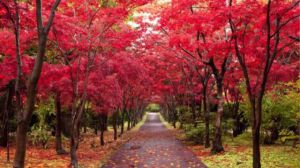
What is the difference between Japanese maple (Acer palmatum) and red maple (Acer palmatum 'Atropurpureum')? A quick guide to telling them apart
Leaf differences: Japanese maple leaves are papery, round in shape, with palmate lobes that are oblong; red maple has alternate simple leaves clustered at the tips of branches, with palmate lobes that are lanceolate. Flower differences: Japanese maple flowers are purple, in corymbose inflorescences; red maple has corymbose inflorescences that are terminal.
-
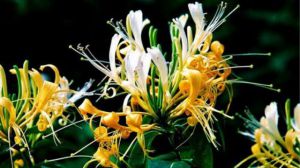
What is the difference between Sophora tonkinensis and Japanese honeysuckle?
Leaf differences: Sophora tonkinensis leaves are thickly papery, elliptical, with the leaf tip shortly acuminate or bluntly rounded; Japanese honeysuckle leaves are papery, ovate or oblong-ovate. Flower differences: Sophora tonkinensis has a raceme, with a white corolla and oblong petals; Japanese honeysuckle has the peduncle growing in the leaf axil, with a white corolla that eventually turns yellow.
-
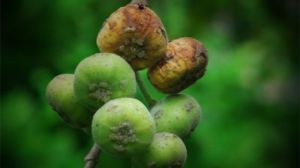
What is the difference between Ficus hispida and Ficus microcarpa? A quick guide to telling the two plants apart
Leaf differences: Ficus hispida leaves are opposite, thickly papery, and ovate-oblong; Ficus microcarpa leaves are thinly leathery, dark green, and narrowly elliptic. Fruit differences: Ficus hispida figs are axillary, top-shaped, and yellow when ripe; Ficus microcarpa figs grow in pairs in the leaf axils, are yellow or slightly red, and are flattened spheres.
-
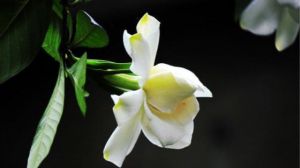
What is the difference between water gardenia and yellow gardenia? A quick guide to tell them apart
Leaf differences: Water gardenia leaves are opposite or in whorls of 3, and the leaf blades are oblanceolate; yellow gardenia leaves are leathery, oblong-lanceolate or seal-shaped lanceolate, with entire margins. Flower differences: Water gardenia flowers are solitary, with 5 to 6 white petals; yellow gardenia flowers have a white or creamy yellow corolla and are salverform.
-
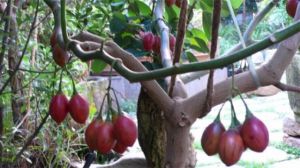
What is the difference between tree tomato and tomato? Learn to easily tell the two apart
Leaf difference: Tree tomato leaves are alternate, ovate or ovate-cordate; tomato leaves are pinnately compound or pinnately parted. Flower difference: Tree tomato cymes are nearly axillary, the corolla is rotate and pink; tomato flowers are yellow with a rotate corolla. Fruit difference: Tree tomato fruit is ovate, smooth on the surface, orange-yellow or tinged with red; tomato berries are oblate or nearly spherical, orange-yellow or turning red.
-
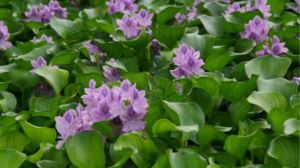
What is the difference between water lettuce and water hyacinth? A quick guide to telling them apart
Leaf differences: Water lettuce leaves grow in clusters, are obovate-cuneate, with rounded blunt tips and slightly wavy edges; water hyacinth leaves are basal, forming a rosette, with rounded blunt tips and entire margins. Flower differences: The water lettuce inflorescence grows in the leaf axils, has a spathe, and is white; the water hyacinth has a spike inflorescence, ovate, and lilac in color.
-
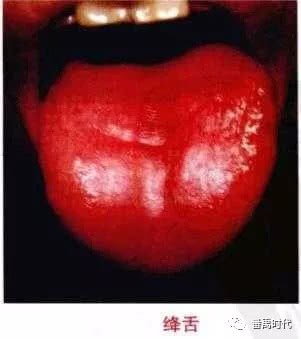
What are the TCM syndrome-differentiation treatment methods for lung cancer?
Diseases such as lung accumulation, mass and addiction, cough, hemoptysis, and chest pain encompass lung cancer. Cancer was first called "swelling" in ancient TCM, and later, according to differences in the zang-fu organs and tissues, many different names were derived, such as the aforementioned lung accumulation, etc.,...
-
What is the difference between the paper written by the ancient Egyptians and the paper you write?
How many days are left until the release of the Species Calendar 2019? Today is the last day of the Q&A session! If you want to learn about the work (gōu) details (zǐ) of Calendar Girl and her friends, don't miss the "Calendar Girl's Big News" at the end of the article.
-
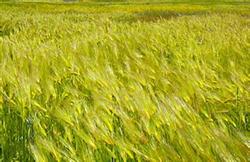
Technical Key Points and Methods for Introducing Barley to Different Regions
I. Seed Preparation and Seeding Rate For barley seeds, the high-quality, high-yield variety S-4 should be selected, and variety S500 can be used as a companion variety. For fields following grain stubble, the seeding rate is 10-11 kg per mu; for fields following flue-cured tobacco or corn, the seeding rate is 8-9 kg per mu. II. Timely Sowing Barley has less strict requirements for sowing time than wheat, and can...
-
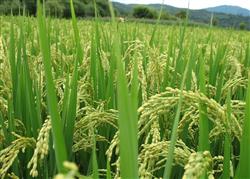
What is the effect of different fertilizer ratios on rice yield?
When rice shows premature senescence from the heading to the maturity stage, it leads to poor grain filling, an increase in blighted grains, and reduced yield. There are many factors that cause premature senescence in the late growth stage of rice. First, improper cultivation management. If the planting density is too high, the plants grow thin and weak; if too much nitrogen fertilizer is applied in the early and middle stages, while phosphorus, potassium and trace element fertilizers are applied...
条件筛选