What is the difference between Sophora tonkinensis and Japanese honeysuckle?
I. Leaf differences
Sophora tonkinensis leaves have only 3 leaflets, the petiole is 4 to 4.5 cm long and covered with short downy hairs, the leaflets are thickly papery, elliptical, 8 to 9.5 cm long and 3 to 5 cm wide, with the leaf tip shortly acuminate or bluntly rounded and the base broadly cuneate.
Japanese honeysuckle leaves are papery, ovate or oblong-ovate, with the apex acute or gradually tapering to a point and the base rounded or nearly cordate.
II. Flower differences
The raceme of Sophora tonkinensis is 6 to 10.5 cm long, the peduncle is 3 to 3.5 cm long, and the pedicel is 0.5 to 0.7 cm long, all covered with short soft hairs; the calyx is cup-shaped with bluntly triangular lobes, the corolla is white, and the standard petal is oblong.
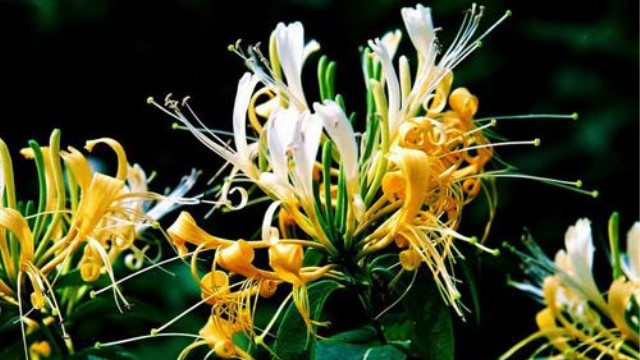
The peduncle of Japanese honeysuckle usually grows singly in the leaf axil on the upper part of the small branch; the corolla is white, sometimes slightly reddish on the sun-facing side at the base, and eventually gradually turns yellow.