-
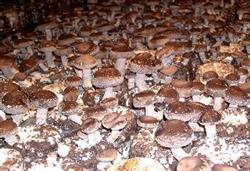
Temperature-difference bud-induction technique for shiitake mushrooms grown on layered shelves without removing the bags
The fruiting stage of summer mushrooms falls in the hotter season, which is unfavorable for the growth and development of the fruiting bodies. Poor management easily leads to shriveled buds and rotten mushrooms. How can cultivation protection facilities be used and corresponding measures taken to curb the effects of the adverse environment? This is the most important part of fruiting management in summer cultivation. According to the experience of the main producing areas, the main measures are as follows...
-
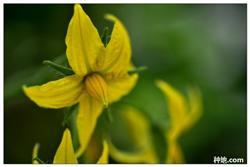
What is the difference between tomato flower dotting and flower spraying?
What is the difference between tomato flower dotting and flower spraying? Please explain. Although tomato flower dotting and flower spraying are different methods, they achieve the same result by different means. Relatively speaking, tomato flower spraying saves more time than flower dotting, mainly reflected in two differences. First is the number of sprayings. Flower dotting is generally done once during flower bud differentiation...
-
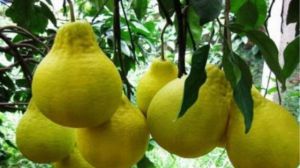
What is the difference between Shatian pomelo and grapefruit? A quick guide to tell them apart
Leaf differences: Shatian pomelo leaves are thick and dark green, broadly ovate or elliptic; grapefruit leaves are ovate, thickly leathery and dark green. Flower differences: Shatian pomelo has racemes with white flowers; grapefruit has cymes with white flowers. Fruit differences: Shatian pomelo fruit is spherical, pear-shaped or broadly conical; grapefruit peel is yellow, and the flesh is pale pinkish-white.
-
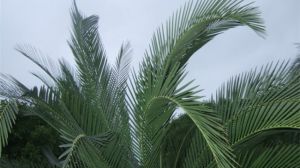
What is the difference between the Canary Island date palm and the pygmy date palm?
Tree form differences: the Canary Island date palm can reach 15 m tall, with a cylindrical trunk; the pygmy date palm has clustered stems, 1 to 3 m tall. Leaf differences: the Canary Island date palm has short, yellowish-brown leaf stalks and pinnate compound leaves; the pygmy date palm has linear pinnae, dark green. Flower differences: the Canary Island date palm has a spicate inflorescence, yellowish-brown; the pygmy date palm's inflorescence is 20 cm long, with needle-shaped petals.
-
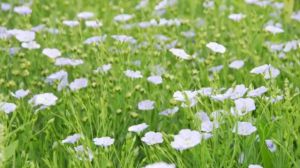
What is the difference between ramie and flax? A detailed analysis of the differences between the two
Leaf differences: Ramie leaves are alternate, herbaceous, round-ovate or broadly ovate, with the leaf tip abruptly pointed; flax leaves are alternate, with blades linear or linear-lanceolate, and the leaves are rolled inward. Flower differences: Ramie has axillary paniculate inflorescences, with petals narrowly elliptic; flax has cymose inflorescences, with 5 petals, obovate, usually blue or blue-purple in color.
-
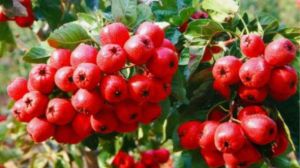
What are the differences between wild jujube and hawthorn? A quick guide to telling them apart
Leaf differences: wild jujube leaves are alternate, elliptical or ovate-lanceolate; hawthorn leaves are broadly ovate or triangular-ovate, with doubly serrated margins. Flower differences: wild jujube flowers are yellow-green, clustered in the leaf axils; hawthorn has corymbose inflorescences with white flowers. Fruit differences: wild jujube fruit is nearly spherical or oblong, reddish-brown; hawthorn fruit is nearly spherical or pear-shaped, dark red.
-
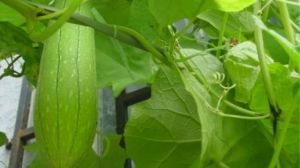
What is the difference between vegetable melon and cucumber? A quick guide to telling the two melons apart
Leaf differences: vegetable melon leaves are alternate, ovate or kidney-shaped; cucumber leaves are broadly ovate-cordate with fuzz on the surface. Flower differences: vegetable melon flowers are solitary and yellowish-white; cucumber flowers are clustered in the leaf axils and yellowish-white. Fruit differences: vegetable melon fruit is long-cylindrical or elliptical, with greenish-white or pale green skin; cucumber fruit is oblong, yellow-green, with a rough surface covered in wart-like bumps.
-
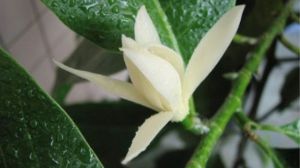
What is the difference between the Ficus virens and the Magnolia champaca?
Tree shape differences: The Ficus virens can reach 30 m in height, with an umbrella-shaped crown and gray bark, and a thick, sturdy trunk; the Magnolia champaca grows over 10 m tall, with a narrow umbrella-shaped crown. Leaf differences: The Ficus virens has alternate leaves, papery blades, and a long elliptic or nearly lanceolate shape; the Magnolia champaca has simple, alternate leaves, long elliptic and blue-green.
-
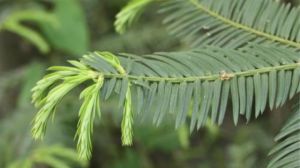
What is the difference between Torreya grandis and Cephalotaxus sinensis? A quick guide to telling them apart
Leaf differences: Torreya grandis leaves are linear, arranged in two rows, with a protruding pointed tip; Cephalotaxus sinensis leaves are also linear, arranged in two rows, with a nearly rounded base and a prominent midrib. Flower differences: the male cones of Torreya grandis are cylindrical; the male cones of Cephalotaxus sinensis are ovoid and arranged in head-like clusters. Fruit differences: the fruit of Torreya grandis is elliptical and turns pale purplish-brown when ripe; the fruit of Cephalotaxus sinensis is ovoid or nearly spherical.
-
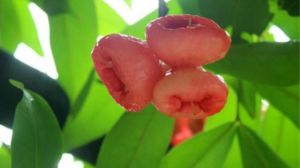
What is the difference between Syzygium cumini and Syzygium samarangense?
Leaf differences: Syzygium cumini leaves are leathery, broadly elliptic or narrowly elliptic, with rounded obtuse tips; Syzygium samarangense leaves are thinly leathery, elliptic or oblong, with obtuse or slightly pointed tips. Flower differences: Syzygium cumini has axillary paniculate inflorescences, white flowers, and 4 petals; Syzygium samarangense has terminal or axillary cymose inflorescences, with white flowers.
条件筛选