-
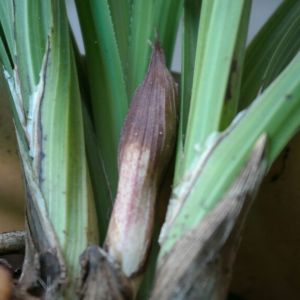
What are the fragrance characteristics of Cymbidium goeringii? A detailed explanation of the fragrances of Cymbidium goeringii from different regions
Bud abortion means the flower buds wither before they bloom. This phenomenon may be caused by deficiencies in bud-stage management techniques or inadequate care for the flower buds; the buds wither or rot before reaching bloom time. The main causes of bud abortion are dry air and excessively high temperatures. Both Cymbidium goeringii and Cymbidium faberi require 1 to 2 months at around 5°C of low...
-
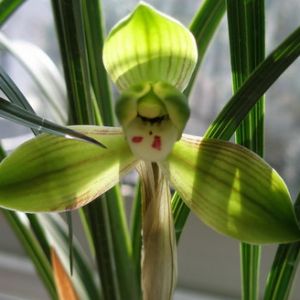
What is the difference between Cymbidium goeringii and Cymbidium tortisepalum? A quick guide to tell them apart
Tongle Mei: The leaves are slanted and upright, the bud sheaths are mercury red with green variegation, the three outer petals are broad and large, with a narrow base, tightly edged, the lip is a large round tongue, the two lateral sepals form a straight-line shoulder, the flower color is emerald green, and the flower form is well-proportioned. It is a large-flowered Cymbidium goeringii treasure combining the lotus, plum, and narcissus petal types.
-

Orchids should be fertilized according to their different developmental stages
Orchids have different fertilizer requirements at different growth stages. Practice has shown that only by fertilizing according to the developmental stage can good fertilizer results be achieved and side effects be prevented. Dormant period: winter is the dormant period for orchid growth. At this time, fertilizing is generally not advisable. If fertilizer is applied, it instead disrupts the orchid's necessary dormancy and induces late-winter and early-spring buds, and these early-sprouting buds, unable to withstand low-temperature freeze damage, die, seriously reducing the germination rate the following spring. If the goal is to improve the plant's stress resistance, in early winter a 600-fold to 800-fold solution of monopotassium phosphate and multi-element micronutrient fertilizer can be sprayed on the leaves in the evening, once a week, for 2 to 3 consecutive times.
-
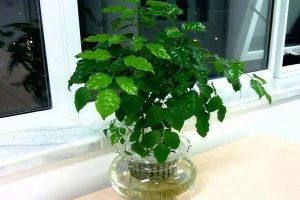
What is the difference between the Radermachera hainanensis and the Radermachera sinica?
Both plants have names rich with auspicious meaning, and you can tell what they represent just from hearing the names, but people do not really understand these two plants, and many vendors also make incorrect claims when selling them, so today we will carefully explain exactly how to identify these two plants and what differences they actually have.
-
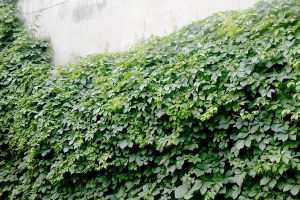
What is the difference between Boston ivy and star jasmine? A quick guide to telling the two apart
Boston ivy and star jasmine share many similarities. Friends in northern China may be more familiar with Boston ivy, as it can be seen in many places, while star jasmine is not commonly seen; but friends in the south may have seen both plants. But can you tell how they differ? Let's take a look at exactly where their differences lie!
-
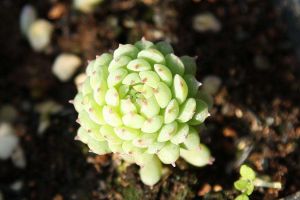
What is the difference between Little Red Cloak and Little Blue Cloak?
Just from the names of these two plants, you get the feeling of a pair of fraternal twins. They both belong to the Crassulaceae family of succulents, and are a type within the Echeveria genus. So where exactly do they differ? Is it really just a difference in color, as their names suggest? Let's take a look together.
-
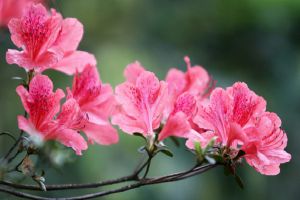
What is the difference between Western azalea and azalea? A quick guide to tell them apart
Nowadays, more and more people love plants, and everyone chooses their favorite plants to grow. The azalea is undoubtedly one of the most popular flowers to grow. But many friends who want to buy Western azaleas to grow end up buying ordinary varieties instead. This is because they do not know the difference between the two. Today let's talk about how the two differ!
-
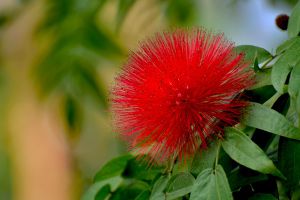
What is the difference between Calliandra haematocephala and Calliandra surinamensis? A guide to telling them apart easily
At first glance, their names sound like there is no difference between them, but when you see pictures of them, it becomes hard to tell which is Calliandra haematocephala and which is Calliandra surinamensis, so let me share how to distinguish them.
-
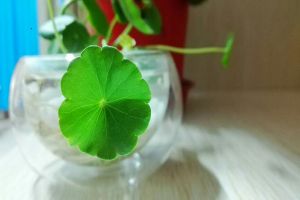
What is the difference between pennywort and pilea? Learn to tell them apart easily
These two plants sound like they have nothing to do with each other, but when you see pictures of them, you will find that if you do not look carefully, they are really easy to confuse. Let's take a look at where their differences lie!
-
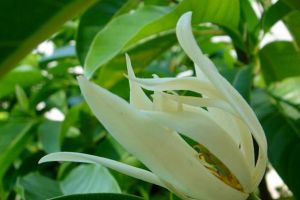
Are white orchids and yellow orchids the same? A detailed explanation of the differences between the two
When it comes to these two, many people may not be able to tell them apart, always thinking, aren't they just the same plant? What difference could there be? It's not surprising at all that everyone thinks this way, because whether in appearance or other aspects, they have far too many similarities. But are they really exactly the same? Today let's take a look together.
条件筛选