What is the difference between Calliandra haematocephala and Calliandra surinamensis? A guide to telling them apart easily
1. Different appearance
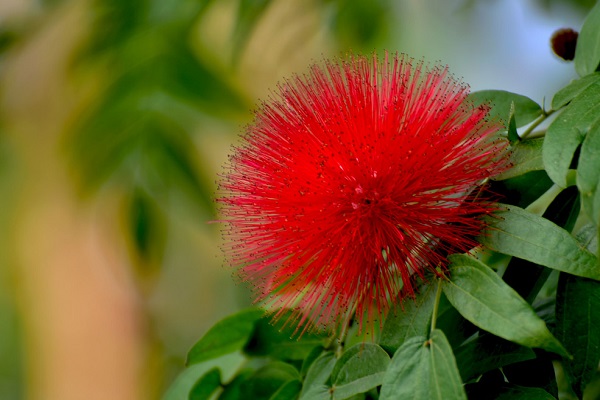
Calliandra haematocephala, as its name suggests, should have flowers shaped like vermilion tassel caps. When it blooms, it looks like a small red pom-pom, and its spherical head-like inflorescence is very showy, with a slight prickly feel when touched. After the petals degenerate, the filaments are exposed, long and prominent. After the flowers fade, a flat, long pod grows beside them, which is very cute.
Calliandra surinamensis is different from Calliandra haematocephala. Its plant form is relatively short, mostly a small shrub, and its leaves are like little feathers, but the number of leaves is very small, only four to six, not as many as Calliandra haematocephala. The base of its filaments is whitish, extremely numerous and slender, and the number of small flowers contained in one inflorescence is not large, so the flower ball looks less dense and heavy than that of Calliandra haematocephala.
2. Different growth habits
Calliandra haematocephala grows in the tropics and likes a warm, humid climate with plenty of sunlight. Having long been in a warm environment, it is not cold-tolerant, and it grows best in well-drained, nutrient-rich acidic soil.
Calliandra surinamensis is distributed in tropical, subtropical and temperate regions. Because its distribution areas differ, its habits are more complex than those of Calliandra haematocephala, which is distributed only in the tropics. However, it also prefers places with plenty of light and a warm, humid environment, and loose, fertile sandy soil is best, unlike Calliandra haematocephala, which can grow in acidic soil.
3. Different value
Calliandra surinamensis has extremely high ornamental value because of its gorgeous appearance, while Calliandra haematocephala is not only beautiful in appearance and high in ornamental value, but also edible. It is non-toxic and has no side effects, and its root bark is rich in tannins, among other things. Consuming tannins can help digestion and can treat symptoms such as loss of appetite and constipation. Not only that, the wood of Calliandra haematocephala branches is hard and is often used by people to make farming tools. It is a raw material that resists polishing wear and has strong corrosion resistance.