What is the difference between pennywort and pilea? Learn to tell them apart easily
1. Different appearance
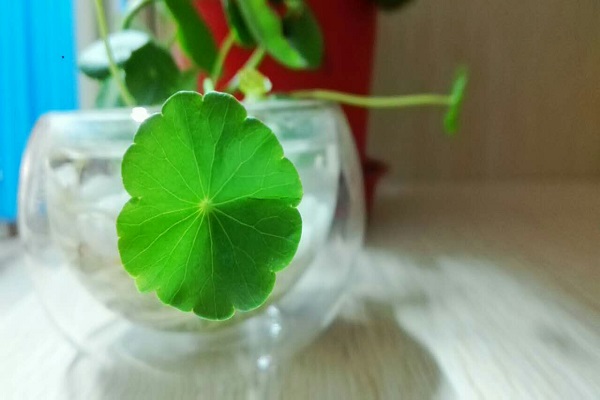
The stems of pennywort are slender and long, and the leaves are round-shield-shaped, with dense T-shaped hairs attached to the underside, covering the entire margin. However, its leaves are relatively small, with veins shallowly split, and when rubbed with the hand they give off a celery scent. In summer and autumn it produces yellow-green flowers.
Pilea is a perennial succulent herbaceous plant. Its leaves are dark green, plump and glossy, and its round, chubby appearance is extremely appealing. Where the leaf meets the petiole, there is also a golden round dot, and the leaf veins naturally spread radially from the center to the surroundings. Seen from a distance, it closely resembles an ancient mirror.
2. Different growing environments
Pennywort likes humid environments and can survive both in water and on land. It mostly grows in wetlands or in artificially maintained aquariums. It is not suitable for growing in direct sunlight; partial sun or shaded places can meet its sunlight needs.
Pilea is suitable for growing in warm, humid environments. It likes loose, well-drained loam rich in organic matter, and can only survive in soil in semi-shaded places, unlike pennywort, which can grow both in water and on land. Its growing room temperature is 16 to 20°C, and if it drops below minus 4°C, cold damage will occur.
3. Different values
Pennywort is non-toxic, and the whole leaf can be used as medicine. It has effects such as reducing internal heat and promoting urination, clearing heat and detoxifying, and reducing swelling. It can also be used for conditions such as damp-heat jaundice, heatstroke and diarrhea, gravel strangury and bloody strangury, carbuncles, swellings and sores, and traumatic injuries.
Pilea can not only serve as an ornamental flower, but also has extremely high medicinal value. Its nature is "sweet and bitter" and "cool in nature." It can be used as a raw material for clearing heat and detoxifying and for removing blood stasis and reducing swelling. It mainly treats erysipelas and is also significantly helpful for recovery from fractures and other injuries.