-
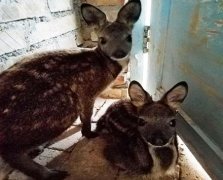
Musk Deer Farming Techniques: Rearing Methods and Nutritional Requirements for Young Musk Deer
The goal in rearing young musk deer is to ensure that all newborn fawns survive without disease and to develop in them excellent production performance. So how should they be reared? Let us take a look together. During growth and development, young musk deer steadily gain body weight and body measurements, and their metabolism is very vigorous.
-

Musk Deer Farming Techniques: How to Handle Farming Procedures for Raising Musk Deer
Abstract Enclosure: Choose a relatively quiet, pollution-free, elevated, well-drained, dry and well-ventilated location. Feeding: The musk deer is a herbivore, and its feed consists mostly of roughage (green grass, wild vegetables, tree leaves, lichen, moss, etc.) and concentrate (corn, soybeans, bran, etc.)
-
Methods of Artificial Nursing for Fawns and Key Points of Deer Farming Techniques
Every year during the production season, some newborn fawns are abandoned by their mothers, or weak fawns cannot get their mother's milk. Artificial nursing is the only way to save these fawns. 1. Location The artificial nursing room for fawns should be spacious and bright, with plenty of sunlight, clean and dry, and insulated (above 15°C), with 1-2 sq m of space per deer and an appropriate exercise area.
-
How to prevent and treat diarrhea and enteritis in roe deer farming?
Diarrhea and enteritis occur in very few nursing roe deer fawns, and occasionally in adult roe deer. The causes of diarrhea and enteritis in roe deer are: roe deer sometimes not suckling properly; too much concentrate feed, causing indigestion; sudden consumption of succulent green feed with too high a water content, etc. Diarrhea and enteritis in roe deer
-
Key Technical Points for Safe Overwintering in Velvet Deer Farming
Cold protection and insulation. When the outside temperature is 15°C, a portion of the nutrients taken in from feed must be diverted to resist the cold in order to maintain normal body temperature. At this time, in northern regions, 1 to 2 layers of bundled corn stalks should be set up outside the deer shed walls to block wind and cold.
-
Prevention and Treatment Methods for Dangerous Epidemic Diseases in Deer Farming
Type 5 disease, also known as this disease, spreads rapidly and is highly harmful. The prevention method is injection of bovine foot-and-mouth disease type O vaccine, but injection of the vaccine in female deer can easily cause miscarriage, and in deer already latently infected it can easily trigger an outbreak of this disease. Therefore, if this disease has already occurred in a certain deer herd, injection of this vaccine should be done with caution.
-
What deer farming techniques increase velvet antler yield?
(1) Light control for fast antler growth in deer farming: Deer farmers can, according to local conditions, build several simple plastic greenhouses with a floor area of about 125 sq m to 225 sq m, install 4 mercury lamps of 100 W to 150 W on the roof, with the lamps about 2.5 m to 2.7 m above the ground, and an illuminance of about 500°C
-
Feeding and Management Methods for Breeding Male Roe Deer in Roe Deer Farming
The purpose of managing breeding male roe deer is to ensure they have a healthy and robust constitution, strong libido, strong mating ability and good semen quality, so as to improve the conception rate. The rearing of breeding male roe deer is divided into three stages: the mating period, the recovery period, and the preparation period for mating. The three stages
-
Prevention and Treatment of Self-Biting Disease and Hair-Eating Disease in Roe Deer Farming
1) Causes of self-biting disease: deficiency or imbalance of trace elements, stress, skin inflammation, parasites, viruses, neurological factors, genetics and other factors. Symptoms: incubation period of 20 days to several months. Spinning, biting a certain part of the body accompanied by screaming, biting off hair, damaging the skin,
-
How to select breeding deer during sika deer farming?
When selecting a breeding stag of sika deer, it is best to buy before the velvet antler growing season; at that time, whether the antler is large or small, good or bad, is clear at a glance. If the antler has already been sawed off, you have to judge by appearance. The head must be large, the eyes spirited, and the height suitable; it is not that the tallest is the best,
条件筛选