Cordyceps flower current price, correct ways to eat it and taboos, cultivation methods
“Cordyceps flower” is not a flower; it is essentially the fruiting body of Cordyceps, not the fruiting body of Chinese cordyceps (Ophiocordyceps sinensis). The culture medium mimics the various nutrients contained in natural insects, including grains, beans, eggs and milk, and it belongs to a type of fungus. So what is the current price of Cordyceps flower per jin? How should it be eaten for the best effect? Who should not eat it? How is it cultivated?
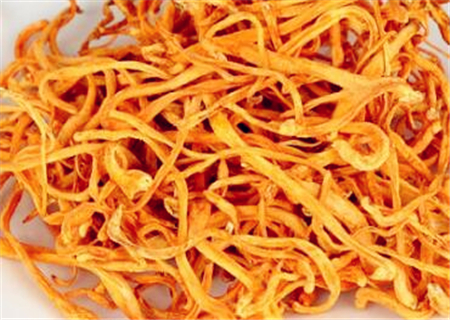
What is the price of Cordyceps flower per jin
The price of Cordyceps flower varies naturally due to different quality, different sizes, and different places of origin. In addition, the price of Cordyceps flower also differs depending on the quantity purchased. For example: if a wholesaler buys 1000 kilograms, it works out to 50 yuan per jin; the wholesaler sells to retailers at 60 yuan per jin; and retailers sell to the final consumers at 120 yuan per jin.
Generally speaking, the retail price in supermarkets is roughly around 50-60 yuan per 500g.
At present, producing areas use 2 kinds of culture media to cultivate Cordyceps flower, namely wheat and rice. Wheat is used fairly widely, and almost everyone growing Cordyceps flower uses it. The price of wheat-based Cordyceps flower is also relatively low, ranging from 30 yuan to 150 yuan per jin depending on the different strains and quality. Cordyceps flower cultivated with rice is very good, and its price starts at 200 yuan per jin.
In recent years, the price of Cordyceps flower has declined year by year, from 180 yuan per jin for standard-grade goods in 2010 to 60 yuan per jin for standard-grade goods now. The reason for this phenomenon should be that more people are growing Cordyceps flower, and also that factory-based, large-scale technology has taken shape, causing output of Cordyceps flower to rise sharply. From previously having wholesalers scrambling to buy goods, to now nobody asking about Cordyceps flower once it is grown, after 2014 many farmers growing Cordyceps flower suffered losses and closed down.
How should Cordyceps flower be eaten to be most effective?
Other ways to eat Cordyceps flower include stewing soup or making dishes. Before stewing soup, first wash the Cordyceps flower and soak it for one hour, then stew the Cordyceps flower together with lean meat (or old water duck and silkie chicken) in a clear soup. The texture is crisp yet not greasy, the taste is good and there are no side effects. The whole family can eat it with confidence, and friends with weak constitutions can especially give it a try.
Who should not eat Cordyceps flower
(1) Children and adolescents. Cordyceps is not entirely suitable for all ages as advertised. Because it has male hormone-like effects, it may cause premature puberty in children and adolescents, so children should not take it.
(2) People suffering from various excess syndromes. So-called "excess syndromes" are mainly a series of pathological changes caused by excessive pathogenic qi, when healthy qi has not yet declined, and there is fierce struggle between pathogenic and healthy qi. They are mostly seen in the early and middle stages of exogenous diseases; at present it is generally believed that high fever, mania, loud voice and coarse breathing, abdominal pain that refuses pressure, inability to urinate or defecate, and a forceful pulse all belong to the clinical manifestations of "excess when pathogenic qi is abundant." People with excess syndromes who eat Cordyceps will not only fail to achieve the purpose of treatment and health care, but will also experience adverse reactions such as restlessness, nausea, and bleeding at the corners of the mouth. (3) Patients with yin deficiency and hyperactive fire must not use it alone, to prevent worsening the condition.
(1) People who smoke, drink excessively, or take medication long-term.
(2) People under high work pressure who tire easily.
(3) Urban syndrome: people with low immune function, irritability, fatigue, restlessness, or who feel they are aging too fast, catch colds easily, or have allergies.
(4) Middle-aged and elderly people, and people who lack exercise and have weak constitutions.
(5) Patients with various types of tumors.
(6) Patients with pneumonia, pulmonary tuberculosis, emphysema, asthma, or chronic bronchitis.
(7) Patients with acute or chronic hepatitis, or cirrhosis.
(8) People with myocarditis, irregular heartbeat, cerebral stroke, cerebral thrombosis, vascular sclerosis, high blood lipids, or high or low blood pressure.
(9) People with acute or chronic nephritis, kidney failure, kidney deficiency, uremia, or diabetes. Note: For people who are already ill, please first follow the doctor's advice and take therapeutic drugs! Chinese cordyceps only plays an auxiliary therapeutic role.
Cultivation process of Cordyceps flower
Strain
The separation, purification and cultivation of the strain are extremely critical and very difficult. This means using wild fungi for tissue separation, then culturing and purifying excellent original strains, and after artificial purification, expanding the culture to produce strains for large-scale cultivation.
Cultivation
In the laboratory, potato, glucose, agar, peptone, inorganic salts, etc. are usually used to make the culture medium. In large-scale cultivation bases, rice, wheat, corn, as well as beans, eggs and milk, etc. are used in formula proportions to make the culture medium. After being dispensed into containers (bottles), it needs to be sterilized.
Inoculation
After the culture medium is prepared, the next step is to inoculate the strain onto the culture medium. This process needs to be carried out under sterile conditions; otherwise, it may contaminate the strain and the culture medium and introduce unwanted microbes.
Culture
After inoculation, it is moved into a culture room and placed on racks for culturing. The optimal growth temperature for the mycelium is 15 to 25°C, and the optimal growth temperature for the stroma is 18 to 22°C. The culture room needs to maintain a certain temperature, humidity and air cleanliness. After 2-3 months of cultivation, when the grown stroma slowly turns orange-red or orange-yellow and rod-shaped, it can be harvested.
Preservation
After harvesting, put it into clean utensils and dry it promptly by drying or air-drying. Store the dried stroma in sealed plastic bags or sell it. After harvesting, according to different situations, supplement the culture medium with water or nutrient solution and maintain a suitable temperature so it can resume growth, and another 1~2 crops of stroma can be harvested.