Pokeweed current price per jin, main production areas, best harvesting time, and planting prospects and economics
Pokeweed is a perennial stout herbaceous plant in the Phytolaccaceae family, genus Phytolacca. Among the species currently distributed in China, the main ones are pokeweed (wild radish) and American pokeweed (Phytolacca americana, American pokeweed, ten-stamen pokeweed). So what is the current price of pokeweed per jin? Where are the main production areas? What about its planting prospects and economic benefits?
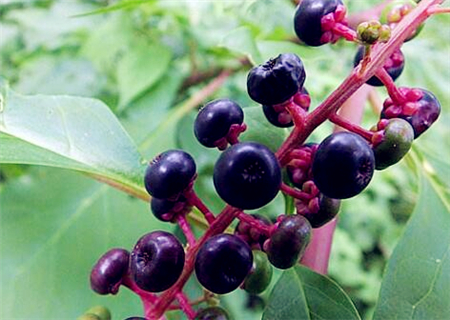
Pokeweed is actually not ginseng, so its price differs from that of ginseng. Pokeweed is both beneficial and toxic as a medicinal herb, and it is common, preferring to grow in moist places, and is often found in villages all over the country. Processed dried pokeweed costs only a few yuan per jin, and pharmacies rarely buy it because it is seldom used in prescriptions. In Shandong, people do indeed call pokeweed "wild ginseng," but it is absolutely not ginseng; eating it can cause symptoms such as vomiting and dizziness. Everyone is advised to identify it carefully and not eat it by mistake.
Pokeweed prices vary widely; some cost a few yuan per bag, while others certainly cost over a thousand yuan per box. No matter how expensive or cheap its price may be, pokeweed propagates easily, as both roots and seeds can reproduce it. Generally, two methods can be used: direct seeding and planting of fleshy roots. From August to September, select mother plants of green-stem pokeweed; when the fruit turns purplish black, harvest it, rub off the outer skin in water, and dry it in the shade for later use. So everyone should choose the pokeweed that suits their own needs.
What about the planting prospects and economic benefits?
The dried root of medicinal pokeweed. It is dug from autumn to the following spring, the fibrous roots and soil are removed, and it is cut into blocks or slices, then sun-dried or shade-dried.
The root is used as medicine; white, plump roots are preferred, while red roots are highly toxic and are only for external use. It promotes both urination and defecation, expels water, and dissipates masses; it treats edema, abdominal fullness, beriberi, and throat obstruction, and is applied externally to treat carbuncles, swellings, and sores. It can also be used as veterinary medicine and pesticide. The fruit contains tannins and can be used to make tannin extract. The tender stems and leaves can be eaten as vegetables.
The main production areas of pokeweed are Henan, Hubei, Shandong, Zhejiang, Jiangxi, and others.
Cultivation techniques for pokeweed
1. Field management: After pokeweed seedlings are thinned or during severe drought, water twice in succession; when soil moisture is suitable, loosen the soil and weed shallowly, keeping the soil surface loose, moist, and free of weeds. Pokeweed blooms from June to August; except for plants kept for seed, cut off all flower stalks to reduce nutrient consumption. To help pokeweed overwinter safely and increase organic fertilizer in the field, in late autumn and early winter spread 6000 kg/ha of chopped straw such as wheat chaff or rice chaff in the field planted that year.
2. Reasonable topdressing: After pokeweed seedlings are thinned, spray the leaves with 0.5% urea solution, in small amounts several times, with the total not exceeding 225 kg/ha. The following spring, before the plants emerge, open shallow furrows between the two rows and bury about 1200 kg/ha of potassium sulfate high-concentration compound fertilizer. From July to August, spray about 1800 kg/ha of 1% potassium sulfate or 0.3% monopotassium phosphate once every 15 days, for 3 to 4 consecutive sprays.
3. Pest and disease control: Pokeweed has no diseases throughout its growth period. Because its stems and leaves are tender, the main pest is aphids, which can be controlled with 40% keiyaxing at 600 times dilution or 25% pirimicarb at 1000 times dilution, with maximum use frequencies of 3 times and 2 times respectively, and a safety interval of 7 days for both. Sometimes root rot can cause harm; affected plants wilt aboveground in a green-wilt state, the rhizome turns brown, and in severe cases the roots rot. Choose well-drained plots for planting, drain promptly during the rainy season, and disinfect the soil with 15 kg/ha of 70% quintozene.