-
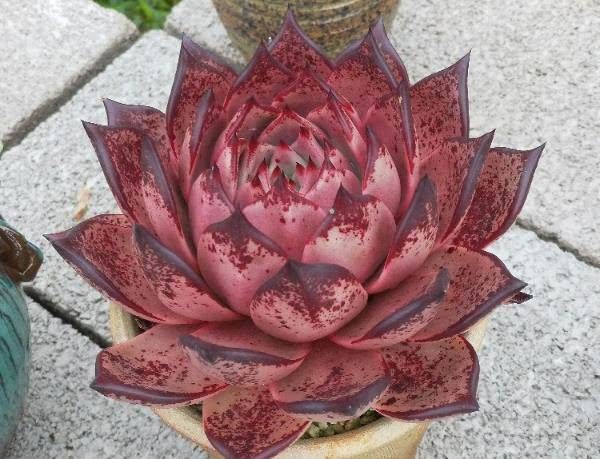
Making succulents plump is not hard: start by controlling watering to make the leaves thick and fleshy
Once the root system of a succulent is well established, it does not need special watering; it should already be fairly plump on its own. But if it is given more water, the plant will grow desperately, yet it will not become compact and plump. Water control means giving appropriately less water, and even...
-
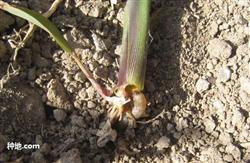
What are the methods for controlling underground pests in sweet corn?
How to control underground pests in sweet corn? Please advise. The underground pests damaging sweet corn mainly include mole crickets, white grubs, wireworms and cutworms. These pests damage sweet corn in their larval stage, mainly during the seedling stage of sweet corn, causing dead seedlings and missing plants. To ensure full and strong seedlings, integrated control should be carried out....
-
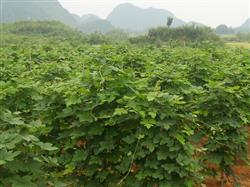
What pesticides work well for controlling kudzu diseases?
What pesticides are used to control kudzu diseases? The main diseases of kudzu include damping-off, downy mildew, and anthracnose; they can be controlled with a 600-fold dilution of 50% carbendazim, or an 800-fold dilution of 70% thiophanate-methyl wettable powder. At the same time, methods such as pruning diseased branches and leaves, or manual capture and trapping of pests, can also effectively...
-
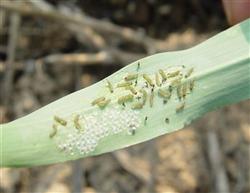
What pesticide is effective for controlling rice stem borer larvae?
What pesticide should be used to control rice stem borer larvae? For controlling rice stem borer larvae, you can use 30 to 40 ml of 5% fipronil suspension concentrate per mu, or 120 to 150 ml of 20% triazophos emulsifiable concentrate plus Tianda 2116. When using chemical control, maintain a 3 to 5 cm deep water layer in the field and let it dry naturally. Click to get more insecticide...
-
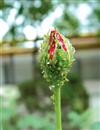
What are the methods for controlling aphids on flowers in spring and summer?
How do you control aphids on flowers in spring and summer? Please explain the methods. Many aphids, every year in the spring and summer period, like to gather densely on the young leaves, young shoots, young stems, buds, flower buds and corollas of Chinese roses, chrysanthemums, hibiscus and so on, causing damage. They use piercing-sucking mouthparts to absorb large amounts of sap from plant tissues, causing a lack of nutrients in the flowers, making the roots, stems, leaves, flowers and flower buds of the affected parts grow slowly or stop growing, and in severe cases causing the whole plant to wither or die.
-
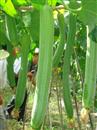
What are the methods for preventing and controlling early senescence in loofah in summer?
How do you prevent and control early senescence in loofah in summer? Please provide an introduction to the prevention and control methods. In summer, as temperature, light and other environmental factors change, loofah plants grow stems and leaves quickly and roots age quickly. If management is improper, plant early senescence is very likely to occur. For loofah early senescence, the following methods can be used for prevention and control: Rational fruit retention: growers in...
-

A Guide to Preventing and Controlling Common Pests and Diseases of Spring Flowers
Common Pests and Diseases of Spring Flowers In spring, the temperature turns warm then cold again, and the air humidity is high, so the occurrence of crop pests and diseases is at a moderate to heavy level, and flowers also suffer from more pests and diseases. Generally, the following types cause more serious damage in April to May: Aphids Hibiscus, ornamental peach, Chinese hibiscus, Chinese rose, honeysuckle and others are all susceptible to aphid damage
-
Pest and Disease Control for Pomegranate Bonsai: Controlling the Crape Myrtle Mealybug
The crape myrtle mealybug, also known as the pomegranate felt scale, is one of the main pests harming pomegranate bonsai and is also a common pest of crape myrtle bonsai. I. Morphological characteristics. Adult: The female adult is flat, oval, 2-3 mm long, dark purplish-red. When fully mature, it is enclosed in a white felted cocoon, appearing like a white grain of rice; the male is about 1 mm long
-
What are the methods for controlling pests and diseases in marigolds?
Marigold belongs to the Asteraceae family and is an annual herbaceous plant native to Mexico. The orange-yellow flowers of marigold contain abundant natural lutein, and the pigment has the characteristics of being antioxidant, highly stable, non-toxic and highly safe, and is widely used in food, cosmetics, tobacco, medicine and poultry feed.
-
A Detailed Guide to Controlling Common Pests and Diseases of Photinia × fraseri (Red Robin)
Photinia × fraseri (Red Robin) has fairly strong resistance, but if it is managed improperly or the nursery environment is poor, gray mold, leaf spot, or damage from scale insects, cutworms and the like may occur. As a member of Yuanlin China Network, I would like to share some of my experience with fellow flower lovers, and I hope we can all exchange and learn more.
条件筛选