Making succulents plump is not hard: start by controlling watering to make the leaves thick and fleshy
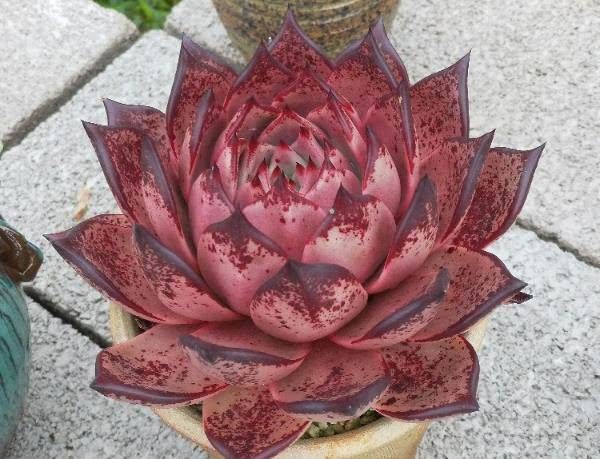
Once the root system of a succulent is well established, it does not need special watering; it should already be fairly plump on its own. But if it is given more water, the plant will grow desperately, yet it will not become compact and plump. Water control means giving appropriately less water, and even when watering, keep it in a low-moisture state; in dry times, just a little moisture to protect the roots is enough. With water control, be sure to avoid alternating heavy wetness and heavy drought, because the roots will not be able to adapt to such drastic changes.
Finally, there is the uncontrollable factor of season, which also plays an important role in fattening succulents. There is no doubt that the best time to fatten them is the spring and autumn growing seasons, and autumn is better than spring, while the early part of the growing season is better than the later part. In summer, because of high temperatures and shading, the leaves tend to become leggy, and at this time it is difficult to grow succulents with a good shape, so in summer you can focus on growing roots and maintaining the plant shape.
For most succulents, during the high temperatures of summer the plants have a brief dormancy period, when growth is slow or completely halted; they can be placed in a well-ventilated spot for care, avoiding prolonged rain, with a little shading, restrained watering, and no fertilizing. Spring, autumn, and early summer are the main growing seasons for the plants, and they should be given plenty of sunlight. Although they can also grow in partial shade, the area near the growing point will turn dark green, and the dark purple of the leaves in other parts will also fade to light brown, affecting their ornamental value.
The soil should be a sandy soil with good drainage and aeration for cultivation, so as to facilitate the removal of excess water and the growth of the plant roots. It can be prepared with 1/3 leaf mold, 1/3 sandy soil, and 1/3 garden soil. Repot once every 1-2 years in spring, and the dead old roots can be trimmed off. To avoid water accumulation around the roots, it is best to choose a pot with drainage holes at the bottom; beginners can use a red clay pot with good air permeability; glass containers absorb heat and have poor air permeability.
Most succulents are short plants, with fleshy stems and leaves, and their growth speed relatively increases in autumn. For plants whose stems and leaves grow too fast, such as the white snow queen and the string of hearts, pinching can promote branching, form flower buds, produce more flowers, and make the plant shape more compact and dwarf. For desert rose and frangipani, thinning the branches can keep the plant shape neat in appearance.
For plants that grow too tall, such as the African milk tree, African baobab, and red bird cactus, heavy pruning is used to control height. For plants that produce too many suckers, such as red roll sedum and Chinese sedum, cutting off the excess suckers can make the plant shape more attractive. Cactus plants continue to grow after flowering in autumn. Timely and reasonable pruning can not only lower the plant shape, promote branching, make the plants grow more robust and the shape more attractive, but also promote the sprouting of offsets for use in cuttings or grafted propagation.
This is a gathering place for succulent lovers, sharing succulent care tips; welcome to follow and exchange ideas.