-

Morning Glory Blooming Season and Bud Midge Control Medication Methods
Morning glory, many people like to grow it, and when it blooms it really looks like a big trumpet. What season does morning glory bloom in? What medication kills bud midges: What season does morning glory bloom in: Morning glory generally has a flowering period from June to October. Morning glory usually blooms at 4 or 5 o'clock in the early morning
-
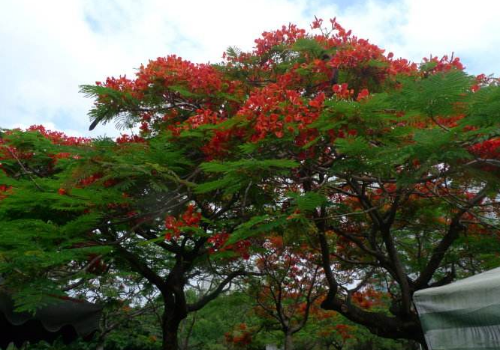
Common pest control methods for the Flamboyant Tree and how it differs from the Silk Tree
With its bright red or orange flowers combined with bright green bipinnate compound leaves, the Flamboyant Tree is hailed as one of the most colorful trees in the world
-

How to prevent and control soybean root rot? These methods you need to master
1. Choose disease-resistant varieties. 2. Rotate with non-host crops such as corn, foxtail millet, and sweet potato. 3. Apply farmyard manure, potassium fertilizer, phosphate fertilizer, etc. when sowing. 4. Apply metalaxyl granules when sowing so that soybean roots can absorb them to prevent root infection. 5. Before sowing, dress seeds with 35% metalaxyl powder at 0.3% of seed weight. 6. Strengthen field management, carry out timely deep plowing and intertillage hilling and weeding, and drain standing water promptly after rain to prevent excessive humidity. 7. When diseased plants are found, pull them out promptly, thoroughly remove the diseased plant residues, and apply quicklime to the planting holes and
-
Control Methods for Fusarium Root Rot in Soybean
Symptoms: Fusarium root rot is one of the common root rots in soybean. It mainly occurs at the seedling stage. The roots and stem base of diseased plants develop elliptical brown, elongated to irregular sunken spots, which later expand into large patches encircling the main root, and some damage the lateral roots. The fungus mainly damages the cortex, causing diseased seedlings to emerge very slowly, cotyledons to lose green color, and lateral roots and fibrous roots to be few; in the later stage the roots turn black and the epidermis rots, the diseased plants turn yellow and become stunted, and the lower leaves drop early. The diseased plants generally do not die, but they set fewer pods and the seeds are small. Control methods should adopt comprehensive measures with prevention as the priority. (1) Select resistant
-
A Comprehensive Guide to Scientific Control Methods for Soybean Aphids
Soybean aphids are commonly known as "ni chong" (greasy bugs) or "mi chong" (honey bugs). They mostly gather on the growing points, top leaves and backs of young tender leaves of soybean plants, piercing and sucking sap to cause damage. This results in leaf curling, plant stunting and reduced yield, and they can also transmit viral diseases, causing yield loss and quality decline. This pest begins to appear in soybean fields in mid-to-late June, and causes severe damage during hot, dry weather. Soybean aphids have a very strong reproductive capacity; a single female can produce 50-60 offspring, and under suitable conditions, young aphids can give birth after about 4-5 days, and can reproduce 15
-
What are the control methods for soybean nutrient deficiency?
Soybean micronutrient deficiency shows as follows: in spring soybeans, nitrogen deficiency causes the true leaves to turn yellow, and yellowing can spread from bottom to top; on the compound leaves there are parallel continuous or discontinuous iron-colored patches along the veins, and chlorosis spreads from the leaf tip toward the base until the whole leaf is pale yellow and the veins also lose green; the leaves are small and thin and fall off easily, the stems are slender, and the lower leaves of the plant are dark green, thick, uneven, and long; when sulfur deficiency is severe, the veins are yellowish-brown, and later the whole leaf turns yellow. Potassium deficiency causes leaf yellowing, with symptoms developing from the lower leaves to the upper leaves; chlorotic spots first appear at the leaf margins, then
-
Control Methods and Technical Key Points for Soybean Bacterial Blight
Soybean bacterial blight is a disease that occurs commonly in soybean-growing regions, reducing the percentage of fully filled seeds, lowering the 100-seed weight, and decreasing both quality and yield. Leaf lesions are initially round, brown to dark brown; as the lesions enlarge, the center turns black, the lesions do not appear raised, and diseased leaves drop easily. Lesions on stems and pods are brown and round, later becoming spindle-shaped. The seed surface is coated with a layer of bacterial slime, often appearing at one end of the seed, and its shape closely resembles a "frog eye." Diseased seeds are shrunken, and the pathogen overwinters on diseased leaves, stems, pods and seeds.
-
Symptoms and control methods of soybean anthracnose
Symptoms: The disease can occur from the seedling stage to the mature stage. It mainly damages stems and pods, and also damages leaves or petioles. When stems are infected, brown lesions first appear, densely covered with irregularly arranged black dots. When pods are infected, the small black dots are arranged in concentric rings, and the diseased pods cannot develop normally. When cotyledons are infected at the seedling stage, dark brown lesions appear with slightly lighter edges, and after the lesions expand, cracking or sunken areas often appear; the lesions can spread from the cotyledons to the young stems, causing death of the plant parts above the diseased area. When leaves are infected, the edges are dark brown and the interior is light brown. When petioles are infected, the lesions are brown and irregular. Control methods
-
How to control dodder in soybean? Detailed control methods
Soybean dodder is a malignant parasitic weed, mainly parasitizing crops or weeds in the Fabaceae, Chenopodiaceae and Asteraceae families, and it also harms peanuts, alfalfa and potatoes.1
-
Control Methods for Soybean Bacterial Blight
Symptoms: It damages seedlings, leaves, petioles, stems and pods. When seedlings are infected, the cotyledons develop semicircular or nearly circular brown spots. When leaves are infected, irregular chlorotic small spots initially appear, water-soaked, and after expanding they become polygonal or irregular in shape, about 3-4mm in size, with the center of the lesion dark brown to blackish brown, surrounded by a narrow chlorotic halo ring, and after the lesions merge they form dead necrotic patches. When the stem is infected, it initially presents as dark brown water-soaked elongated strips, which after expanding become irregular and slightly sunken. When pods and seeds are infected, dark brown streaks
条件筛选