-

Symptom Identification and Control Methods for Cotton Brown Spot Disease
Symptoms The disease mainly affects leaves. When cotyledons are infected, pinpoint-sized purplish-red spots first appear, then expand into brown, purplish-edged, slightly raised round to irregular lesions; multiple lesions merge together to form large patches, with small black dots scattered in the center, which are the pathogen's pycnidia. The center of the lesion easily breaks off and falls out, forming holes, and in severe cases the leaves drop off. On true leaves, the lesions are round, yellowish-brown, with purplish-red edges. Pathogen Phyllosticta gossypina Ell. et Mart., called cotton Phyllosticta leaf spot
-
How to prevent and control cotton seedling diseases? Detailed spring prevention and control methods
In recent years, due to low temperatures in spring, seedling diseases in direct-seeded cotton fields have occurred severely, causing large numbers of dead seedlings in cotton fields. In order to improve the economic benefits of cotton farmers and reduce the losses caused by diseases, the symptoms and prevention and control methods of several cotton seedling diseases are introduced as follows: 1. Symptoms of damaged cotton seedlings 1. Anthracnose: Both leaves and stems can be affected. After the seedlings are damaged, reddish-brown spindle-shaped streaks appear at the base of the stem, with longitudinal cracking. In severe cases, the lesions expand, turn brown, blacken, and rot, leading to seedling death. When the weather is humid, the lesions produce orange-red sticky substances.
-
Occurrence Patterns and Control Methods of Cotton Seedling Diseases
Cotton seedling diseases are characterized by a concentrated onset period, generally occurring 15-30 days after sowing. The primary infection source comes mainly from the soil, with a small portion from seeds. Around April 20 this year, many provinces experienced continuous rainy and low-temperature weather, so seedling diseases are bound to be severe, and timely control measures should be taken in all areas. I. Symptom Manifestations (1) Damping-off. When cotton seedlings are affected before emergence, it causes seed and sprout rot. When disease occurs after seedling emergence, lesions initially appear as yellowish-brown and later turn black and sunken at the base of the young stem near the soil surface. The lesions gradually expand,
-
Control Methods and Rescue Measures for the Three Major Types of Pesticide Damage in Cotton
1. Strict operation and effective prevention. When using the various types of pesticides mentioned above on cotton, the operating procedures must be strictly followed and the pesticides used rationally (including the type, concentration, method and timing of application, etc.), so as to give full play to the pesticide's efficacy while reducing costs and preventing pesticide damage. 2. Timely "rescue" to eliminate the "danger". After pesticide damage occurs, a large amount of water can be sprayed on the leaves to wash it off; in the soil, irrigation, drainage to wash out the pesticide, or neutralization and detoxification with safeners can be used. If Bordeaux mixture is mistakenly used, since copper ions cause the pesticide damage, 0.5%-1% lime milk can be sprayed; spray equipment that has been used for
-
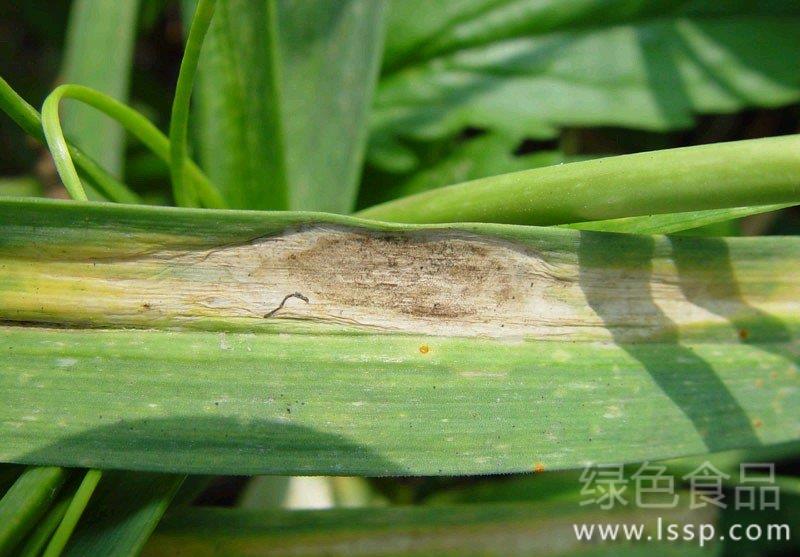
Garlic leaves turning from green to brown and yellow: master the control methods for garlic leaf blight
Garlic leaves turning from green to brown and yellow: control methods for garlic leaf blight
-
How to control cotton mirid bugs? These methods must be mastered
The occurrence of mirid bugs is very sensitive to the ecological environment. Mirid bugs prefer temperatures of 25°C~30°C and a relative humidity of 80%~90%. The recent humid weather with little sunshine is very favorable for the occurrence of mirid bugs. Intercropping in cotton fields is also conducive to the parasitism and transfer damage of mirid bugs. Now, soybeans, broad beans and other vegetables are intercropped in cotton fields everywhere, which is conducive to their reproduction. Therefore, some cotton farmers in cotton areas of counties and cities such as Hanchuan and Yunmeng in Hubei Province have recently reported that the occurrence and damage of mirid bugs have already emerged
-
Identification and Control Methods of Cotton Stem Blight
Symptoms The disease occurs more severely in the Northeast cotton region, the Yellow River basin and the Yangtze River basin, and the cotton regions along the rivers and coast. Cotton can be affected throughout the entire growth period, with the seedling stage and bud stage suffering the most severe damage. When cotyledons and true leaves are infected, small round spots initially appear with purplish-red edges and grayish-white centers, after which the lesions expand or merge into irregular-shaped lesions. Some lesions develop concentric rings in the center, scattered with small black granules, which are the pathogen's pycnidia. The diseased parts often break apart and fall off. Under high humidity, water-soaked lesions appear on young tender leaves, then spread rapidly as if scalded by boiling water,
-
Symptoms and Control Methods of Cotton Boll Red Rot
Symptoms After a cotton boll is infected, an irregularly shaped lesion initially appears. In wet weather or during continuous overcast and rainy days, the disease spreads rapidly, covering the entire boll, and in some cases reaching the cotton fibers, producing an even pink or light red mold layer. After rain, it easily sticks together, forming pink masses, causing the diseased boll to fail to crack open, and the cotton fibers to rot into stiff, matted locks. After seeds are infected, the germination rate declines. The pathogen is the same as that of cotton seedling red rot. Transmission route and disease conditions This fungus is a weak parasite and cannot directly infect cotton bolls; it mainly enters through wounds to cause disease. Cotton boll angular leaf spot
-
Symptoms and control methods of cotton boll Aspergillus rot
Symptoms It occurs in all cotton regions. It mainly damages cotton bolls. Initially, water-soaked yellowish-brown spots appear at cracks, insect holes, wounds or splits on the cotton boll, followed by yellow-green or yellowish-brown powdery material that fills the boll cracks, causing the cotton boll to fail to open normally. During continuous rainy weather or high humidity, yellowish-brown or yellow-green fuzzy mold grows, namely the pathogen's conidiophores and conidia, and the cotton lint quality is contaminated to varying degrees or becomes dry-rotted and deteriorated. Pathogen Aspergillus flavus Link, called yellow aspergillus, Aspergillu
-
Identification and Control Methods of Cotton Seedling Red Rot
Symptoms This disease occurs in all cotton regions of China, with severe damage in the Yangtze River Basin and Yellow River Basin cotton regions, and it also occurs in the Liao River Basin. It can infect plants at the seedling stage and boll stage. When infected at the seedling stage, the young sprouts are damaged before emergence, and the sprouts become reddish-brown and rot. After emergence, the roots of affected cotton seedlings show yellowing of the root hairs and lateral roots, which later turn blackish-brown and rot. When the young stem is infected, the vascular bundles turn dark brown, yellow streaks appear at the base of the young stem near the ground, and later turn brown and rot. The young roots and young stems swell, and grayish-red irregular spots form on the edges of the cotyledons and true leaves. Under high humidity, a pink mold layer forms on the surface, which is the pathogen
条件筛选