-

Coneflower Seed Prices and Planting Methods Explained
Coneflower, also known as purple coneflower, Echinacea, or eastern purple coneflower, is a very beautiful flower. The coneflower's blooms are quite large and their colors are very vibrant; they can not only be planted in flower beds and parks, but also grown in pots at home or in the courtyard, where they can serve to accent the
-
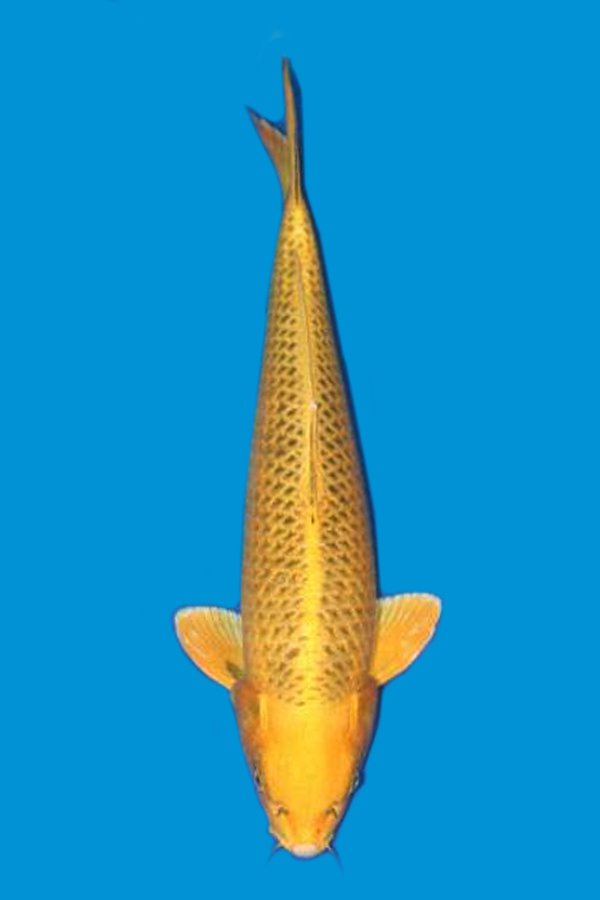
Which is better, the Yellow Pinecone-scaled Koi or the Ginrin Koi?
Introduction to the Yellow Pinecone-scaled Koi The Yellow Pinecone-scaled Koi, like the White Pinecone and Red Pinecone varieties, also belongs to the ancient Pinecone-scaled Koi group. The Pinecone-scaled Koi, like the Asagi Koi, is also one of the original species of koi varieties. Its main characteristic is that the scales of the Pinecone-scaled Koi appear pine-nut shaped, which...
-
-
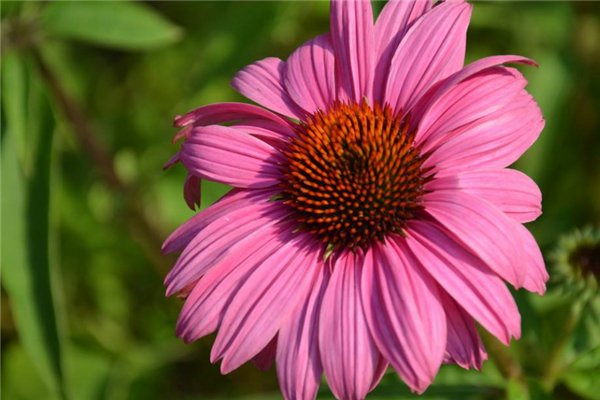
What are the cultivation methods and precautions for purple coneflower?
Purple coneflower is not an edible fruit, but a kind of chrysanthemum. They are very cold-hardy and can survive winter outdoors even in the north. The petals are deep pink, and the flower center is a brownish orange-yellow; the combination of the two colors has a very vintage beauty. It is neither delicate and gaudy nor plain and dull.
-
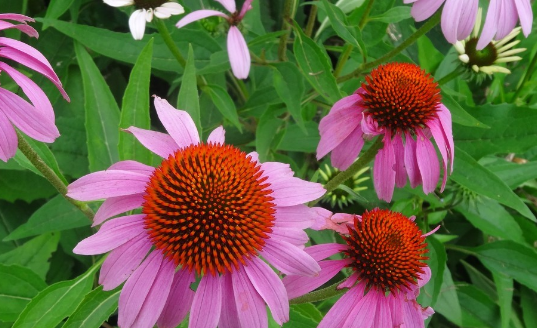
Cultivation Methods, Precautions, Propagation Methods and Uses of Purple Coneflower
Purple coneflower is one of the indispensable flower varieties for courtyards, parks, street green spaces and street greening and beautification, as well as for holiday flower displays. So what are the cultivation methods and precautions for purple coneflower? How is it propagated? What are its uses? According to available information, purple coneflower is a long-day plant
-

Coneflower Introduction and Cultivation Tips: Easily Grow Beautiful Coneflowers
Coneflower Introduction and Cultivation Tips: How to Grow Beautiful Coneflowers
-
Kissing gourami pinecone disease is a common illness.
Pinecone disease (pinecone-scale disease): the scales of the sick fish stand up like a pinecone. Treatment methods: A. Soak the sick fish in a tetracycline aqueous solution at a concentration of 1 unit per 50,000, bathing twice a day for one hour each time. B. Mix a 2% sodium chloride solution with a 3% sodium bicarbonate solution, and give the sick fish a medicinal bath twice a day for 10 minutes each time. C. Add 0.5 g of chloramphenicol per 40 kg of water for soaking.
-
A Detailed Guide to Creating a Boxwood Cone Topiary
The following instructions explain how to trim a potted boxwood into a cone shape about 50 cm tall. Plants grown in the open ground in a garden can also be trimmed using the same method, with no height limit. Unless the plant exceeds the required height by more than 5 cm, do not remove the leader shoot. Materials needed: 1 untrimmed potted common boxwood (Buxus sempervirens), evenly grown with a strong apical dominance. Sharp pruning shears. Pruning method: 1. In early summer, place the potted boxwood on level ground. 2. Stand over the potted boxwood
-
Symptoms and Control Methods of Spruce-Bird Cherry Cone Rust
Spruce-bird cherry cone rust occurs in Inner Mongolia, Jilin, Heilongjiang, Sichuan, Yunnan, Tibet, Shaanxi, Gansu, Qinghai, ** and other places in China. The disease affects Picea asperata, Picea purpurea, Picea likiangensis, Picea brachytyla var. complanata, Picea jezoensis, Picea schrenkiana, ** spruce, etc. Symptoms: The disease affects the upper surface of the scales of female cones. Infected scales are twisted, recurved and disorganized. On the upper surface, many small purple-brown spherical bodies are produced in a single layer; these are the aeciospore-bearing structures (aecia) of the pathogen, and sometimes aecia are also produced on the lower surface of the scales. Pathogen: The pathogen is Thekospora areolata (Fr.) Magn.
-
Identification and Control Methods of the Spruce Cone Moth
Spruce cone moth [Cydiastrobilella (Linnaeus)], also known as the spruce cone leaf roller, belongs to the order Lepidoptera, family Tortricidae. In China it is distributed in Heilongjiang, Inner Mongolia, Shaanxi, Gansu, Ningxia, Qinghai, ** and other places, mainly damaging spruce and larch. Damage characteristics: the larvae damage cones and seeds; infested cones become curved and exude resin, and after falling the cone scales often do not open. Morphological characteristics: the adult is about 6mm long, with a wingspan of 10-13mm. Head, thorax and abdomen are grayish black. The labial palps project forward and curve slightly upward,
条件筛选