-
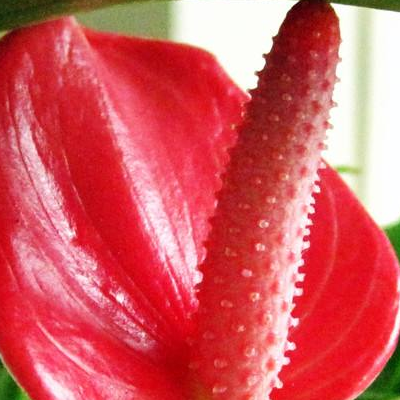
Is Anthurium Toxic? A Complete Guide to Growing It
Anthurium is something many people absolutely love to grow, and this anthurium is just that appealing. How do you grow anthurium? Is anthurium toxic? How to grow anthurium: Living habits. Anthurium likes high temperatures and humidity, and it cannot be placed in direct sunlight, so it is generally best grown indoors.
-

Canna Lily Potted Plant Prices and Complete Growing Guide
Canna lily is a perennial herbaceous plant with fleshy roots, native to South America and India, and later widely cultivated in China. So how much does a potted canna lily cost? What are the cultivation techniques for potted canna lilies? How much does a potted canna lily cost: canna lily seedlings are 0.4 yuan per plant, which is quite cheap.
-

Is the Snow White plant toxic? A complete guide to its care
Snow White is a plant, and it is unclear who gave it such a name, since this plant is not white at all. So how do you care for the Snow White plant? Is the Snow White plant toxic? How to care for the Snow White plant: 1. Early-stage management. During the care of the Snow White plant, keep the growing medium moist.
-

A Complete Guide to the Four Key Points of Winter Pear Orchard Management
Four Key Points of Winter Pear Orchard Management
-

A Complete Guide to the Key Points of Edible Mushroom Harvesting Techniques
Key Points of Edible Mushroom Harvesting Techniques
-

A Complete Guide to New Summer Cultivation Methods for Straw Mushrooms
Straw mushrooms are the only high-temperature, fast-growing variety among edible fungi. The cultivation substrate is mainly rice straw and wheat straw. They are delicious and nutritious. The summer cultivation techniques are introduced as follows: Preparation of mushroom beds. The mushroom beds are set up inside a plastic greenhouse, and the greenhouse is covered with plastic film and straw mats to retain warmth and moisture. The mushroom beds are 1 m wide, with unlimited length, and the spacing between beds is 30 cm, which can serve both as walkways and as water storage ditches. On the beds, sunken mushroom troughs are dug crosswise. The troughs are 30 cm wide and 20 cm deep, with a 20 cm small soil ridge left between troughs. Within the troughs, spray 0.2
-
How to Grow Tulips? A Complete Guide to Practical Care Methods
Tulips belong to the Liliaceae family, are perennial herbaceous plants with bulbs, and originated along the Mediterranean coast. They were later improved and cultivated by Central European countries and have now become a very elegant and precious flower. They were introduced to the Netherlands in the 16th century and designated as the national flower of the Netherlands. In the Netherlands there is a saying: "If a rich man does not have tulips, he is not truly wealthy." At that time, a precious flower bulb was worth 100 pounds, almost equivalent to the price of a villa. The famous French writer Alexandre Dumas wrote a legendary novel, The Black Tulip, praising this
-
A Complete Guide to the Techniques for Making Goubuli Baozi
"Goubuli" baozi is highly renowned in Tianjin and has a history of over a hundred years. Legend has it that the baozi was named after the childhood nickname "Goubuli" of Gao Guiyou, the owner of the Dejuhao baozi shop in Tianjin and its creator. "Goubuli" baozi is made by mixing minced pork with ginger, soy sauce, broth, sesame oil, monosodium glutamate, pork rib soup and other ingredients to form the filling, wrapping it in dough wrappers and then steaming. The finished baozi must keep their shape, not fall apart at the bottom, not leak oil, and each one takes on a chrysanthemum shape. Its characteristics are carefully selected ingredients, thin wrapper and generous filling, a rich and savory taste, tender and palatable, and fatty without being greasy. In 1956
-
The Complete Guide to Silkworm Breeds: Get to Know Common Silkworm Varieties
Silkworm breeds are broadly divided into three categories: 1. Univoltine silkworm breeds. Depending on the breed, the silkworm (Bombyx mori) produces only one generation within a year and then lays diapause eggs; these are called univoltine silkworm breeds. Such breeds develop slowly, take many days to complete their life cycle, consume a large amount of mulberry leaves during the larval stage, and have larger bodies and cocoons with the highest silk yield, but they are physically weak and not suited to hot, humid climatic conditions, making them suitable for rearing in temperate regions. 2. Bivoltine silkworm breeds. Those that produce two generations within a year, that is, the first generation lays non-diapause eggs and the second generation lays diapause eggs, are called bivoltine silkworm breeds. Such breeds
-
How to raise nursing puppies? A complete guide to scientific rearing methods
Puppy: refers to a dog from birth to weaning (around 45 days of age); puppies do not open their eyes until 12-15 days after birth, have poor mobility, but grow fast and have relatively high nutritional needs. Therefore, the rearing of puppies should be done as follows: 1. Get colostrum in time. The milk secreted by the mother dog within 1 week after giving birth is colostrum. Colostrum is rich in gamma globulin, which after being absorbed by the intestinal tract forms antibodies in the puppy's body and can enhance the puppy's disease resistance. Puppies must get colostrum in time, otherwise the gamma globulin will be destroyed by digestive juices
条件筛选