Canna Lily Potted Plant Prices and Complete Growing Guide
Canna lily is a perennial herbaceous plant with fleshy roots, native to South America and India, and later widely cultivated in China. So how much does a potted canna lily cost? What are the cultivation techniques for potted canna lilies?
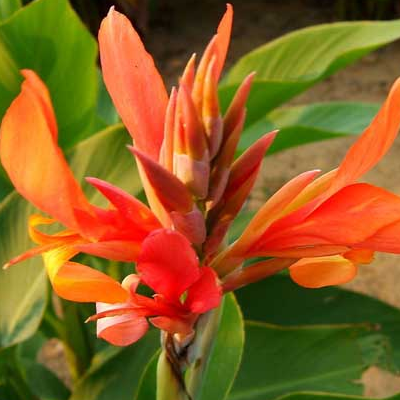
How much does a potted canna lily cost:
Canna lily seedlings are 0.4 yuan per plant, which is quite cheap. Canna lilies prefer places with water and sunlight.
If you want a finished potted plant, the price should be around ten-plus yuan, since it is a fairly common plant.
What are the cultivation techniques for potted canna lilies:
1. Light: Full sun. During the growing period, it requires ample light, ensuring at least 5 hours of direct sunlight every day. If the environment is too shady and light is insufficient, the flowering period will be delayed. If placed in a cool spot while flowering, the flowering period can be extended.
2. Temperature: The suitable growing temperature is 15-30°C. When flowering, to extend the flowering period, it can be placed in a low-temperature, sunless location, and the ambient temperature should not be lower than 10°C. When the temperature reaches above 40°C, the canna lily can be moved to a ventilated, cool place. Around the time of Frost's Descent, the potted canna lily can be moved to a place at 5-10°C, and it will safely overwinter.
3. Humidity: During the growing period, water should be sprayed on the leaves 1-2 times a day to maintain humidity. Because canna lilies greatly enjoy fertilizer and tolerate moisture, the pot should be watered thoroughly.
4. Fertilizing: In addition to applying sufficient base fertilizer before planting, topdressing should be done 3-4 times a month during the peak growing season. If flower buds have not yet emerged 20-30 days before the expected flowering period, a 0.2% monopotassium phosphate water-soluble solution can be sprayed on the leaves to promote flowering. Potted canna lilies sometimes develop symptoms of scorched and yellowing leaf edges, mainly caused by applying too much ferrous sulfate or suffering from drought or exposure to scorching sun. In hot summer, watering with water that is too cold can also cause scorched leaf edges. If fertilizer is applied too concentratedly during the height of summer, it can even burn the rhizomes and "burn them to death."
5. Soil: It is not demanding about soil. It grows best in loose, fertile, well-drained sandy loam, and also adapts to fertile clayey soil. The potting soil should be mixed from leaf mold, garden soil, peat soil, mountain soil and other organic-rich soils. For potted canna lilies, dwarf varieties should be chosen. Generally, leaf mold, vegetable garden soil, and rice husk ash are used as the three raw materials in a ratio of 1:1.5:0.5, with a small amount of soybean cake, bone meal and other fertilizers added and mixed well. In spring from March to April, take out the tubers, remove the rotten parts, select stem tubers with 2-3 robust buds and bury them in the potting soil, preferably with the bud tips exposed above the soil. Because canna lilies greatly enjoy fertilizer and tolerate moisture, the pot should be watered thoroughly. When the 5th leaf has grown, apply a decomposed topdressing once every 7-10 days, and water after fertilizing. Generally, apply a 1% ferrous sulfate fertilizer solution once a month, or add a small amount of plant ash, to encourage the stems to be upright and robust, the leaves to be green and thick, and the flower colors to be vivid. Stop fertilizing at the flowering stage. During overwintering, stop fertilizing.
6. Pruning: After the flowers at the stem tips fade, the stems and branches should be cut off from the base at any time, so as to stimulate new buds to sprout and grow flowering branches that bloom successively.
Alright, everyone knows how to grow canna lilies in pots now.
How to dwarf potted canna lilies, potted canna lily cultivation methods / repotting is crucial
Canna lily is a relatively easy plant to grow, and we have also introduced in detail the cultivation methods and precautions for canna lilies. But if it is grown in pots, what differences are there? Today let's look at the cultivation methods for potted canna lilies.
Potted Canna Lily Cultivation Methods
1. Choose a deeper and larger pot
Because canna lily is a tuberous-rooted plant, its roots will be larger than those of ordinary plants, so a larger pot should be chosen. In this way, during growth, root development will not be hindered by the size of the pot.
In addition, the soil should also be looser, for example, made by mixing leaf mold, vegetable garden soil and so on with sand, because loose soil will not restrict root development. This is a very important point in potted canna lily cultivation methods.
2. Control watering and fertilize more
When growing canna lilies in pots, pay attention to controlling watering. Unlike open-field cultivation, watering should follow the principle of drying before watering and watering thoroughly, with the soil preferably on the drier side during the dormant period, and on the wetter side in summer. For details, you can refer to the detailed introduction on how to water canna lilies through the four seasons.
In addition, when fertilizing, note that some bone meal or organic fertilizer should be added to the potting soil, and then during the growing period fertilize once every half a month to a month, mainly with nitrogen, phosphorus and potassium.
3. Repot regularly
In potted canna lily cultivation methods, regular repotting is essential. Generally, repot once every 1-2 years in spring, depending on the condition of the potting soil. The purpose is to increase the air permeability of the potting soil and ensure good soil drainage.
4. Propagate by division
If canna lilies are grown in pots, the best propagation method is division, as this is the method with the highest survival rate. It can be done conveniently when repotting, which saves maintenance time and also improves the survival rate of the propagated plants.
How to dwarf potted canna lilies
1. Stem-cutting method
Cut the canna lily rhizomes into small pieces, keeping 2-3 buds on each piece. Then choose the potting soil well and plant the cut rhizomes separately in each flowerpot. Generally, 2 rhizome pieces per pot is suitable, at a depth of 8-10 cm. After planting, water thoroughly, then wait until the leaves grow and manage them according to potted canna lily cultivation methods.
2. Choose the right variety
Among canna lily types, there is one called dwarf canna lily, whose height is generally 50-70 cm. It is very suitable for potting, so if you want to grow it indoors, you must choose the right variety.
3. Buried paclobutrazol mud-ball method
Use 1 g of 15% paclobutrazol mixed evenly with 1 kg of clay, then add an appropriate amount of water and make small mud balls similar in size to ping-pong balls, then dry them for later use. When the stems and leaves of the canna lily grow to about 20 cm, bury 5 mud balls in the potting soil. After that, the solution in the balls penetrates to the roots and dwarfs the plant.
What are the growing conditions for potted canna lilies? What are the cultivation methods for potted canna lilies?
Growing Conditions for Potted Canna Lilies
1. Light: Full sun. During the growing period, it requires ample light, ensuring at least 5 hours of direct sunlight every day. If the environment is too shady and light is insufficient, the flowering period will be delayed. If placed in a cool spot while flowering, the flowering period can be extended.
2. Temperature: The suitable growing temperature is 15-30°C. When flowering, to extend the flowering period, it can be placed in a low-temperature, sunless location, and the ambient temperature should not be lower than 10°C. When the temperature reaches above 40°C, the canna lily can be moved to a ventilated, cool place. Around the time of Frost's Descent, the potted canna lily can be moved to a place at 5-10°C, and it will safely overwinter.
3. Humidity: During the growing period, water should be sprayed on the leaves 1-2 times a day to maintain humidity. Because canna lilies greatly enjoy fertilizer and tolerate moisture, the pot should be watered thoroughly.
4. Fertilizing: In addition to applying sufficient base fertilizer before planting, topdressing should be done 3-4 times a month during the peak growing season. If flower buds have not yet emerged 20-30 days before the expected flowering period, a 0.2% monopotassium phosphate water-soluble solution can be sprayed on the leaves to promote flowering. Potted canna lilies sometimes develop symptoms of scorched and yellowing leaf edges, mainly caused by applying too much ferrous sulfate or suffering from drought or exposure to scorching sun. In hot summer, watering with water that is too cold can also cause scorched leaf edges. If fertilizer is applied too concentratedly during the height of summer, it can even burn the rhizomes and "burn them to death."
5. Soil: It is not demanding about soil. It grows best in loose, fertile, well-drained sandy loam, and also adapts to fertile clayey soil. The potting soil should be mixed from leaf mold, garden soil, peat soil, mountain soil and other organic-rich soils. For potted canna lilies, dwarf varieties should be chosen. Generally, leaf mold, vegetable garden soil, and rice husk ash are used as the three raw materials in a ratio of 1:1.5:0.5, with a small amount of soybean cake, bone meal and other fertilizers added and mixed well. In spring from March to April, take out the tubers, remove the rotten parts, select stem tubers with 2-3 robust buds and bury them in the potting soil, preferably with the bud tips exposed above the soil. Because canna lilies greatly enjoy fertilizer and tolerate moisture, the pot should be watered thoroughly. When the 5th leaf has grown, apply a decomposed topdressing once every 7-10 days, and water after fertilizing. Generally, apply a 1% ferrous sulfate fertilizer solution once a month, or add a small amount of plant ash, to encourage the stems to be upright and robust, the leaves to be green and thick, and the flower colors to be vivid. Stop fertilizing at the flowering stage. During overwintering, stop fertilizing.
6. Pruning: After the flowers at the stem tips fade, the stems and branches should be cut off from the base at any time, so as to stimulate new buds to sprout and grow flowering branches that bloom successively.
Potted Canna Lily Cultivation Methods
1. Use a deep, large pot and loose soil: Canna lily is a tuberous-rooted plant, so the pot should be relatively deep and large; a clay pot with a diameter of 30-40 cm can be used. It has strong adaptability and is not choosy about soil. It grows best when planted in fertile, loose, well-drained sandy loam. Leaf mold and vegetable garden soil can be mixed in equal amounts with a small amount of sand added as the growing medium. When planting, deep planting is preferable, covering with 6-8 cm of soil. Place a layer of broken hard plastic foam blocks at the bottom of the pot to facilitate air permeability, drainage and removal from the pot. Repot and change the soil once every spring.
2. Moderate watering and frequent fertilizing: During the growing period, the potting soil for canna lilies should be kept alternately dry and moist, and during the rainy season standing water should be drained at any time to prevent waterlogging. During the dormant period, the potting soil should be on the drier side. It likes fertilizer. In addition to adding some bone meal and nitrogen-phosphorus-potassium compound fertilizer to the growing medium when potting, apply nitrogen-phosphorus-potassium compound fertilizer once every half a month or so during the growing period. Do not apply during flowering; continue applying after flowers fade. Avoid applying nitrogen fertilizer alone, otherwise there will be many leaves and few flowers. Do not fertilize during the dormant period.
3. Likes light and warmth, fears cold: Canna lily is a shade-tolerant flower native to the tropics. It should be placed in a sunny courtyard, rooftop garden or west-facing balcony with good ventilation and ample sunlight. In this way, not only will the tubers be large and produce many tillers, but the flowers will also be numerous and gorgeous. If placed in a shady spot, the plant will be tall with few flowers and pale color, or even no flowers. It fears frost and freezing. After Frost's Descent, cut off all the scorched yellow leaves, invert an empty flowerpot over the pot, and it can overwinter safely outdoors south of the Yangtze River; north of the Yangtze River, it needs to be moved indoors to overwinter. Prune the flowering stems in time. For potted canna lilies, after the flowers fade, cut off the flowering stems in time from the lower part of the stem level with the soil surface, and fertilize to encourage new stems to tiller from the stem base. After 1.5 to 2 months it can bloom again, so from late May to October it can bloom 3-4 times, always maintaining beautiful flowers and leaves.
4. Division propagation is easy to survive: In spring, along with repotting and changing the soil, pour out the tubers and cut them into several pieces with a sharp knife. Each piece must have at least 2-3 buds. Coat the cuts with sulfur powder or plant ash, and plant them separately in pots. They can also be bred after flowering and propagated by sowing in the following spring.
Potted Canna Lily Pest and Disease Control
From May to August each year, pay attention to leaf-roller pests to avoid damage to tender leaves and flower spikes. A 50% dichlorvos 800-fold solution or 50% fenitrothion emulsifiable concentrate 1000-fold solution can be sprayed for control. Field-planted canna lilies occasionally suffer from cutworms, which can be captured manually, or controlled by drenching the root soil with a 600-800-fold trichlorfon solution.
Alright, that is the introduction to potted canna lily cultivation methods. Canna lily not only has high ornamental value, but its roots and flowers can also be used medicinally. The tubers can treat icteric acute infectious hepatitis, high blood pressure and flooding, etc., and the flowers can treat hemoptysis. It is a medicinal and ornamental flower worth cultivating.
Related Articles