-
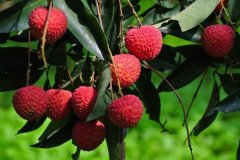
Lychee Cultivation Techniques, Variety Classification, and Fertilization and Irrigation Management Methods
The lychee is a fruit loved by many people, so do you like eating lychees? Do you want to grow lychees yourself? The lychee fruit is large and heart-shaped, and when ripe the tubercles are relatively smooth, the peel is dark red, the taste is sweet and juicy, the seed is relatively large, the quality is medium, and the yield is high; the flowering period
-
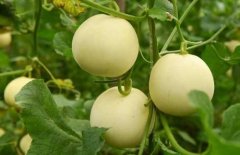
What Are the Growing Regions of Muskmelons? A Full Guide to Variety Classification and Selection Tips
Muskmelons can be roughly divided into three types: the netted muskmelon, which of course has a netted rind, with flesh that can be green, white or orange; the Hami melon, oval in shape, improved from the original Hami melon of Xinjiang, elongated oval in appearance with orange flesh, and its biggest difference from the muskmelon
-
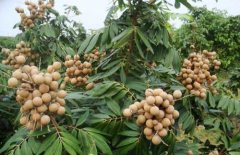
The Origin of the Longan, the Main Production Areas for Longan Cultivation in Taiwan, China, and the Classification of Varieties by Maturity Period
The longan belongs to the Sapindaceae family and is a subtropical evergreen fruit tree. It originated in mainland China, and its cultivation history in Taiwan, China is very early. It was already recorded in works such as the "Zhuluo County Gazetteer" in the 55th year of the Kangxi reign of the Qing Dynasty. It was brought over for cultivation when people from Fujian and Guangdong migrated to Taiwan, China. Although the longan cultivated in Taiwan, China was introduced from mainland China, because of its wide adaptability, strong reproductive capacity, and easy cultivation management, it has developed into the most localized economically cultivated fruit tree in Taiwan, China. What is popular now is the <a href="https://www.nongxun.net/zhongzhi/zz201903311855877506.html">method for growing longan in pots</a>.<br /> <br /> Taiwan, China is currently, besides mainland China and Thailand, one of the world's main longan production areas. According to the "Annual Report of Agricultural Statistics," in the 94th year of the Republic of China, the total cultivated area in Taiwan, China was 12,358 hectares, with an annual output of 102,790 metric tons. The main production areas are Tainan, Kaohsiung, Taichung, Nantou, and Chiayi, with Tainan having the most. The main cultivated variety is "Pink Shell," accounting for about 60% of the cultivated area.</span></span></div> <div> </div> <div> <span style="font-size: 14px;"><span style="font-family: georgia, serif;">The longan fruit tree has a very wide range of uses. Its wood is tough and its grain is beautiful, making it a superior material for furniture and carved products. Besides being eaten fresh, the fruit can be dried into longan and processed into canned longan, longan wine, longan paste, and so on. In recent years, the food industry has produced a great many processed products using dried longan flesh as a raw material, causing the consumption of dried longan flesh in Taiwan, China to increase year by year, which has been of great help in easing the pressure on Taiwan, China's fresh longan fruit market.</span></span></div> <div> </div> <div> <span style="font-size: 14px;"><span style="font-family: georgia, serif;">The longan cultivars grown in Taiwan, China are very mixed, mostly consisting of natural forest-like stands of many naturally variant plants planted together. To facilitate market transactions, they have long been divided into only 4 major categories according to fruit size and quality: Fuyan, Shuiyan, Tangsuanrouyan, and Niuzaiyan.</span></span></div> <div> </div> <div> <span style="font-size: 14px;"><span style="font-family: georgia, serif;">The Chiayi Agricultural Experiment Branch Station and Chung Hsing University have carried out variety improvement and identification and selection work. To date, surveys have discovered as many as more than 70 cultivated varieties. Although there are many varieties, cultivated varieties change quite rapidly. The 8 more important varieties can be divided into 3 categories according to maturity period: (1) early-maturing (fruit harvested in early to mid-July): Zhuqi Zaosheng, (2) mid-maturing (fruit harvested from late July to late August): Pink Shell, Large Pink Shell, Red Shell, Green Shell, Shuigong, (3) late-maturing (fruit harvested from September to mid-October): Fanlu Wansheng, October.</span></span></div> <div style="text-align: center;"> <span style="font-size: 14px;"><span style="font-family: georgia, serif;"><img alt="" src="/uploads/allimg/190615/2-1Z61510044Mc.jpg" style="width: 500px; height: 323px;" /></span></span></div>
-

A Detailed Explanation of the Material Properties and Grade Classification of American Douglas Fir
Douglas fir is a relatively common construction timber, enjoying high recognition around the world, especially in North America. Because Douglas fir is very hard and has strong wear resistance, it is particularly suitable for use in supports, bridge components, wooden houses, commercial buildings and other places.
-
What are the classifications and advantages of seaweed fertilizer?
Seaweed fertilizer refers to a biological fertilizer produced from seaweed or seaweed extracts as raw materials, through fermentation, acid-base processes, or fertilizer blending processes. It has three main effects, namely improving soil, enhancing crop photosynthesis, and improving crop stress resistance. So, the classifications of seaweed fertilizer
-
Cotton Color Classification and 2020 Price Forecast Analysis
Cotton originated in the subtropics. Its flowers are milky white, and shortly after blooming they turn deep red and then wither, leaving behind small green capsules called cotton bolls. Below, we introduce the 2020 cotton price forecast and color classification. 1. 2019 Cotton Price Forecast In 2020, fac
-
What family does the blueberry belong to? A guide to its family and genus classification
Blueberry is a relatively popular fruit; it can be made into jam and can also be eaten directly, making it very popular in the market. So do you know what family the blueberry belongs to? Let's take a look! 1. What family does the blueberry belong to? Blueberry belongs to the Ericaceae family. It originated in North America
-
What family does the lily belong to? A detailed explanation of plant classification knowledge
The lily is a very common plant that can be used medicinally, as food, and also has ornamental value. So do you know what family the lily belongs to? 1. What family does the lily belong to? The lily is in the Liliaceae family, Lilium genus, a perennial herbaceous bulbous plant,
-
Vegetable Planting Times by Type: Heat-Loving, Cold-Loving and Cold-Hardy Classification
Summary Vegetables that can be planted year-round: scallions, bean sprouts, garlic, bok choy, etc. Can be planted in January: lettuce, rapeseed greens, etc. Can be planted in February: cilantro, lettuce, etc. Can be planted in March: spinach, radish, etc. Can be planted in April: napa cabbage, cowpea, etc. Can be planted in May: pumpkin, bitter melon, etc. Can be planted in June:
-
Detailed Explanation of Licorice Variety Classification and Cultivation Methods
Licorice is the dried root and rhizome of the legume plants Glycyrrhiza uralensis Fischer., Glycyrrhiza inflata Bat., or Glycyrrhiza glabra L., used for medicinal purposes. It has effects such as clearing heat and detoxifying, relieving cough and phlegm, tonifying the spleen and harmonizing the stomach, and harmonizing various medicines. It treats sore throat
条件筛选