Lychee Cultivation Techniques, Variety Classification, and Fertilization and Irrigation Management Methods
The lychee is a fruit loved by many people, so do you like eating lychees? Do you want to grow lychees yourself?
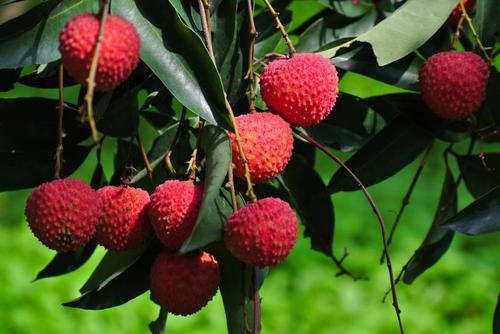
The lychee fruit is large and heart-shaped, and when ripe the tubercles are relatively smooth, the peel is dark red, the taste is sweet and juicy, the seed is relatively large, the quality is medium, and the yield is high; the flowering period is late March, and the ripening period is mid-to-late June. At 30 to 40 days after flowering, the flesh begins to develop, and after the seed stops developing, the flesh grows rapidly, reaching maturity at around 80 days, when the peel turns red and black.
According to the early or late fruit ripening period, they are divided into four categories:
1. Extremely early maturing: such as Sanyuehong;
2. Early maturing: such as Yuhebao, Gaoxiong Zaosheng;
3. Mid-maturing: such as Heiye, Shakeng Xiaohe;
4. Late maturing: such as Nuomici, Gangwei, Guiwei, Huaili.
Cultivation Management
(1) Soil and Climate
Lychee is not strict about soil selection; soil with good drainage and an underground irrigation water source is more suitable, and the ideal soil pH range should be maintained between pH 5.0 and 6.5. Lychee is suitable for cultivation in a subtropical climate environment.
(2) Planting Period, Method and Density
As long as there is a water source for irrigation, lychee can be planted throughout the year. The planting hole should be about 70 cm deep and wide at least, and during planting a large amount of decomposed compost should be applied and mixed with the soil; after planting, thorough irrigation is needed. To protect against wind, stakes may be set up to secure the trunk. The row-to-plant spacing is 4-6 m × 4-6 m; after the plant grows larger, appropriate pruning must be done to control plant height. If dwarf cultivation is used, planting may be slightly denser, about 3 m × 3 m or 4 m × 3 m, with plant height maintained at about 2 m; when too tall, the trees easily shade each other and affect tree vigor.
(3) Pruning and Training
For the pruning and training of young trees, the main goal is to cultivate tree shape; prune moderately after planting to cultivate 3 to 5 main branches, allowing them to spread naturally to form the tree shape, and after 2 to 3 years from planting they enter the fruiting stage. For pruning of mature trees, after harvest prune moderately the overly dense branches and weak slender branches, and remove dead branches.
In addition to dwarfing the tree shape, pruning removes weak small branches growing inside the canopy that cannot fully receive sunlight, increasing the light-receiving area of the canopy and improving air circulation, thereby reducing the occurrence of pests and diseases.
(4) Irrigation
1. Flower bud differentiation stage: around October - February, new shoots of lychee stop growing; dryness favors flower bud sprouting, so irrigation is not suitable during this period.
2. Flowering stage: around March, the florets begin to open; during this period appropriate irrigation is needed to avoid flower drop.
3. Fruiting stage: April is the stage of small fruit development, which requires sufficient moisture.
4. Growth stage: irrigation should be done 2-4 times per month to promote the growth of new shoots, so as to cultivate the fruiting branches for the following year.
(5) Fertilizer Management: fertilization is mainly based on chemical fertilizers, supplemented by organic fertilizers, so as to further supplement trace elements.
1. Fertilization period: the amount and frequency of lychee fertilization vary depending on tree age and whether it is fruiting; the cultivation of young trees is mainly to develop tree shape so as to reach the fruiting stage early. Young trees can be fertilized three times a year, using the annual amount in divided applications, and Taiwan Fertilizer No. 5 compound fertilizer can also be used instead. For mature trees, twice a year is suitable: once after the flower panicle emerges, applying 3/4 of the annual amount, and the second time immediately after harvest, applying 1/4 of the annual amount. To improve soil quality and enhance fruit quality, compost should be applied in appropriate amounts.