-

How can rural cooperative economic organizations grow bigger and stronger? Chen Xiaohua explains
From December 13 to 14, the 6th (2014) China Cooperative Economy High-Level Forum, guided and supported by the Department of Rural Economic System and Management of the Ministry of Agriculture and the Cooperative Guidance Department of the All China Federation of Supply and Marketing Cooperatives, and hosted by the China Cooperative Economy Society, was held at the Beijing Conference Center.
-
Chen Xiaohua: More than 20,000 villages nationwide have completed the reform of the rural collective property rights system
Beijing, December 1 (Reported by Chang Li): At the research symposium on the reform of the rural collective property rights system held today, Vice Minister of Agriculture Chen Xiaohua revealed that by the end of 2013, 28,000 villages and 50,000 groups nationwide had completed the reform of the rural collective property rights system.
-
Chen Wensheng on Food Security and the Urgent Need for a New Strategy in China's Agricultural Development
Agriculture is an irreplaceable strategic industry, food is the first necessity of human survival, and food security is a goal that humanity has pursued over the long term. If China, with its population of over a billion, were to suffer a severe food shortage, even emptying the granaries of the entire world would not save China. The American scholar Lester
-
Why should urban-rural integration be farmer-centered?
Wangcheng District of Changsha City insists on planning, building and managing the entire area as one big park, one big garden and one big exhibition garden, and takes urban-rural integration as the golden key to solving urban and rural problems simultaneously. This is where the value of Wangcheng District's exploration lies, and it is also the
-
Farmhouse restaurants should not become back kitchens for cooking wild game
Among the signature dishes a farmhouse restaurant in Chengdu, Sichuan, uses to attract customers is a special wild game item: egrets. For 80 yuan, a customer can order one slaughtered on the spot and have it braised, stewed in soy sauce, stir-fried, or stewed in a pot. (September 21, Beijing Times) A small shop breaking the law seems to be merely an isolated case.
-
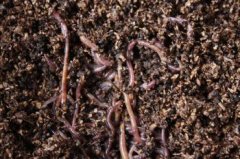
Vermicomposting: Turning Kitchen Waste into Fertilizer
Research and development of vermicomposting: How do you handle your household kitchen waste? If you always throw it away, that is actually a waste. Below we will teach you how to use kitchen waste to make valuable fertilizer. Kitchen waste is produced by every household every day
-
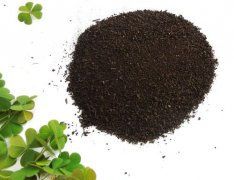
DIY Method for Turning Kitchen Waste into Organic Fertilizer
In many European countries, when dealing with kitchen waste and yard weeds and fallen leaves, people often use their own yards for natural composting, and some use machines for high-speed fermentation. In the early days, farming families in Taiwan, China all had compost sheds and manure pits, and these can provide us with space for reflection and thought.
-
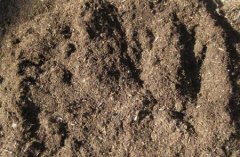
The principles of kitchen waste composting and how to make a compost bin, eco-friendly and practical
Nowadays, we all want a good ecological environment, and many people are making compost, which is both eco-friendly and practically useful. So how do you make compost? Do you know? Let's take a look together. For composting to succeed, you must provide the right amount of water, air,
-
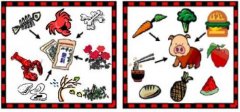
Banning kitchen waste feeding of pigs: kitchen waste may become a transmission route for African swine fever virus
If the African swine fever virus enters China, then kitchen waste is also a very risky transmission route. Let's take a look below. If the African swine fever virus enters China, kitchen waste is absolutely a high-risk route, but at present, after taking stock, the Council of Agriculture has
-

Ministry of Ecology and Environment: Green environment must be protected, the Green Environment Payment Program for Land is implemented
One year into the implementation of the Green Environment Payment Program for Land, farmers are encouraged to convert their original rice paddies to import-substitution crops, key export crops, priority development crops, etc., in order to reduce rice cultivation area. What do frontline personnel think? Implementation of the Green Environment Payment Program for Land
条件筛选