-

The profit landscape of the flour industry is shifting - who is driving it from behind the scenes?
At present, with wheat strong and flour weak, humble bran is to a certain extent affecting the operating efficiency of wheat processing enterprises. Since the second half of last year, bran prices have continued to decline, making flour processing enterprises that were already struggling even worse off, and also affecting this year's
-
Agricultural and poverty-alleviation funds must not be embezzled or misappropriated
As of May this year, procuratorial organs nationwide handled a total of 29,000 duty-related crimes in agriculture-related and poverty-alleviation fields, accounting for 22% of the total number of duty-related crimes filed and handled by procuratorial organs during the same period. Duty-related crimes in agriculture-related and poverty-alleviation fields remain at a high level, in a prone and frequent state. (People
-
Whose cheese does collective land entering the market really cut?
Collective land entering the market is not a new thing. Since the reform and opening up, the rise of township and village enterprises relied on land that was all collective land, in line with the 1988 "Land Administration Law" provision that "establishing township and village enterprises is permitted to use collectively owned land." But this law also clearly stipulated that "the right to use state-owned and collectively owned land may be transferred according to law. The specific measures for the transfer of land use rights shall be separately prescribed by the State Council." Two years later, the State Council promulgated the "Interim Regulations on the Granting and Transfer of State-owned Land Use Rights in Cities and Towns," but to this day it has not promulgated regulations on the transfer of collective land use rights. To be realistic, the existing legal system has basically blocked the routes and channels for "collective land entering the market." But according to Liu Shouying's research, in some developed coastal cities such as Nanhai District in Foshan, Guangdong, from the early 1990s the scope of collective land entering the market was not limited to "establishing township and village enterprises"; it was more used to build factory buildings for foreign-funded, joint-venture and private enterprises.
-
Building Villas Through Land Transfer: Who Will Protect the Farmers' Interests?
Xingning City in Guangdong is an underdeveloped mountainous county. In recent years, the county has frequently brought in large projects with bold, grand gestures, treating one-off land transfers as a disguised form of land expropriation, and farmers' rights have been repeatedly violated. The full name of land transfer is rural land contractual management right
-
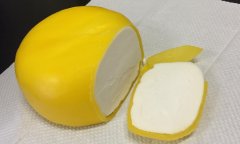
Livestock Research Institute develops locally flavored goat milk Gouda cheese to find a way forward for domestic goat milk
Many people dare not drink goat milk, thinking it has a peculiar taste, but more and more people are drinking fresh cow milk. In comparison, the goat milk industry seems to have encountered difficulties. The Livestock Research Institute of the Council of Agriculture is trying to help goat milk find processing methods that increase added value and solve the problem of surplus milk
-
How to Grow the Formaldehyde-Absorbing Swiss Cheese Plant So Its Leaves Split: Care Methods and Precautions
The name Swiss cheese plant (Monstera deliciosa) may be unfamiliar to friends who do not grow greenery; it is very popular in tropical regions and is generally cultivated in greenhouses. The Swiss cheese plant is also known as Penglai banana, iron wire orchid, and so on. As a plant of the Araceae family, it has its own unique charm.
-
Does the Swiss cheese plant bloom? The latest answer is here
The Swiss cheese plant (Monstera deliciosa) is a sun-loving plant native to Mexico, originally growing in the tropical rainforests of Mexico, evergreen year-round, and often kept as a large potted foliage plant. There is even a folk saying that "the Swiss cheese plant blooming is harder to see than the sago palm," but is that really true? Below we will
-
How to Grow and Care for Monstera obliqua
Monstera obliqua is also called the Swiss cheese vine (Monstera obliqua). Its leaf edges are entire, but the middle of the leaf has holes of varying sizes, giving it high ornamental value. So how do you grow Monstera obliqua? 1. Soil. Monstera obliqua likes to grow in loose, fertile and well-drained
-
What is the flower language and symbolism of the Swiss cheese plant?
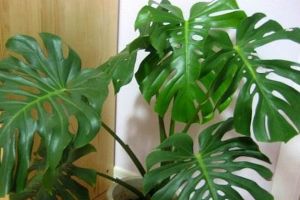
The Swiss cheese plant (Monstera deliciosa) is a southern vegetation; it frequently appears by garden ponds and in hotel lobbies. Its leaves are very peculiar in shape, with many splits on the leaf surface, looking much like a turtle's shell from a distance, while its stem grows like bamboo, hence its name. By associating the extended meaning of its name, one can understand that its flower language is related to health and connected to longevity! So today let us dig deeper into its flower language: health and longevity!
-
What is the flower produced by the Swiss cheese plant called?
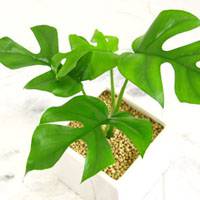
The Swiss cheese plant has a graceful form, unusually shaped leaves, and deep green, glossy foliage, giving the whole plant a fine ornamental effect. It also has the trait of absorbing harmful gases such as formaldehyde and benzene, achieving the effect of purifying indoor air, making it an ideal indoor plant.
条件筛选