-

Introduction to Rhododendron scopulorum and Its Planting and Care Methods
Family and genus: Ericaceae, Rhododendron. Morphological characteristics: evergreen shrub. Height l-4m. Leaves obovate to oblanceolate, with small scales on the underside. 3 flowers terminal, corolla white with pink, about 4.5cm long. Flowering period April-May. Prefers warm and humid conditions, likes light, slightly tolerant of poor soil. A plant endemic to Tibet. Produced in the Yarlung Zangbo River gorge, growing only in scrub at the forest edge on mountain slopes at an altitude of about 2000m.
-
How to care for northern azaleas in summer? Detailed explanation of methods for safely getting through summer
Azaleas prefer a cool, humid, well-ventilated environment. Due to the influence of temperature, light, humidity and other conditions in northern regions, azaleas must endure some challenges in the northern summer. If not handled well, multiple diseases can accumulate at once, the leaves can drop completely and the plant can die. So how can it get through the hot summer smoothly? Roughly, the following points should be grasped: Ventilation. Northern azaleas all overwinter in greenhouses. As spring arrives, temperatures keep rising. In early April, the indoor temperature at noon can reach around 28°C, and at this point ventilation should begin
-
Home Cultivation and Care Methods for Variegated Spider Plant (Chlorophytum comosum 'Vittatum')
Spider plant, also known as weeping potgrass, cinnamon orchid, hook orchid, and folding crane orchid, is called spider grass or airplane grass in Western Europe. It is a perennial evergreen foliage plant of the genus Chlorophytum in the family Liliaceae. Spider plant is a herbaceous perennial with clustered, cylindrical, fleshy fibrous roots and rhizomes. The leaves are basal, linear to linear-lanceolate, narrow and long, flexible like an orchid, 20-45 cm long and 1-2 cm wide, with long, acuminate tips; the base clasps the stem and is borne on short stems. The most distinctive feature of the spider plant is that mature plants will from time to time produce runners, 30-60 cm long, each of whose tips will grow small plantlets
-
How to Raise and Care for a Welsh Corgi: Methods and Precautions
The daily feed should contain 200-250 grams of meat and an equal amount of vegetarian food. For the vegetarian portion, various coarse grains, vegetables, carrots, etc. can be used. The varieties should be changed regularly to ensure comprehensive nutrition. The amount of food fed each day should be moderate; too much or too little is detrimental to healthy growth. Although this dog's coat is somewhat coarse and not very long, it should still be combed and brushed regularly to keep it clean and attractive. It should also be bathed regularly, its earwax and dental tartar cleaned, its eyes washed with warm water (boiled), and its claws trimmed.
-
Planting Techniques and Care Management Methods for Japanese Yew (Taxus cuspidata)
Scientific name: Taxus cuspidata Sieb. et Zucc. Family: Taxaceae Genus: Taxus Distribution: Native to forests of the Changbai Mountain area in eastern Jilin and Liaoning. Biological characteristics: A tree, up to 20 m tall, with a diameter at breast height of up to 1 m; crown broadly ovate or obovate; male plants have a narrower crown while female plants are more spreading; bark reddish-brown, splitting off in flakes. A shade-tolerant tree, slow-growing, with a shallow root system and well-developed lateral roots; it prefers moist soil rich in organic matter, is cold-hardy, and grows well in areas with high air humidity.
-
Detailed explanation of pot chrysanthemum cultivation techniques, easily master the care methods
Single-head pot chrysanthemum 1. Variety selection For pot chrysanthemums, choose large-flowered excellent varieties from single-stem chrysanthemums that have an early flowering period, thick and sturdy stems, dense stem nodes, thick and plump leaves, a large root system, and sensitivity to dwarfing agents such as B. Varieties suitable for pot chrysanthemums include: "White Hydrangea", "Golden Lion Head", "Grass Frost", "West Chamber Waiting for the Moon", "Pink Lion Head", "Sunrise Peach", "Huang Shigong", "Tiger Roar", "Huaguang Cloud", "Queen", "Cloud of the Plateau", etc. 2. Cutting propagation Generally suitable for cutting from late July to early August.
-
Variety Characteristics and Care Methods of Variegated Agaves
I. Common Varieties Five-Color Wanda Variegated (Agave kerchovei v. pectinata), the plant has no stem, and its fleshy leaves are arranged in a rosette. The leaves are sword-shaped to lanceolate, slightly concave in the middle, firm and tough in texture, and not easy to break. The leaf tips have hard brown spines, the leaf margins are wavy with brown spines, the middle of the leaf is yellow-green, the two sides are dark green, and the outermost part is yellow. Hime Ran-yuki Variegated (Agave parrifiora f. varie
-
Spider Plant Care Methods and Daily Maintenance Tips
Spider plant is a perennial evergreen herbaceous flowering plant with a rosette root system. It has diverse forms and is also highly shade-tolerant and easy to manage. It is often used as a hanging potted plant for indoor decoration or garden landscaping. Its management should master the following points: 1. Temperature regulation. Spider plant prefers a warm and humid climate and is not cold-tolerant. It grows fastest at 20-24°C, stops growing above 30°C, and its leaves tend to turn yellow and dry at the tips. Therefore, in summer, take measures to prevent heat and lower the temperature, and pay attention to ventilation. In winter, it should be cultivated in a greenhouse or indoor shelter, with an overwintering temperature of 10°C being suitable, and not lower than 5°C. 2. Light
-
An Introduction to the Beagle's Breed Characteristics and Care Methods
History: This breed is the smallest of the hunting dogs. It originated in ancient Greece. The mixed-blood peoples of the Normans and the French once kept this dog for hunting hares. This dog was introduced to England in 1066. At that time, because of its small size, it was often carried in pockets, so it was called the Pocket Beagle; today's Beagle was improved from this dog. Elizabeth I, William II, and George III all kept this breed and used it as a hunting dog on the hills of Brendon in Sussex. In 1895 the British Beagle
-
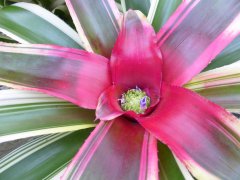
How to grow bromeliads? Master the care methods and watering tips after blooming
How do you plant bromeliads, do you know? Do you also want to grow a nice pot of bromeliads yourself? Then read the introduction below and see how bromeliads are grown. Bromeliads belong to the Bromeliaceae family, and most originate in the tropical rainforests of Central and South America. In total
条件筛选