-

How to grow a Boxwood (Buxus sinica) bonsai? Care management and pest and disease control methods
Boxwood (Buxus sinica), also known as littleleaf boxwood, thousand-year dwarf, etc., is an evergreen shrub or small tree of the genus Buxus in the family Buxaceae, native to the middle Yangtze River basin of China and the regions to its south. It likes warm, semi-shaded, humid climates, is drought-tolerant, cold-tolerant and tolerant of pruning, is a shallow-rooted tree species, grows slowly and lives long, and is an excellent tree material for making bonsai. Care management: Boxwood likes moisture and needs frequent watering to prevent leaf drop caused by water loss. From May to August is the vigorous growth period of boxwood, and several applications of thin, fully decomposed cake fertilizer can be made along with watering. Always pay attention to pruning
-
Cultivation Techniques and Care Methods for Hokkaido Euonymus
Variety origin. Hokkaido euonymus, also known as Japanese euonymus, originated in Sapporo, Hokkaido, Japan. It was introduced in 1986 and, after many years of breeding and selection, became an excellent new variety suited to the climatic conditions of northern China. Characteristics. Hokkaido euonymus has relatively broad, elliptical leaves with bluntly rounded tips, sturdy shoot tips, obvious apical dominance, and a single straight trunk, showing excellent tree-like traits. It grows relatively fast, with an annual growth of 70--170 cm, and a 5-year-old tree can reach more than 3 m in height. Hokkaido euonymus has a very obvious main trunk
-
Detailed Explanation of Magnolia Cultivation Techniques and Care Management Methods
Magnolia is white with a slight bluish-green tint, lustrous, clean and elegant, and is a famous flower native to China, with a cultivation history of 2,500 years. Also known as white magnolia, Yingchun flower, and Wangchun tree, it is a deciduous tree of the Magnoliaceae family and Magnolia genus, with a height reaching up to 15 m; when planted in the ground in the north it is generally about 5 m. The crown is rounded and egg-shaped, the winter buds bear large scales, and both the young branches and the outside of the buds are covered with short soft hairs. Cultivated varieties are short in stature with dense branches, and the flowers are large and densely clustered. Seedling plants are tall with straight trunks and sparsely arranged branches, with abundant leaves and sparse flowers, but they have strong adaptability and grow rapidly. The leaves are large, alternate, obovate to long elliptic, with a very short abrupt tip at the apex, a wedge-shaped base, and entire margins without serrations; the leaf surface is glossy and has sparse soft hairs, and the veins on the underside are also covered with soft hairs; the petiole is very short. The flowers are large, borne singly at the top of the branches; the bell-shaped petals are obovate, white, fleshy, and delicately fragrant; the calyx is white and very similar to the petals, with 9 to 15 pieces together with the petals. They open before the leaves in spring, and the flowering period is about 8 to 10 days. The aggregate fruit is cylindrical; the young fruit is green, and after ripening it turns brown and splits open. The seeds hang outside the fruit, connected to the placenta by a thin thread at the hilum; the outer seed coat is red and fleshy, and the inner seed coat is bony; the fruit ripens in October. Varieties include the purple-red magnolia, whose outer tepals are purple-red and inner tepals pale red, opening at the same time as the leaves, and fragrant. Based on the number of petals, whether the tepals are upright or recurved, the width of the petals, flower color, and flowering period, magnolia has been preliminarily summarized into 6 to 11 types.
-
Dendrobium Orchid Home Growing Tips and Daily Care Methods
Dendrobium orchids, along with Cattleya, Phalaenopsis and Vanda, are ranked as the four major tropical ornamental orchid groups, and are one of the largest genera in the Orchidaceae family, with 1500-1600 native species, of which about 60 are found in China. Dendrobiums are divided into two major categories, deciduous dendrobiums and evergreen dendrobiums, according to their biological characteristics and different ecological requirements. Deciduous dendrobiums send up flower spikes from the upper part of the pseudobulb each year, and after flowering new shoots grow from the base and develop into new pseudobulbs, with the leaves falling at the end of the growing period or in the spring of the following year. Evergreen dendrobiums
-
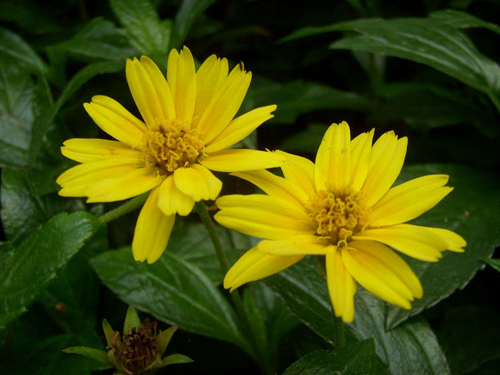
Cultivation and Care Methods and Medicinal and Other Uses of Wedelia trilobata
Wedelia (Wedelia trilobata, also known as South American wedelia) Scientific name: wedeliatrilobata. Common names: Three-lobed wedelia, Dijinhua, Chuandilong (Yunnan), Longguqi. Family and genus: Asteraceae. Morphological characteristics: Perennial herb. Stems creeping, leaves opposite, ovate-lanceolate.
-
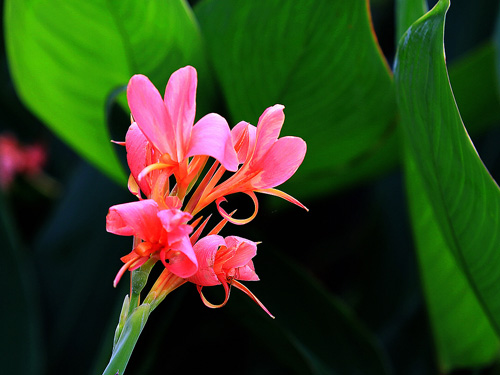
Cultivation and Care Methods for Aquatic Canna (also known as Variegated Canna)
Aquatic Canna (Variegated Canna) Scientific name: Canna glauca. Alternative name: Florida Canna. Family and genus: Cannaceae, Canna genus. Morphological characteristics: Perennial rhizomatous herb, dwarf, plant height 50-80 cm. Has root tubers, leaves broadly elliptical, alternate.
-
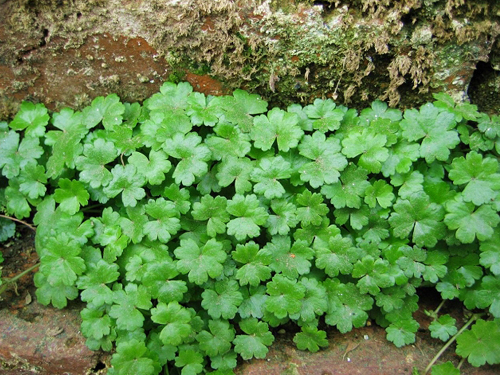
How to grow Hydrocotyle sibthorpioides? Introduction and care methods for Baby's Tears, Po Tong Qian
Hydrocotyle sibthorpioides (Baby's Tears, Po Tong Qian, Taiwan Hydrocotyle) Scientific name: hydrocotylesibthorpioides Family: Apiaceae Morphological features: Perennial herb. Plant height 5-10 cm, stems slender, creeping growth. Leaves alternate, kidney-shaped, usually 5-lobed, hence the name Po Tong Qian
-
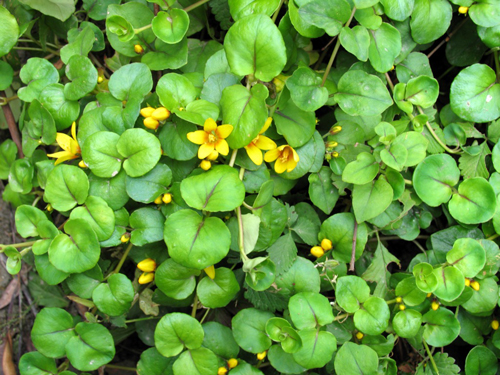
Care and Management Methods for Dichondra repens (Yellow Gall Grass, Moneywort)
Dichondra repens (Yellow Gall Grass, Moneywort, Pouch Grass) Scientific name: dichondra repens. Aliases: Small Moneywort, Pouch Grass, Meat Wonton Grass, Golden Key, Copper Coin Grass, Small Dichondra, Jaundice Grass. Family and genus: Convolvulaceae. Morphological characteristics: Perennial creeping herb. Leaves alternate, horseshoe-shaped, bright green.
-
How to grow roselle? Detailed cultivation and care methods
There are many kinds of flowers, and different flowers differ greatly in shape, color and fragrance. The common flowers are roses and lilies. These flowers are very common and are also women's favorites. In particular, roses represent love, and different numbers of roses have different meanings.
-
How to care for the Boston fern? These methods you need to master
The Boston fern, also known as comb fern. It is a perennial evergreen herbaceous plant of the Davalliaceae family. The fronds are deeply pinnatifid, lanceolate, bright green, and grow in dense clumps. The sori are borne at the tips of the upper veinlets on each side vein of the pinnae, and the indusium is kidney-shaped. Commonly cultivated plants of the same genus include the long-leaved Boston fern, the fine-leaved Boston fern, and the slender-leaved Boston fern.
条件筛选