How to grow bromeliads? Master the care methods and watering tips after blooming
How do you plant bromeliads, do you know? Do you also want to grow a nice pot of bromeliads yourself? Then read the introduction below and see how bromeliads are grown.
Bromeliads belong to the Bromeliaceae family, and most originate in the tropical rainforests of Central and South America. There are more than three thousand species in total, and their appearance can also be very different. This includes the pineapple we eat (pineapple), the beautiful pink pineapple Aechmea, and also the Tillandsia, which does not look like a flower at all and resembles a clump of grass (it absorbs nutrients and moisture entirely from the air).
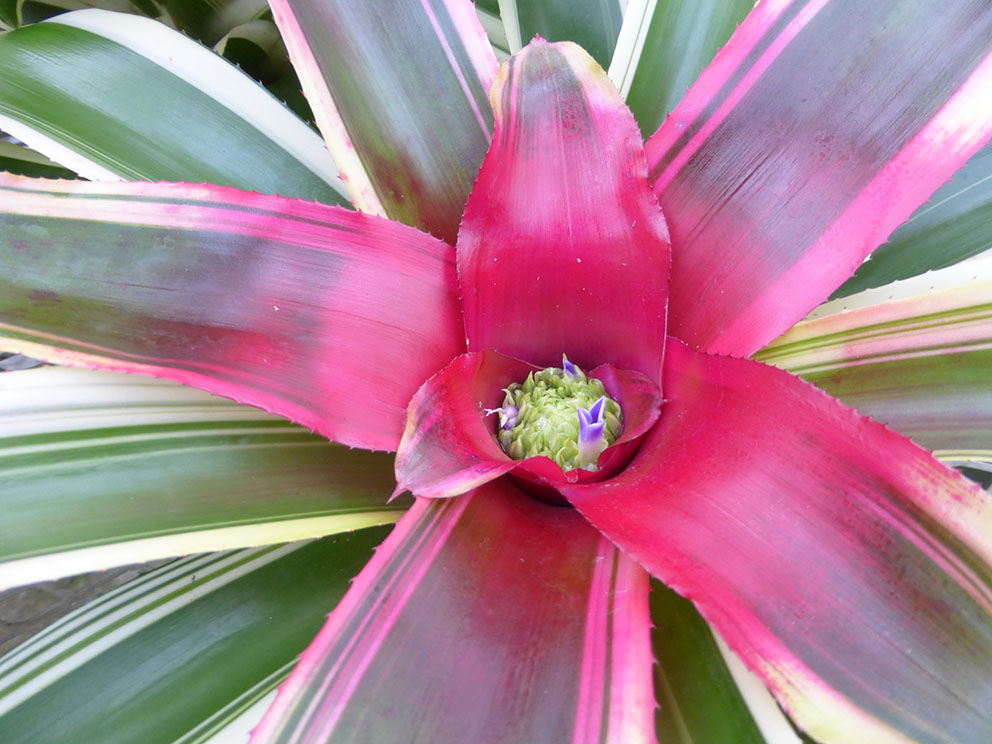
Bromeliads were once regarded as the aristocracy of indoor potted plants, because they are dazzling when in bloom and are decorative potted plants favored by interior designers. Most of the flowers are bright red or pink, and even without obvious flowers, the leaves will also show beautiful colors. In the past, the price was not cheap, but recently they have become less expensive, and in fact care is not difficult. (Below; bromeliads in natural environments all grow on large trees, so many hotels or lobbies plant bromeliads on tree trunks.)
The characteristic of bromeliads is that most have large, slender leaves in a radiating pattern, forming a water cup in the middle that can collect moisture. So although they very much need a humid environment, it is no problem if it does not rain for a while. In the rainforest, this water cup also collects nutrients such as bird droppings and insect corpses. Some bromeliads have tiny gray scales on their leaves and can absorb nutrients from the air, so the role of the roots in absorbing water is not great. In addition, most bromeliads are epiphytes, attached to tree trunks. Therefore, some can be grown like orchids on sphagnum moss or on tree fern boards. Only the edible pineapple must be grown in the ground, or in potting soil (see below).
Once you know the properties of bromeliads, you can roughly know how to care for them. When watering, you can pour water into the water cup at the center of the leaves; if you see there is still water in the water cup, there is no need to water again. Fertilizer can also be applied into the water cup, but you absolutely must not use too much fertilizer, to avoid damaging the leaves. It is best to use an extremely small amount, that is, apply little but often. Another type with scales on the leaves needs more light; this type should maintain humid air, but can be watered less, because the leaves will absorb moisture.
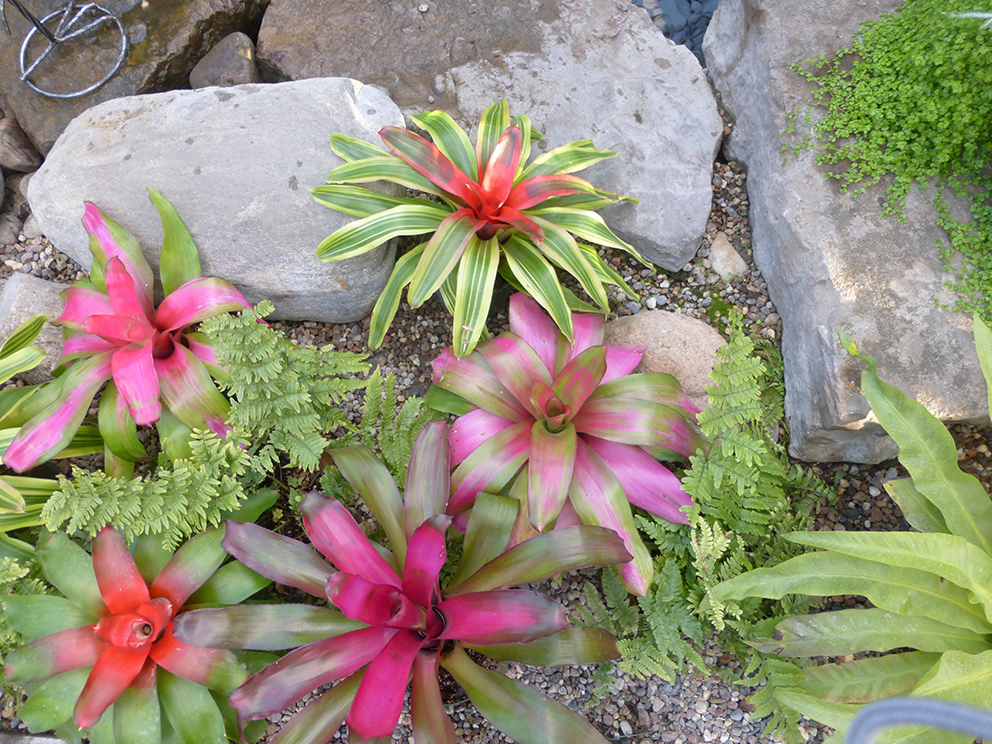
Bromeliads used to be more expensive because you had to wait many years for the plant to mature and bloom. So those already blooming in stores are plants that have been grown for many years. However, the flowering period is very long; after you buy it and bring it home, you can place it in the living room for several months. After the flowers fade, the plant dies, but new offsets will appear at the base, usually at least one offset, sometimes as many as two or three. After the offsets grow a little larger, you can remove them and plant them in potting soil, then wait slowly; after two or three years they will bloom again. However, while the offsets are not yet large, because they do not have their own water cup, you should keep the leaves of the mother plant and continue watering into the water cup.
They can be transplanted once the offsets are about six inches tall. After transplanting, water according to the rule (water when the surface soil is dry), and reduce the frequency of watering in winter. Apply a little fertilizer in spring and summer, and in addition maintain plenty of light. After two or three years they will grow into adult bromeliads. If they do not bloom after reaching maturity, there is a trick: place a fully ripe apple together with the plant, then cover the plant with a paper bag for a week before opening it. The ethylene carbide released by the apple will promote flowering. In addition, a few drops of the liquid Ethrel sold in flower shops dripped into the water cup will also help flowering.