-

Interplanting autumn soybeans in rice paddies yields good increases in both output and income
According to trials: after the mid-season rice harvest, by using the temperature and light conditions in the field, planting an additional season of autumn soybeans can increase soybean yield by 60-120 kg/mu, with economic income of 150-420 yuan/mu, giving a relatively good effect of increasing both output and income, and it is suitable for extension in ratoon rice areas below 400 m in altitude. The key technical points are as follows: 1. Suitable site and good varieties: fields below 400 m in altitude with no water for retaining ratoon rice, as well as all rice seed production fields, can be planted. After the rice grains have set, open ditches to drain water; after the rice harvest, promptly clear weeds and rice stubble, without plowing, and according to
-
Jewel orchid has both attractive flowers and leaves, making it an excellent ornamental plant
The jewel orchid is a beautiful and intriguing potted orchid, also known as the jewelry orchid, and can be used in rock bonsai arrangements. Its clusters of small, snow-white, crystal-clear flowers have a unique form, its leaf patterns and leaf colors are beautiful, and its fleshy stems resemble giant silkworms, segmented one section after another; cutting them into sections with a sterilized sharp knife allows for propagation. To get this common orchid, the jewel orchid, to bloom, the following points must be noted: 1. Constant adequate moisture - the jewel orchid is native to humid, semi-shaded environments, and is difficult to bloom when too dry. It is best to use high-quality wet sphagnum moss; absorbent
-
Intercropping insect-resistant cotton with potatoes: both crops can achieve high yields
In recent years, the model of intercropping potatoes with insect-resistant cotton has been welcomed by the people. According to surveys, this model not only enables cotton to achieve high yields (lint yield of 90-100 kg per mu), but also "freely" yields an extra 1500-2000 kg of potatoes per mu. The key cultivation techniques are as follows. I. Potatoes ① Seed selection and sprouting. It is advisable to choose early-maturing, short-stalked, high-yielding virus-free varieties, such as Holland No. 7, Jinyin No. 8, etc., using 80-90 kg of seed potatoes per mu. In mid-February, cut the seed potatoes into pieces (each kg cut into 40-50 pieces) and use a sunny cold frame or greenhouse
-
Golden Crown, a new yellow peach variety, is suitable for both canning and fresh eating
Golden Crown is a new yellow peach variety for both canning and fresh eating, selected from naturally crossed open-pollinated seedlings of Jinxiu. In September 2006, it passed expert appraisal organized by the Shandong Provincial Department of Science and Technology. The fruit is nearly round, with an average single fruit weight of 167 g and a maximum of 245 g. The skin is golden yellow, with no red blush, and the appearance is beautiful; the flesh is yellow, non-melting, does not brown, has good overall traits for canning processing, and is sweet-sour and palatable for fresh eating. It contains 13.8% soluble solids, 9.8% total sugar, and 0.67% total acid, with a rich apricot aroma and excellent quality; the pit is small and clingstone, and the
-
Golden lilies bloom easily, and both planting and care are not difficult
Golden lilies are mostly used as cut flowers and bloom easily. When planting, pay attention to the following points: 1. It is best to cultivate with plump bulbs - the purchased bulbs should be plump and elastic so they will bloom easily in the future; shriveled bulbs, damaged bulbs, or bulbs that have been stored too long will fail to bloom. 2. Do not expose to light in the early stage of planting the bulbs - it is best to plant the "bulbs" in autumn or spring, burying 2/3 in the soil with the tip pointing upward and about 1/3 exposed. Keep the planting soil moist, do not fertilize for the time being, and keep it cool and shaded, exposing it to as little light as possible. This will not only help it root faster, but also use the "dark period"
-
Both sunstroke and heatstroke in pigs are caused by high temperatures
In the hot summer, pigs are prone to heatstroke. In fact, heatstroke is the collective term for sunstroke and heatstroke, which traditional Chinese veterinary medicine calls black-sweat wind. Causes The causes of sunstroke and heatstroke differ, but their pathological processes cannot be completely separated. Sunstroke occurs when pigs are exposed to direct sunlight for too long, causing a rise in physiological body temperature and overheating and warming of the skin, which dilates the skin blood vessels. On the other hand, overheating of the head leads to congestion of the brain and meninges, ultimately causing disorders of the cerebral cortex regulatory function and the vital centers in pigs.
-
Detailed Explanation of the Technique for Fruiting on Both the Front and Back Sides of Oyster Mushroom Beds
Using indoor frame-style cultivation of oyster mushrooms, fruiting simultaneously on both the front and back sides of the mushroom bed can, without increasing the substrate per unit area and without changing the substrate formula or the spawn sowing rate, produce an average of 16 kg of mushrooms per square meter of mushroom bed, and bring fruiting about 7 days earlier. 1. Setting up the mushroom bed frame structure: Build a frame indoors using materials such as moso bamboo, and fix the mushroom bed baseboard onto the frame. Generally the frame is 2 m high, with three tiers of mushroom beds, and the distance between tiers is 60-65 cm; beds managed from both sides are 110 cm wide, and beds managed from one side are 55 cm wide; the bed baseboard is made by nailing thin wooden boards, with 1.5-2 cm between each wooden strip. 2. Sowing: Select the Florida strain, which has a relatively broad suitable temperature range. Use the "layer sowing method": first lay a layer of plastic film on the mushroom bed baseboard, with a width 2.5 times the width of the bed baseboard, then spread a layer of substrate about 3 cm thick on the plastic film, then spread a layer of spawn, with the spawn layer no more than 1 cm thick; after spreading 4 layers of substrate and 3 layers of spawn in this way, press firmly, then cover the surface of the culture medium with a layer of water-soaked wet newspaper, and finally wrap the entire culture medium tightly with plastic film. 3. Fruiting management: About 60 days after inoculation, when the mycelium has basically finished colonizing the substrate, use a blade to make intermittent longitudinal cuts in the plastic film at the gaps on the back side of the mushroom bed baseboard. Each cut segment should be no longer than 15 cm, and both the horizontal and vertical spacing between cuts should be greater than 15 cm. Thereafter, each time the mushroom bed is watered, use a sprayer to spray an appropriate amount of water onto the cuts on the back side of the bed; other management is the same as conventional. After the first flush of mushrooms on the back side of the bed is harvested, the uncut plastic film on the back side of the bed can be slit open again with a knife. During the entire cultivation process, 2-3 flushes of oyster mushrooms can be harvested from the back side of the bed, with yield close to that of the front side of the bed.
-
Deworming Dogs: Treat Both Inside and Out
"A woman's beauty must come from the inside out!" Most people have probably heard advertising slogans like this, but hearing that deworming your dog must be done from the inside out is probably a first for you. Anyone who keeps a dog knows that dogs need annual infectious disease vaccinations and deworming, and the order must never be reversed. Compared with getting infectious disease vaccinations, deworming is not so simple. Deworming effectively kills parasitic eggs such as roundworms, hookworms, and pinworms inside a dog's body. In the minds of some dog owners, deworming their dogs
-
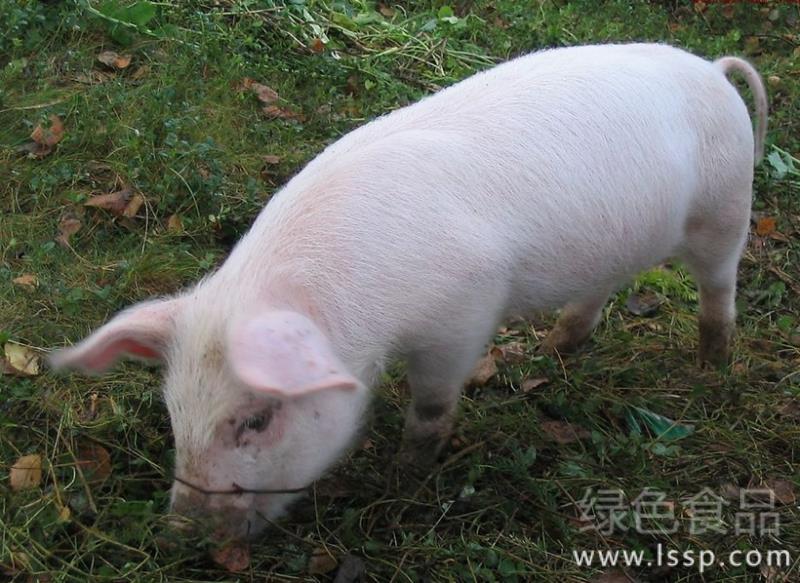
Piglet stubborn diarrhea has both high incidence and high mortality; how should it be treated?
Piglet diarrhea with high incidence and high mortality: how to treat piglet stubborn diarrhea
-
Detailed Explanation of Key Cultivation Techniques for Upland Rice in Spring in Both Northern and Southern Regions
I. Early-Stage Management Techniques for Early Rice Production in the South China Rice Region Currently, it is necessary to focus on drought resistance and protecting spring plowing, and to seize the opportunity for transplanting and planting. In the southern region, early rice should be transplanted around Qingming; in the central region, around Guyu; and in the northern region, before "May Day." The following technical measures should be mainly adopted: 1. Apply sufficient basal fertilizer and transplant sufficient seedlings, and apply tillering fertilizer early and heavily. On the basis of applying good seedling-departure fertilizer to the seedling field, apply 30 kg of ordinary superphosphate, 7.5 kg of potassium chloride, and 25 kg of ammonium bicarbonate per mu as basal fertilizer. Where conditions permit, apply 1000-1500 kg of high-quality farmyard manure per mu. Throw or transplant 21,000-25,000 hills per mu; for hybrid rice, two seedlings per hill (two grains), and for conventional rice, 4-6 seedlings per hill. 5-7 days after throwing or transplanting, apply 5-6 kg of urea per mu as tillering-promoting fertilizer; 12-15 days after throwing or transplanting, apply about 7.5 kg of urea and 7.5-10 kg of potassium chloride per mu, or 12.5-15 kg of compound fertilizer per mu as strong-tillering fertilizer.
条件筛选