-

Honeysuckle: An Excellent Greening Plant That Is Both Medicinal and Pollution-Resistant
Honeysuckle is widely distributed in our country, from Liaoning in the north, Shaanxi in the west, Hunan in the south, to Yunnan and Guizhou in the southwest. It is a woody vine, evergreen, fragrant flower that grows wild in the mountains and is widely cultivated in gardens. In small courtyards, they can climb walls and reach into the air, expanding green coverage; in summer they also bring fragrance throughout the courtyard, which can ease the restlessness of summer heat. Honeysuckle belongs to the genus Lonicera in the family Caprifoliaceae. Its paired, inch-long tubular axillary flowers bloom side by side; when they first open, both stamens and petals are white, as white as jade, and after two or three days they
-
The Chinese honey locust is a tree species with both ecological and economic benefits, worthy of vigorous promotion
The Chinese honey locust is a tall tree with a full-fruiting period lasting 200 years, and is an ecological and economic multipurpose tree species with broad development potential in our country. The Chinese honey locust is drought-tolerant and water-saving, with a well-developed root system, and is suitable for growing in areas with a frost-free period of no less than 180 days, a minimum temperature not below minus 20°C, at least 2400 hours of sunlight, and rainfall not exceeding 800 mm. The Chinese honey locust is heat-tolerant, cold-resistant, and pollution-resistant, making it a good tree species for urban and rural landscape forests and road greening, and also an important hedge species. The Chinese honey locust can fix nitrogen, has wide adaptability
-
Strawflower is both a flower and a tea, good for ornamental viewing and for brewing tea
Strawflower is also known as shell flower. The flowers are hard, shaped like shells or wheat straw, and resemble chrysanthemums, hence the name. The flowers can be brewed as tea and have effects such as cooling and relieving summer heat, refreshing the mind and lowering blood pressure, with no toxic side effects, making them a fine beverage. The flower colors are gorgeous, the flowering period is long, planting is simple, management is extensive, and adaptability is strong. It can be grown in pots or in the ground, and it is very popular. 1. Plant characteristics. Asteraceae, annual herbaceous flower. Plant height 50-70 cm, leaves dark green, long elliptical, lanceolate, leaves alternate, 7 cm long and 2 cm wide. Flowers double-petaled, flowers stra
-
Harvesting wheat at the late dough stage gives both high quality and high yield
In recent years, researchers have studied the grain-filling rate of several wheat varieties, and the 1000-grain weight reaches its maximum at the late dough stage of wheat. If harvesting begins 3 days after this, the 1000-grain weight decreases by an average of 0.3-9.4 grams per day, while if harvesting begins on the 4th-5th day, the 1000-grain weight decreases by an average of 1-1.2 grams per day. If calculated at 350,000-400,000 ears per mu and 35 grains per ear, for every 1 gram decrease in 1000-grain weight, the yield per mu drops by 13-15 kg. Studies show that harvesting wheat at the late dough stage is most suitable, because during the milk-ripening stage, the stems and leaves
-
What flower is the strawflower? Everlasting flower and "beixigong" are both its other names.
Latin name: Helichrysum bracteatum. Other names: strawflower, beixigong. Family and genus: Asteraceae. Origin: native to Australia, now widely cultivated in countries around the world. Characteristics: herbaceous, plant height 70-120 cm, stems stout and rough, seemingly hairy, leaves linear or lanceolate, capitulum solitary at the tip of branches, flower diameter 3-6 cm, the petals at the edge of the disc are multiple layers of involucral bracts surrounding the capitulum, the outer bracts are short and arranged in an imbricate pattern,
-
How do you make jujube paste popsicles that are both delicious and refreshing in summer?
Ingredients: 500 g red dates, 1400 g white sugar, 100 g starch, 50 g osmanthus, 7000 ml water. Method: 1. Wash the red dates, boil them in water until soft and cooked, peel and remove the pits, and make them into jujube paste. 2. Put the starch in a bowl, pour in a little cold boiled water and mix evenly into wet starch. 3. Pour the water into a pot, bring to a boil over high heat, then add the white sugar, wet starch, and jujube paste and mix well, adjust the taste, sprinkle in the osmanthus, and after it cools, pour it into popsicle
-
New red-leaf peach series cultivars, good for both ornamental viewing and eating
Ma Yuxi, a senior engineer at the Zhonghua Winter-Ripening Fruit Tree Research Center in Xun County, Henan Province (telephone: 0392-5811384), after 10 years of arduous exploration, finally bred 12 new red-leaf peach series cultivars with different colors and flower types, which both delight the eye and let people enjoy delicious fruit. After spring returns to the earth, this peach can first be enjoyed for its peach blossoms, then for its red peach leaves, third for the red fruit hanging all over the branches, and finally people can also eat sweet, large fresh peaches. For the red-leaf peach series cultivars, the flower buds begin to swell and the leaf buds begin to sprout in early March, and flowering begins in early April
-
How can goji berries be cultivated to achieve both high yield and premium quality?
Goji berry (Lycium barbarum) is a perennial deciduous shrub of the genus Lycium in the nightshade family Solanaceae. Its leaves, fruit, roots and bark all have extensive medicinal value. It has strong stress resistance and tolerance to fertilizer and water, and is suitable not only for planting in arid, sandy wasteland and saline-alkali land, but is also an excellent tree species for courtyard economies; its fruiting period is long, and plants set out in the current year can still bear fruit up to 50 years later, reaching full fruiting stage in 3 to 4 years, generally producing more than 3000 kg of dried fruit per hectare; its fruit contains a variety of organic compounds and nutrients and has effects such as tonifying the kidney, nourishing the liver, brightening the eyes, invigorating blood circulation and fighting cancer. 1. Select good varieties. There are many goji varieties; in ** alone there are nearly 1
-
Dry branch plum is easy to grow, offering both ornamental flowers and medicinal benefits
Dry branch plum is native to Siberia and the Mongolian Plateau, and has many names reflecting its characteristics, such as two-color blood tonic grass, fly-catching flower, fly rack, salt cloud grass, catchfly, etc. Dry branch plum resembles plum blossoms, never fades, never withers; the fresh flowers are just as uniquely beautiful as the dried ones, and it is praised as "the flower that never withers." Dry branch plum blooms in all four seasons; the flowers are purple or pink at first and turn white as they mature, hence the name two-color blood tonic grass. This flower is a precious Chinese herbal medicine; the whole plant including the root is used medicinally, and it can activate blood circulation, stop bleeding, warm the middle
-
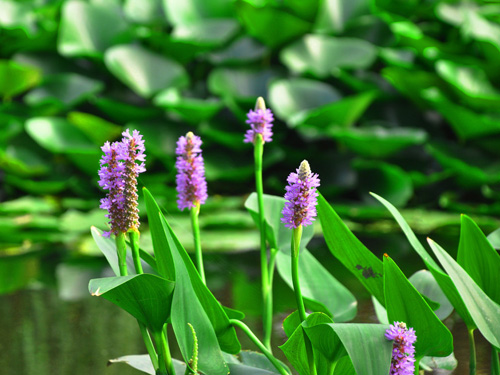
Is aquarium water good for watering flowers? Water from goldfish and tropical fish tanks both work
Fish tank water can be used directly for watering flowers. Not only is the water temperature close to the air temperature, but the water is also soft, high in nutrients, and high in air content. Water from a fish basin exposed directly to the open air differs little from natural air temperature, and some nutrients decompose quickly; water from an aquarium has less air content and a large temperature difference from natural air temperature
条件筛选