-

What Green Plants Are Suitable on Both Sides of the TV Cabinet? Introduction to 5 Plants
In home decor, green plants not only beautify the environment but also purify the air and improve quality of life. As the center of family activities, the living room makes the choice of plants on both sides of the TV cabinet especially important. Here are several plants suitable for placing on both sides of the TV cabinet; they not only have ornamental value but also add a touch of vitality to home life.
-

How to propagate boxwood? These methods are simple and practical
Boxwood is a common landscaping tree in green areas and along roadsides, with high ornamental value, and some people even grow it specially as bonsai, so how do you propagate boxwood? 1. Seed propagation (1) Site selection and soil preparation: In early September, choose loose, fertile, well-drained sandy soil as the sowing bed, apply base fertilizer (organic fertilizer), and at the same time mix in insecticides and fungicides, then deep plow and level the soil to make the sowing bed.
-

Pneumonia outbreak leaves employers and workers crying out in distress; Taipei City Department of Labor urges both sides to weather the hard times together
Regarding the impact of the severe special infectious pneumonia outbreak, which has caused business units to suspend operations or cut production, Chen Hsin-yu, Director of the Taipei City Department of Labor, said the department has so far received filings from 4 companies, affecting more than a hundred workers. On February 17 alone, there were...
-
Detailed Explanation of the Technique for Fruiting on Both the Front and Back Sides of Oyster Mushroom Beds
Using indoor frame-style cultivation of oyster mushrooms, fruiting simultaneously on both the front and back sides of the mushroom bed can, without increasing the substrate per unit area and without changing the substrate formula or the spawn sowing rate, produce an average of 16 kg of mushrooms per square meter of mushroom bed, and bring fruiting about 7 days earlier. 1. Setting up the mushroom bed frame structure: Build a frame indoors using materials such as moso bamboo, and fix the mushroom bed baseboard onto the frame. Generally the frame is 2 m high, with three tiers of mushroom beds, and the distance between tiers is 60-65 cm; beds managed from both sides are 110 cm wide, and beds managed from one side are 55 cm wide; the bed baseboard is made by nailing thin wooden boards, with 1.5-2 cm between each wooden strip. 2. Sowing: Select the Florida strain, which has a relatively broad suitable temperature range. Use the "layer sowing method": first lay a layer of plastic film on the mushroom bed baseboard, with a width 2.5 times the width of the bed baseboard, then spread a layer of substrate about 3 cm thick on the plastic film, then spread a layer of spawn, with the spawn layer no more than 1 cm thick; after spreading 4 layers of substrate and 3 layers of spawn in this way, press firmly, then cover the surface of the culture medium with a layer of water-soaked wet newspaper, and finally wrap the entire culture medium tightly with plastic film. 3. Fruiting management: About 60 days after inoculation, when the mycelium has basically finished colonizing the substrate, use a blade to make intermittent longitudinal cuts in the plastic film at the gaps on the back side of the mushroom bed baseboard. Each cut segment should be no longer than 15 cm, and both the horizontal and vertical spacing between cuts should be greater than 15 cm. Thereafter, each time the mushroom bed is watered, use a sprayer to spray an appropriate amount of water onto the cuts on the back side of the bed; other management is the same as conventional. After the first flush of mushrooms on the back side of the bed is harvested, the uncut plastic film on the back side of the bed can be slit open again with a knife. During the entire cultivation process, 2-3 flushes of oyster mushrooms can be harvested from the back side of the bed, with yield close to that of the front side of the bed.
-
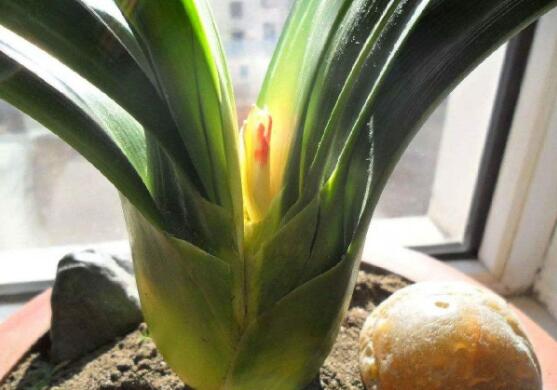
What to do when a clivia gets its flower stalk stuck? Try tying the leaves on both sides and pouring beer into the pot
Gardeners are all familiar with the clivia (Clivia miniata), which has thick, broad leaves that are emerald green and beautiful. But it is precisely because the leaves are large that clivias often suffer from a stuck flower stalk, meaning the flower is trapped by the leaves and cannot open. So what should you do when a clivia gets its flower stalk stuck? It is actually very simple: tie the leaves on both sides together
-
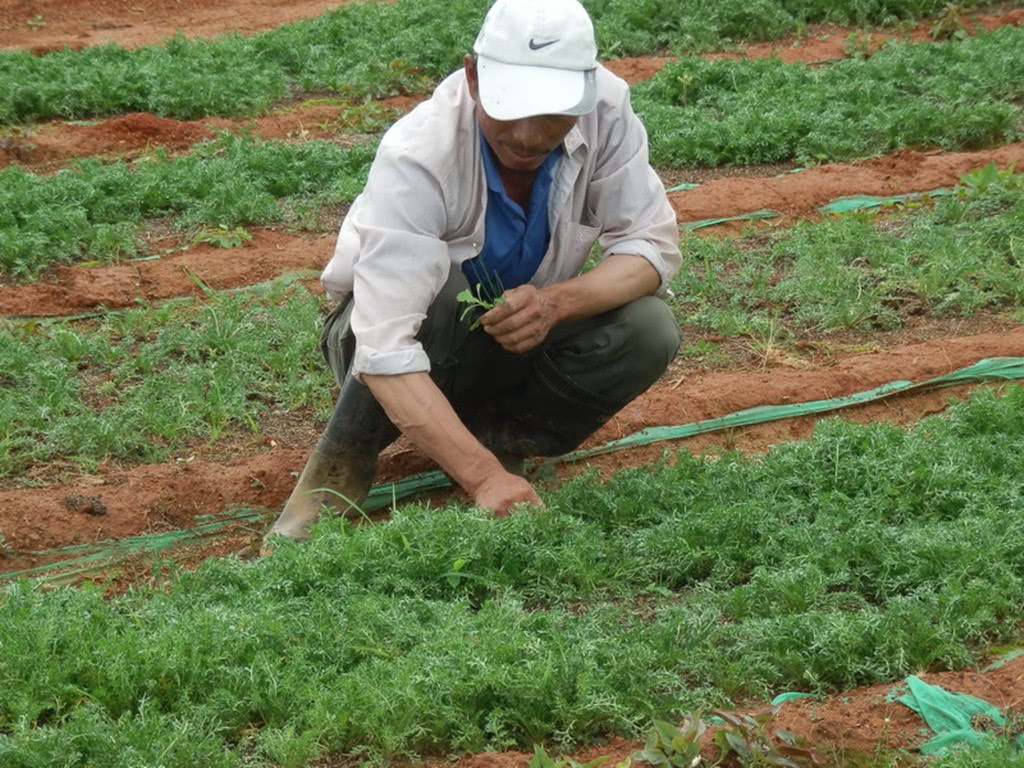
A once-famous luxury item that sold at sky-high prices has been reduced to pig feed, leaving growers squeezed from both sides.
A once-famous luxury item that sold at sky-high prices has now become pig feed. Growers say: I'm squeezed from both sides. With the rapid development of technology and rising living standards, people's demand for material goods keeps expanding, which has also led innovative people to...
-
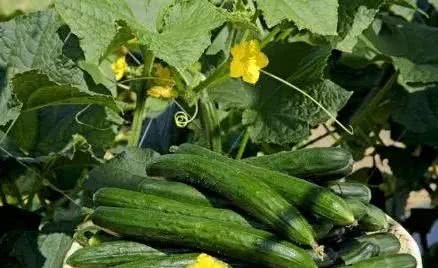
Large space in the cucumber patch means reasonable intercropping can bring high yields, but planting the wrong vegetables together leaves both sides damaged
It is time to sow autumn cucumbers again. Cucumbers have always been a vegetable deeply loved by friends, especially in summer when cold cucumber salad is very refreshing. Cucumbers are also rich in nutrients, full of protein and vitamins, and clear heat and detoxify...
-

How to improve the survival rate when transplanting Chinese tallow trees on both sides of a road
Techniques for transplanting Chinese tallow trees on both sides of a road to improve the survival rate. The Chinese tallow tree (Triadica sebifera) has strong adaptability to soil, growing in soil types such as red soil, yellow soil, yellow-brown soil, purple soil and brown soil, in soils of textures ranging from sand to clay, as well as in acidic, neutral or slightly alkaline...
-
-
条件筛选