How to improve the survival rate when transplanting Chinese tallow trees on both sides of a road
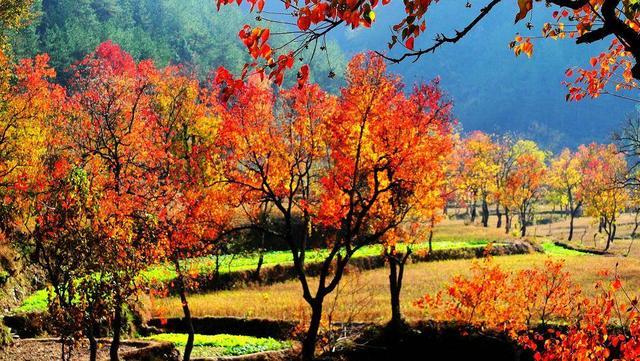
Techniques for transplanting Chinese tallow trees on both sides of a road to improve the survival rate
The Chinese tallow tree has strong adaptability to soil, growing in soil types such as red soil, yellow soil, yellow-brown soil, purple soil and brown soil, in soils of textures ranging from sand toclay, as well as in acidic, neutral or slightly alkaline soils, and is one of the tree species with strong salt resistance.The Chinese tallow tree requires relatively high soil moisture and can tolerate short-term waterlogging. It also has a certain degree of wind resistance and is relatively tolerant of droughtand barren conditions. In addition, the Chinese tallow tree has strong resistance to toxic hydrogen fluoride gas. Because the Chinese tallow tree likes moist and fertile soil,however, when the Chinese tallow tree is used as a landscaping tree species, it is generally planted on both sides of roads, where the soil moisture is relatively low, compaction is relatively serious,and the soil is generally not fertile either. When planted on both sides of roads, the survival rate is not high, and after planting it needs frequentwatering, generally once every 10 [days] or less, which wastes a large amount of water resources, as well as thelabor costs required for planting, and so on.
Select 4-year-old nursery stock, height 1m, diameter 6cm. The Chinese tallowtree is transplanted in March in spring; it can be planted both before and after bud break. When transplanting, a soil ball must be kept, with a soil ball diameter of 40cm. Diga large planting pit of 1m x 1m x 1m, apply decomposed organic fertilizer at the bottom of the pit, backfill with good soil, then place the seedling in, and control the planting depthso that the surface backfill soil is 8cm from the root collar of the seedling. Then water thoroughly once, water again after three days, and thereafter water once every 20 days. Afterdigging out the soil ball, spread a water-retaining agent inside the soil ball and water it; the water-retaining agent is potassium carboxymethyl cellulose 0.2kg. The soil ball is dug into a spiralshape, rather than a plate shape or a conical shape, and the soil ball is tied tightly with straw rope. Pruning branches and removing leaves should remove inner canopy branches, overlapping branches and diseased and pest-infested branches, andstrive to maintain the integrity of the tree shape. After planting, support stakes should be set up to secure the trunk.