-
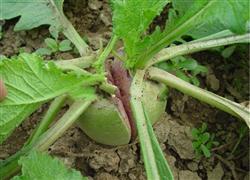
What to do when radishes are pithy? Timely boron fertilizer supplementation is key
The main cause of split roots in radishes is uneven water supply. It tends to occur in the mid-to-late growth stage, mostly splitting lengthwise along the fleshy root, with deep cracks of varying lengths. Cracked fleshy roots are prone to soft rot and do not store well. In the early growth stage, if high temperature and drought occur and soil moisture supply is insufficient, the skin of the fleshy root can...
-
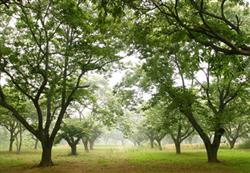
Chestnut trees should be supplemented with zinc and boron fertilizer promptly after harvest
At present, the yield of most chestnut orchards is not high, with only 4-5 kg per tree. Many bearing chestnut trees have burrs but no nuts (that is, empty burrs). The reason, apart from extensive management, is largely related to the failure to apply or spray zinc and boron. Practice has proven that supplementing with soil application and foliar spraying of zinc and boron micro-fertilizers after chestnut harvest promotes flowering, differentiation, improves flower quality, and ensures...
-
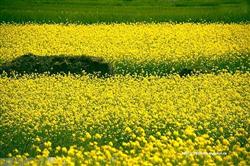
Techniques for Achieving High-Quality, High and Stable Yields in Rapeseed through Heavy Application of Boron Fertilizer
Rapeseed is a boron-demanding crop, and especially high-yield, high-quality cabbage-type "double-low" hybrid rapeseed is particularly sensitive to boron deficiency. Boron deficiency at the seedling stage causes slow rooting, dark green and wrinkled leaves, and stunted growth; boron deficiency at the bud-bolting stage causes swelling of the root crown, leaves turning purple to blue-purple, and abnormal flower bud development; boron deficiency at the flowering stage causes plant dwarfing and abnormal pollen...
-
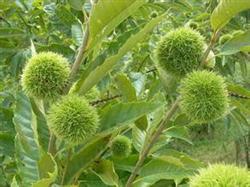
Key Technical Points for Skillfully Applying Boron Fertilizer to Chestnut Trees
According to surveys, in areas where chestnuts grow normally, 15% of the burrs are empty, and in some cases the rate is even as high as over 50%, seriously affecting chestnut growth. Boron deficiency is the main cause of empty chestnut burrs. Applying boron fertilizer can markedly inhibit the formation of empty chestnut burrs and increase yield. In spring, before the chestnuts sprout, apply it in a ring-shaped trench or in holes...
-
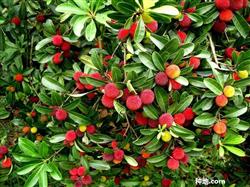
Correct Methods and Technical Key Points for Applying Boron Fertilizer to Chinese Bayberry
How to fertilize Chinese bayberry for high yields? Please advise. The following methods can be referenced for fertilizing Chinese bayberry: 1. Rational fertilization. Fertilization of Chinese bayberry should take into account the soil and tree nutrient levels as well as the fertilizer requirements of Chinese bayberry. First is the fertilizer requirement characteristics of Chinese bayberry; attention should be paid to the use of nitrogen and potassium fertilizers, as mature trees have a relatively high demand for potassium fertilizer. Potassium fertilizer...
-
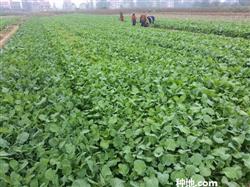
What should be noted when applying boron to rapeseed? Master the correct application method
How to fertilize rapeseed scientifically? Please advise. In rapeseed production in the Yangtze River Basin, the application rates of nitrogen, phosphorus and potassium fertilizers are generally low, the nutrient ratios are unbalanced, organic fertilizer application is insufficient, the straw return rate is low, and deficiencies of trace elements such as boron occur from time to time. Fertilization principles: increase organic fertilizer application and advocate straw return; supplement according to the soil...
-

Correct Fertilization Methods and Key Application Points for Boron Fertilizer
Correct Fertilization Methods for Boron Fertilizer
-

Detailed Explanation of Key Technical Points for Boron Fertilizer Application in Field Crops
Boron Fertilizer Application Techniques for Field Crops
-

Why do rapeseed plants need boron supplementation? A detailed explanation of the role of boron nutrition
The role of boron nutrition for rapeseed
-
Correct application methods and technical key points for boron nutrition in rapeseed
Correct application of boron nutrition in rapeseed
条件筛选