-

What are the causes of cotton square and boll shedding?
1. Physiological shedding. Physiological shedding accounts for about 60-70% of total square and boll shedding, mainly caused by improper management and damage from pests and diseases, which leads to nutrient imbalance in the plant and insufficient nutrients for squares and bolls. There are mainly the following three aspects: 1. Poor root development, insufficient absorption of water
-
How can the boll-setting rate be increased in cotton cultivation?
Types of square and boll shedding in cotton include physiological shedding, shedding caused by pests and diseases, and shedding caused by mechanical damage. As for the causes of physiological shedding: first, excessive application of fertilizer and water causes excessive vegetative growth, with nutrients consumed too heavily in the early stage and supply falling short of demand in the later stage; second, excessive planting density in the cotton field causes severe shading by branches and leaves, reducing light, weakening photosynthesis, and decreasing the nutrients produced; third, some cotton fields are deficient in boron, causing cotton to flower but not set fruit; fourth, high temperature and drought, insufficient fertilizer and water, or excessively high temperatures cause cotton pollen sterility; fifth, frequent rainy weather leads to poor pollination. As for pest and disease damage, inadequate control of cotton mirids, cotton bollworms, Fusarium wilt and Verticillium wilt can easily lead to massive square and boll shedding. As for mechanical damage, it is mainly caused by improper operation during field management. In addition, in the past two years, blind application of herbicides has occasionally caused square and boll shedding.
-
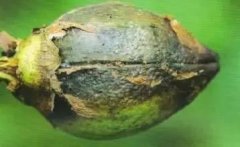
Common diseases of cotton bolls and control methods for cotton boll blackening
Do you know what diseases can occur during cotton cultivation? Below we introduce the most common cotton boll blackening disease. Do you know this disease? What do the symptoms of this disease look like on cotton? What are the control methods? Let's take a look together.
-
Cotton seed: never harvest prematurely opened bolls; pay attention when saving and selecting seed
According to data from seed management department testing, in recent years the germination rate of some cotton seed has been only around 60%, still far from the national standard of 80% germination rate. From extensive surveys, the reasons for low cotton seed germination rates are: first, harvesting immature prematurely opened bolls; second, purchasing "favor bolls" with high moisture content; third, mixing in diseased seed from rotten cotton bolls; fourth, storing cotton seed in the warehouse before it is fully sun-dried; fifth, containing some cotton seed broken during processing; sixth, relatively high residual acid content in coated cotton seed; seventh, not strictly
-
Cotton struggling to open its bolls? Reforming the planting method is key
In recent years, with the continuous deepening of the breeding of new cotton varieties and the improvement of sowing and seedling-raising methods, as well as the increase in the degree of agricultural mechanization, the planting method of cotton fields has become extremely important for high cotton yields. In the era when conventional cotton varieties dominated, cotton sowing was mostly direct seeding, cotton planting density was relatively high, cotton row spacing was relatively small, and cotton fertilization was mostly broadcast application. After hybrid cotton was promoted and applied on a large scale, because the individual development of hybrid cotton is larger, cotton field density was continuously reduced, cotton row spacing was expanded, and cotton
-
Why do young bolls on the middle and upper parts of the cotton plant crack open prematurely?
Recently, some farmers called to report a strange phenomenon in cotton production: the large bolls and early-developing bolls on the lower part of the plant were growing normally and had not yet opened, while the tender bolls on the middle and upper parts cracked open prematurely, and some of the cracked bolls then rotted. The Wuqiao County Agriculture Bureau immediately organized technical personnel to go into the fields to find the cause. 1. Field symptoms: In early-sown cotton fields where the top 1-3 fruiting branches had no buds or bolls, or very few buds and bolls, due to rain or pest and disease damage, the number of cracked bolls on the middle and upper parts was relatively high, that is, the outer bolls on the 7th-8th fruiting branches counting from the bottom and the inner bolls on the 9th-10th
-
Observe the growth of cotton bolls and apply the cotton flowering and boll fertilizer precisely
In the middle and late stages of cotton growth, flowering and boll fertilizer should be applied accurately according to changes in bolls and leaf color. Generally, where soil fertility is good, seedling and bud fertilizer is plentiful, growth during the bud and flowering stage is vigorous, leaves are large, leaf color is deep, internodes are sparse, bracts do not tightly enclose the flower buds, few bolls are set, and leaf color does not fade at early flowering, flowering and boll fertilizer in such cotton fields should not be applied early; it should be postponed until bolls increase and leaf color turns lighter. Conversely, where soil fertility is poor, seedling and bud fertilizer is applied in small amounts, growth during the bud and flowering stage is weak, leaves are small, leaf color is light, internodes are short and thin, bract color is light, flower buds are few, and leaf color is pale yellow at early flowering, 5-8 kg of urea per mu can be applied as a relay fertilizer
-
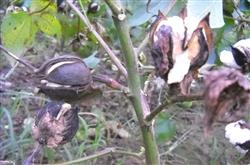
Why do cotton bolls rot? How to prevent and control cotton boll rot?
Why do cotton bolls rot? How to prevent and control cotton boll rot? Please give an introduction. Cotton boll rot occurs to varying degrees almost every year. Therefore, on the basis of understanding the conditions and causes of cotton boll rot, comprehensive measures should be taken for prevention and control, striving to reduce losses to a minimum. 1...
-
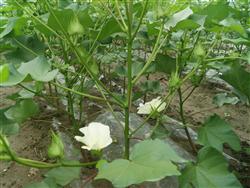
Control methods for cotton boll rot (bolls) during the rainy season
How to prevent cotton boll rot (bolls) during the rainy season? Please provide an introduction. During the rainy season, the following methods can be used to prevent cotton boll rot (bolls): 1. Scientific fertilization: Most of the cotton currently cultivated is insect-resistant cotton, which generally requires large amounts of base fertilizer and bud fertilizer, and no flower and boll fertilizer, to prevent excessive growth and increased shading. Nitrogen should be controlled, phosphorus increased, and...
条件筛选