-

How to manage cotton during the flowering and boll-setting stage? Apply flowering and boll fertilizer heavily, use chemical regulation and pruning to prevent premature senescence
The flowering and boll-setting stage of cotton is the peak period of fertilizer and water demand and the critical period for yield formation. This article introduces the topdressing rate of flowering and boll fertilizer, the standards for irrigation and drainage, the dosage of mepiquat chloride for chemical regulation, the timing of pruning and topping, and pest and disease control techniques, to help cotton growers set more bolls and prevent premature senescence and boll rot.
-
What are the latest key management techniques for cotton during the flowering and boll-setting stage?
Cotton is grown on a relatively large area in our country. When growing cotton, management work is very important. We need to appropriately adjust management methods according to the growth stage of cotton to ensure that cotton can grow normally at every growth stage. And among these
-
How can the boll-setting rate be increased in cotton cultivation?
Types of square and boll shedding in cotton include physiological shedding, shedding caused by pests and diseases, and shedding caused by mechanical damage. As for the causes of physiological shedding: first, excessive application of fertilizer and water causes excessive vegetative growth, with nutrients consumed too heavily in the early stage and supply falling short of demand in the later stage; second, excessive planting density in the cotton field causes severe shading by branches and leaves, reducing light, weakening photosynthesis, and decreasing the nutrients produced; third, some cotton fields are deficient in boron, causing cotton to flower but not set fruit; fourth, high temperature and drought, insufficient fertilizer and water, or excessively high temperatures cause cotton pollen sterility; fifth, frequent rainy weather leads to poor pollination. As for pest and disease damage, inadequate control of cotton mirids, cotton bollworms, Fusarium wilt and Verticillium wilt can easily lead to massive square and boll shedding. As for mechanical damage, it is mainly caused by improper operation during field management. In addition, in the past two years, blind application of herbicides has occasionally caused square and boll shedding.
-
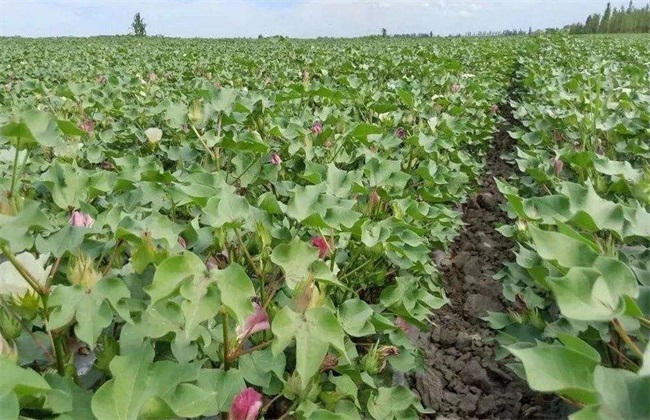
How to manage cotton during the flowering and boll-setting stage? Key technical points explained in detail
How to manage cotton during the flowering and boll-setting stage
-
What are the key field management points for cotton during the flowering and boll-setting stage?
The flowering and boll-setting stage of cotton is the key period for yield formation. In addition to good fertilizer and water management, the following points should also be done well: chemical regulation. Chemical control during the flowering and boll-setting stage can shift more nutrients from vegetative growth to reproductive growth and reduce the shedding of squares and bolls. It is recommended that for cotton fields with strong growth, at the beginning of flowering, spray 2.0-2.5 grams of mepiquat chloride per mu, or 8-10 milliliters of 25% chlormequat. At full flowering, carry out chemical control again according to growth, spraying 2.5-3.0 grams of mepiquat chloride per mu, or 2
-
Technical Points for Spraying Foliar Fertilizer on Cotton to Increase the Boll Setting Rate
This year, the summer-ripening crops in Haimen City were delayed in maturity due to climate effects, and after the summer harvest there was a continuous drought until mid-July, when it rained heavily for several consecutive days. This weather pattern of drought followed by rain was very unfavorable for the survival and growth of the already delayed transplanted cotton, and the growth process was delayed by about 10 days compared with normal years. To increase the formation speed of flower buds in the late stage of cotton and improve the boll setting rate, it is recommended to strengthen fertilizer management in the late stage by means of foliar spraying. 1. Combine pest control with proper timing of fertilizer application. Not every pest control treatment requires
-
What to do when cotton develops red leaf blight during the boll-setting stage
Control measures for cotton red leaf blight: 1. Apply fertilizer reasonably, and skillfully apply the cotton topping fertilizer; nitrogen, phosphorus and potassium should be applied together or foliar fertilizer should be applied. 2. Strengthen field management, cultivate frequently, improve root respiration conditions, promote root development, prune and remove side branches in time, remove old leaves and control pests and diseases. 3. Spray for protection, using 70% mancozeb or 75% chlorothalonil 600-800 times solution or 70% thiophanate-methyl 800-1000 times solution plus foliar fertilizer (potassium dihydrogen phosphate, Lvzhiyuan, etc.) for spraying, once every 5-
-
What are the key measures for managing cotton during the flowering and boll-setting stage?
The main goals of cotton management during the flowering and boll-setting stage are: preserve bolls, increase boll weight, and prevent premature senescence. 1. Apply heavy flowering and boll fertilizer: The flowering and boll-setting stage is the period when cotton needs the most fertilizer throughout its entire growth period. For cotton fields with high soil fertility, abundant rain and good soil moisture, and vigorous cotton plant growth, topdressing can be done at the full flowering stage; for cotton fields with average soil fertility, drought and poor soil moisture, and weak cotton plant growth, early and heavy application should be done, with topdressing at the initial flowering stage. Generally, apply 15-20 kg of nitrogen-potassium compound fertilizer per mu. Continue to do a good job of intertillage and loosening the soil, following the principle of shallow rather than deep cultivation. 2. Water during drought, drain during waterlogging
-
Technical Guidance on Cotton Management During the Flowering and Boll-setting Stage
The flowering and boll-setting stage of cotton is a critical period when vegetative growth and reproductive growth proceed together. During this stage, the plant gradually shifts from being dominated by vegetative growth to being dominated by reproductive growth. The plant grows vigorously with a large daily growth increment. It is the peak period of fertilizer and water demand in the plant's entire life cycle, and also the key period for forming economic yield. Timely and meticulous management is essential, adapted to local conditions and to the condition of the seedlings. Attention must be paid to pest and disease control, chemical regulation, pruning, and intertillage loosening of the soil, while at the same time rationally and scientifically formulating fertilizer and irrigating promptly and in appropriate amounts, so that individual plants grow steadily, the plant architecture and field population structure are reasonable, ventilation and light penetration are good,
-
How to manage cotton during the flowering and boll-setting stage? Jinnan District Agriculture and Forestry Bureau reminds cotton farmers to master the techniques
The flowering and boll-setting stage of cotton in Tianjin generally begins in early July and ends at the end of August, lasting 55 days. According to surveys, most of the cotton fields in our district have entered the flowering and boll-setting stage. Field management during the flowering and boll-setting stage is very important. This period is when cotton grows and develops most vigorously, and it is a period of intricate and complex contradictions among vegetative growth and reproductive growth, individuals and populations, and the cotton crop and the environment, so it is the period that determines yield. Cotton field management during this period should focus on doing the following key tasks well: 1. Increase potassium fertilizer application. Increasing
条件筛选