-
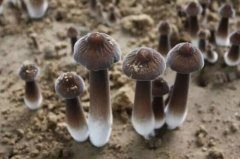
A Detailed Guide to Black-Skin Chicken-Foot Mushroom Cultivation Techniques, Price per Jin, and Investment per Mu
Large-scale artificial cultivation of the black-skin chicken-foot mushroom has low production costs, a short cycle, and high yields, and can meet people's market demand for the black-skin chicken-foot mushroom. So how do you grow the black-skin chicken-foot mushroom? The price of the black-skin chicken-foot mushroom is 35 yuan per jin, and prices vary somewhat from region to region.
-

Is the underside of the Tricholoma mushroom cap and its interior turning black toxic, and can it still be eaten normally?
Tricholoma mushroom is also called white mushroom because it is white all over, and it is also a rare edible fungus with high nutritional value. But why do some Tricholoma mushrooms bought and left for a while turn black? Is the underside of the Tricholoma cap turning black toxic? Is the inside of the Tricholoma
-

How long is the growth cycle of the black Hypsizygus mushroom? A guide to the best-selling season and variety selection
The growth cycle of the black Hypsizygus mushroom is different from that of other mushroom varieties; its growth cycle has far fewer days than ordinary varieties. Inoculate from late September to mid-October, move into the room from late October to mid-November, harvest from early November to late November, and one
-

How many levels of protection does the black-faced spoonbill have? An analysis of its habitat in Zhuanghe and its migration route
Do you know the black-faced spoonbill? Its numbers are extremely small. How many levels of protection does the black-faced spoonbill have? It is a Class II protected wild animal. So we must take good care of it. Xingrentuo on Shicheng Island and Yuanbaotuo in Wangjia Town of Zhuanghe City are the black-faced spoonbill's only breeding site in China
-

What protection level does the black-faced spoonbill have? A detailed look at its appearance and migratory bird status
What does the black-faced spoonbill look like? Hearing the name, you might wonder whether it looks similar to a pipa. That is exactly right, because its long, flat, spoon-shaped bill is extremely similar to the pipa, a Chinese musical instrument, and that is how it got its name. Is the black-faced spoonbill a migratory bird? Yes.
-
What to Do When the Surface of Oyster Mushroom Substrate Turns Black? Cause Analysis and Control Methods
The main causes of blackening on the substrate surface and the control methods are: (1) Oyster mushroom mycelium soaked in water for a long time causes rot and blackening. In this case, the condensation water on the substrate surface should be absorbed and dried promptly. If it is grown on beds, excess water at the bottom should also be absorbed and dried promptly. (2) Contamination by foreign microorganisms and breeding of insect pests cause blackening. When blackening occurs, pests must be controlled or the affected part dug out promptly to prevent it from spreading.
-
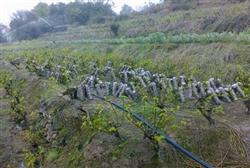
Key Technical Points for Interplanting Black Wood Ear Mushrooms in Orchards
Interplanting black wood ear mushrooms in trenches between orchard rows yields fairly considerable returns. The main cultivation methods are as follows: 1. Stock culture substrate formula: sawdust 78%, rice bran (or wheat bran) 5%, corncob 15%, gypsum powder 1%, sucrose 1%. Weigh each ingredient according to the above proportions. First dissolve the sucrose in water, then stir the sawdust, rice bran and gypsum powder...
-
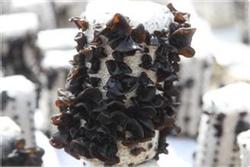
Detailed Explanation of Key Points for High-Yield Bag Cultivation of Black Wood Ear Mushroom
In recent years, substitute material cultivation of black wood ear mushroom has become one of the paths for northern farmers to escape poverty and achieve prosperity. Farmers in Yushu County, utilizing agricultural by-product resources such as miscellaneous wood sawdust and corn cobs, cultivated 800,000 bags of black wood ear mushroom. About 60 days after inoculation, harvesting began. Each bag could yield 30-50 grams of dried wood ear mushroom. That year, 28,000 kilograms of black wood ear mushroom were harvested, with income reaching 1.2...
-
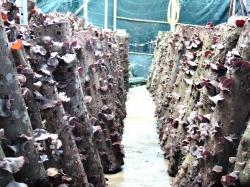
Detailed Explanation of High-Yield Cultivation Techniques for Black Fungus (Wood Ear Mushroom) on Logs
A sandy ground or flat grassland with a warm microclimate, small temperature difference between day and night, humid air, ample sunshine, close to a water source but not prone to waterlogging; for larger-scale cultivation sites, transportation conditions should also be considered. Low-lying plots with poor drainage are not suitable for use as mushroom yards. 1.2 Establishment of the mushroom yard: After selecting the site, it is necessary to...
-

Detailed Explanation of Key Techniques for Identifying Wood Ear (Black Fungus) Spawn
1. The mycelium is snow-white, like fine wool, with short, neat, dense, thick and strong strands, advancing evenly side by side until it reaches the bottom of the bottle, growing uniformly and consistently from top to bottom, coming out in a solid block when dug out, not loose. 2. After the mycelium has fully colonized the bottle, brown water droplets are generally secreted on the surface of the mycelium. Later, pale yellow...
条件筛选