-
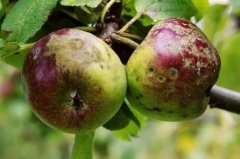
How to treat apple scab (apple black spot)? A new breakthrough treatment lends a hand
Do you like eating apples? Then you know that apples are very prone to pests and diseases, and some growers spray pesticides to prevent them, which makes it easy for apples to end up with pesticide residues. Apple scab, also known as apple black spot, is a disease caused by fungi and is especially
-
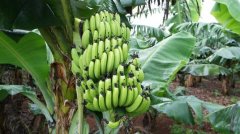
Symptoms and control of three common banana diseases: small black spot disease, fine streak disease and bunchy top-like stunting disease
An introduction to the symptoms and control methods of common banana diseases: small black spot disease, fine streak disease and stunting disease. Let's take a look! Small black spot disease Pathogen: the optimum temperature for mycelial growth is 25°C, the optimum temperature range for spore formation is 13-29°C, and the optimum temperature range for spore germination is 13-33°C.
-

Why Bear's Paw Loses Leaves and Develops Black Spots in Summer, and How to Fix It
Bear's Paw (Cotyledon tomentosa) has a very cute appearance. It is not only small and compact, but each fleshy leaf looks like a little bear paw. Under sunlight, the very tip of each paw slowly turns reddish-brown, and paired with its fuzzy surface, it is especially cute and delicate, deeply loved by plant enthusiasts.
-
Causes and Solutions for Leaf Drop and Black Spots on the 'First Love' Succulent
The 'First Love' succulent is a common variety of succulent plant, and it can now be seen in many places across our country. Because of its attractive appearance, many people grow it at home. But have you ever experienced the trouble of leaf drop while growing it? In fact, this ⟦4 <p>The 'First Love' succulent is a common variety of succulent plant, and it can now be seen in many places across our country. Because of its attractive appearance, many people grow it at home. But have you ever experienced the trouble of leaf drop while growing it? In fact, all of this is caused by not mastering the proper techniques.</p><p></p><p><strong>Causes of leaf drop in the 'First Love' succulent</strong></p><p>1. Overwatering. Some succulent growers cannot control their hands, and whenever they see the plant looking a bit dry they keep watering it, which leads to excessive moisture and causes the leaves to fall off at the slightest touch. In this situation, you must pay attention to watering at ordinary times. Generally, watering thoroughly after the soil has dried out is enough; just do not let water accumulate in the pot.</p><p>2. Lack of light. Sometimes when the plant lacks light for a long time, the leaves will also fall off at the slightest touch. The best solution in this case is to give it more sun at ordinary times, but in summer be careful not to let it get sunburned; some plants need shading.</p><p>3. Root rot. Leaves falling off at the slightest touch is sometimes caused by a problem with the plant's root system. At this time you can take the plant out of the pot to check whether the roots have a problem. If there is a problem, use a sterilized knife to cut off the rotten roots, then apply some carbendazim powder to the wounds, let the wounds dry, and then repot.</p><p></p><p>4. Soil and pot that do not breathe. Apart from the four situations above, leaf drop is sometimes caused by soil and pots that do not breathe. Poorly aerated potting soil often leads to weak roots, and at this time you should replace the soil and pot promptly.</p><p>5. Pests. If your plant is being troubled by scale insects or root mealybugs, then leaf drop is almost certain to happen, so pay attention to timely prevention and control of common succulent pests.</p><p>6. Normal metabolism. This one is relatively easy to judge. In this situation, mostly only the bottom leaves fall off, and new leaves are growing; the new leaves are not wrinkled and do not fall off easily. In this case there is no need to worry; the consumption shows that the plant is growing.</p><p></p><p><strong>Solutions for leaf drop in the 'First Love' succulent</strong></p><p>1. For 'First Love', the soil mix is generally one part peat + one part vermiculite + one part perlite, with an appropriate amount of bone meal added. You can also use a mix of 3 parts leaf mold, 3 parts river sand, 1 part garden soil, and 1 part cinder. During the growing season, water thoroughly after the soil has dried out. When the air is dry, you can sprinkle water around the plant, but water should not accumulate on the leaf surface, especially in the center of the leaf rosette, otherwise it will cause heart rot.</p><p>2. 'First Love' likes a warm, dry, and ventilated environment, likes light, is drought-tolerant, cold-tolerant, and tolerant of partial shade. Its main growing seasons are spring and autumn. Water thoroughly after the soil has completely dried out, and reduce watering in summer.</p><p>3. For a glass pot, watering once every half a month is enough. The plant's roots have already partially rotted, affecting the supply of nutrients and water. Now the more you water and the more you expose it to the sun, the greater the plant's transpiration, and this vicious cycle will eventually lead to the death of the whole plant. Pots with a substrate that does not breathe should have drainage holes; water less and give more light.</p><p>4. 'First Love' has no obvious dormancy period. In winter, it is best to place it indoors in a sunny spot for care.</p><p>5. If it really cannot be saved, then use the relatively healthy fallen leaves for leaf propagation. If almost all the leaves have fallen off, you can also behead it for cutting propagation.</p><p></p><p><strong>What to do if the 'First Love' succulent develops black spots</strong></p><p>The weakness of black spot disease is that it fears high temperatures and fears dryness. Directly place the affected plant in the sunlight, keep the environment relatively dry, and expose it to strong sun for a period of time. Spray fungicide promptly until it improves. In care, also note: do not use soil that has not been disinfected and sterilized; keep the growing environment ventilated; when the rainy season comes, never let it be rained on at will (this point is very important); and never let the potting soil stay wet for a long time.</p><p></p><p><strong>Causes of black spots on the 'First Love' succulent</strong></p><p>If you are not careful in daily care and water directly onto the leaves or the leaf center, water will accumulate for a long time. A stuffy, unventilated environment, especially the stuffy heat of summer, breeds various bacteria. Once 'First Love' develops black spots, it is also rather troublesome to deal with, and there is only a 50% chance of recovery. So during care you must pay attention to them at all times. Please do not casually discard the sick succulents around you; work hard to save them.</p><p></p><p>The causes of leaf drop in the 'First Love' succulent are generally root rot, too little light, pests, and overwatering. If leaf drop occurs during your growing process, you can observe the cause and eliminate this phenomenon at its root. The 'First Love' succulent may also develop black spot disease during growth, and you need to prevent and control it promptly.</p>
-
Comprehensive control methods and technical key points for broccoli black spot disease
The morphological characteristics and growth habits of broccoli are basically similar to ordinary white cauliflower (cabbage). It belongs to the cabbage species of the Brassica genus in the Brassicaceae family, and is a 1-2 year herbaceous plant. It grows vigorously and has strong heat tolerance and cold resistance. The plant is tall; depending on the variety, after about 20 leaves have grown
-
Identification and Control of Black Spot Disease in Snow Peas
The snow pea (Pisum sativum var. macrocarpon) belongs to the genus Pisum in the legume family (Fabaceae). It is an annual twining herb growing 90-180 cm tall. The earliest region where snow peas were cultivated was along the Thailand-Myanmar border area approximately 12,000 years ago. The round-bodied type is also called sugar snap pea or honey pea (Sugar snap peas), while the flat-bodied type is called green pea or snow pea.
-
Symptom Identification and Control Methods for Black Spot Disease in Siberian Solomon's Seal
Siberian Solomon's seal (scientific name: Polygonatum sibiricum), also known as: chicken-head Solomon's seal, yellow chicken vegetable, brush-tube vegetable, claw ginseng, tiger ginger, chicken-claw ginseng. It is a plant of the genus Polygonatum, with horizontal rhizomes, cylindrical, with enlarged nodes. Leaves are whorled, sessile. A medicinal plant, it has the effect of tonifying the spleen,
-
How to prevent and control soybean black spot disease? Growers must read
Soybean black spot disease is a commonly occurring disease. The disease damages pods and stems, causing stems to wither and die, pods to fail to set seed, and in severe cases plants to die in patches. Seeds in diseased pods are small and shriveled, affecting yield and quality, and diseased seeds have reduced commercial value and oil extraction rate. 1)
-
What are the multiple control methods for sweet potato black spot disease
Sweet potato black spot disease, also known as sweet potato black scar disease, has become one of the most widespread and serious diseases in sweet potato producing areas of China. According to statistics, the annual yield loss caused by this disease in China is 5%-10%, and livestock eating diseased tubers can also cause poisoning, with severe cases leading to death. I. Symptoms
-
Black-spotted Frog Breeding Technical Manual: Help You Master Scientific Breeding Methods
Abstract Site selection for breeding black-spotted frogs: choose a place with abundant water and good water quality, with a reliable power supply. Build the black-spotted frog breeding pond: dig trenches and build ponds according to the terrain, lay a layer of black anti-seepage plastic film on the pond bottom, and set up a net above the pond. Create
条件筛选