How to treat apple scab (apple black spot)? A new breakthrough treatment lends a hand
Do you like eating apples? Then you know that apples are very prone to pests and diseases, and some growers spray pesticides to prevent them, which makes it easy for apples to end up with pesticide residues. This is especially true of apple scab, also known as apple black spot, a disease caused by fungi that is especially difficult to deal with; if it spreads, it can cause apple yield losses of up to 80%.
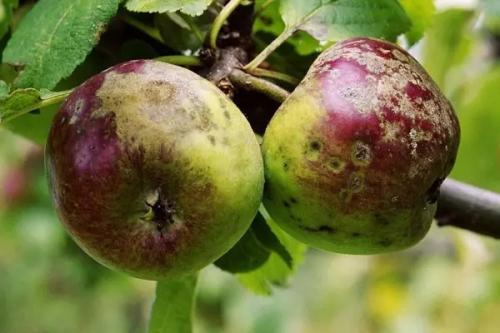
To this end, experts and scholars from the University of Illinois, Rutgers University and Purdue University jointly carried out the "Apple Cooperative Breeding Program." Several of the collaborating experts and scholars published new research in the Journal of Food Quality on scab-resistant apple varieties, including four new varieties: GoldRush, WineCrisp, CrimsonCrisp and Pixie Crunch. The main aim of the research was to determine whether quality could be maintained after standard postharvest storage treatment. At the same time, the disease resistance of these four new apple varieties was compared with that of Golden Delicious apples, which are susceptible to scab.
⟦NL> Slowing the apple ripening rate for market competitiveness
The researchers treated the scab-resistant apples with 1-methylcyclopropene (1-MCP) gas, a step also known as "controlled atmosphere" treatment, which uses gas to control the ripening rate of fruits and vegetables; in this study it was used to inhibit ethylene production and slow the ripening rate of the fruit during storage. The trials showed that 1-MCP could effectively slow apple ripening and keep fruit stored for 70 days and 140 days still fresh, helping to maintain nutrition and quality during storage.
In terms of eating quality, such as flesh firmness, sugar content and acidity, the new scab-resistant apple varieties performed comparably to, or even better than, Golden Delicious apples whether freshly harvested or after storage. GoldRush and CrimsonCrisp still had significantly higher antioxidant capacity even after 140 days of storage, and among all the scab-resistant varieties, CrimsonCrisp responded best to 1-MCP gas treatment. In terms of nutrition, health benefits, appearance and taste, the scab-resistant varieties were similar to Golden Delicious in quality and standard performance and are highly competitive.
Reducing pesticide use makes organic farming even more beneficial
Another benefit is that, to combat apple scab and other diseases, farmers need to use pesticides frequently during the growing season to deal with the diseases, whereas scab-resistant varieties can reduce pesticide use, making them more attractive to organic farmers. Since 1944, after horticulturists at the University of Illinois discovered the scab-resistance gene, several resistant apple varieties have been developed, but the traits of the early scab-resistant varieties were not good; even so, they brought a glimmer of hope for the future apple market.
The breeding program has confirmed that several new varieties are more nutritious than older varieties, but whether they can maintain flavor as storage time is extended still requires more research. At present, disease-resistant apple varieties can only be seen in local agricultural sales areas, such as local markets or orchards, and as the new varieties are produced in volume in major U.S. apple-producing states, consumers will be able to find them in large stores.