-

How to distinguish true from false before introducing fragrant flower locust?
Nursery stock identification methods Currently the fake and inferior fragrant flower locust nursery stock sold on the market generally falls into the following four types: (1) Red flower black locust substituted for fragrant flower locust. The red flower black locust and the fragrant flower locust both have papilionaceous purplish-red corollas; the red flower black locust blooms once a year, bears pods, and is grafted using black locust as rootstock. The fragrant flower locust blooms twice a year, does not bear pods, and is propagated from root segments. (2) Aged root stock. Perennial fragrant flower locust root stock, due to aging, has an extremely low germination rate. According to trial plantings, fragrant flower locust root stock over two years old is not suitable for use as planting material, and even less should it be sold on the market
-
What are the prevention and control methods for chicken embryos dying before pipping?
During incubation, it is very common for normally developed chicken embryos to be suffocated before pipping due to various factors such as an overly hard eggshell, limited space for the chick embryo's head to move, or its beak tip being too far from the eggshell. So, how can this phenomenon be prevented? 1. Turning the eggs. The first 10 days of incubation are the critical period for blastoderm positioning. To ensure the embryo's eye spot and head develop along the blunt-end shell edge of the hatching egg, so as to help the chick's beak tip pip the shell, the eggs should be turned frequently during this stage. During operation, the blunt end of the hatching egg should be kept facing up
-
Four precautions for wheat seed dressing before sowing that you must remember
If the chemical seed dressing before wheat sowing is not operated correctly, it will not only fail to prevent diseases and pests, but may also lead to slow and uneven emergence of wheat, and even affect the normal growth of wheat seedlings. In general, the following 4 points should be noted when dressing wheat seeds with chemicals before sowing: determine the type of pesticide according to the local occurrence of pests and diseases. If the local pest infestation at the wheat seedling stage is very mild and the disease occurrence is severe, only a fungicide seed dressing is needed, and no insecticide is necessary; if pests and diseases occur together, both an insecticide seed dressing and a fungicide seed dressing should be used; if
-
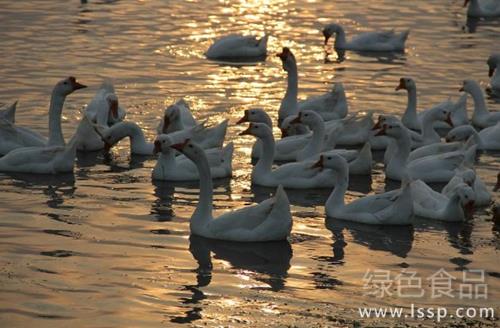
Master the key technical points of winter goose fattening, get good returns by marketing before the Spring Festival
Good returns from marketing winter geese before the Spring Festival; key technical points of winter goose fattening
-
What preparations are needed before sowing cotton
1. Land preparation and fertilization: On the basis of winter plowing and freezing of the soil, apply base fertilizer in spring by broadcasting 3 cubic meters of slow-release organic manure and 30 kg of quick-acting NPK compound fertilizer per mu, then plow again, harrow and level. After rain, harrow again to retain moisture and preserve soil moisture, and wait for sowing with sufficient moisture. 2. Seed preparation: (1) Variety selection. Choose disease-resistant and insect-resistant hybrid cotton varieties. Commonly used varieties include Yuzha 35, Zhongmian 47, Zhongmian 48, etc. (2) Seed selection. Choose seeds with high purity, plump grains, maturity, and high germination rate. (3) Sunning seeds.
-
What are the precautions before cotton harvest?
Cotton generally takes 60-70 days from boll opening to the end of harvest, so it must be harvested in multiple pickings. The ideal time to pick is generally 7 days after the boll cracks open. Cotton picking generally has the following requirements: 1. Picking technique: mainly adopt the "three clean" and "five separate" picking method. "Three clean" means when picking, the plant is clean, the boll husk is clean, and the ground is clean. "Five separate" means separate picking, separate drying, separate storage, separate ginning, and separate selling. When picking cotton, good cotton, stiff-boll cotton, and cotton that has fallen to the ground must be picked separately, dried separately, and stored separately, and must not be mixed together.
-
Can Turtles and Fish Be Kept Together? A Few Things to Know Before You Start
Turtles and fish can be kept together. For mixed turtle-fish culture, the stocking ratio is as follows: per 0.07 hectares, stock 300 silver carp (specification 20-25 g each), 80 bighead carp (specification about 25 g each), 120 grass carp (specification 50-125 g each), 80 common carp (specification about 25 g each), and 80 blunt snout bream (specification 12.5-25 g each). Then stock about 1,200 turtles aged 3-6 years. Fish fingerlings are best stocked before the Spring Festival, while turtles are best stocked after the beginning of spring, when the water temperature has stabilized above 15
-
What preparations should a mother dog have in place before pregnancy?
Most generally healthy dogs can mate, conceive and give birth on their own without human help, but if a female dog at home becomes pregnant, or if you are arranging a mating for her, the dog owner must take responsibility for the health and safety of both the mother dog and the puppies. Before mating, besides making sure the mother dog has been dewormed first and confirming that all the vaccinations she should have had are indeed fully completed, the mother dog herself should have a strong, healthy body and be free of congenital hereditary diseases or defects.
-
Key Management Techniques for Greenhouse Peach Trees Before Temperature Increase
I. Pruning To ensure a relatively good yield from greenhouse peaches, long-branch pruning should be adopted, keeping as many branches as possible and removing as few as possible. According to the space inside the greenhouse and the requirements of tree shape growth, while retaining 3-4 basic scaffold branches per tree, remove large branches that disrupt the tree shape, weak branches, non-flowering branches, diseased and pest-infested branches, overly dense branches, and crossing or overlapping branches; thin out or flatten the upward-growing medium and long fruiting branches; leave the extension branches unpruned; leave medium and long branches unpruned; and cut back the downward-hanging fruiting branches. The pruning amount should be controlled at about 10% of the total, so that after pruning each peach tree retains 8
-
How to prevent and control yellowing of wheat seedlings before winter? The key lies in treating according to the condition of the seedlings
After barley and wheat are sown and emerge, due to the influence of adverse conditions and cultivation management, varying degrees of yellowing often occur before winter. There are many reasons for wheat seedlings turning yellow before winter, such as drought, insect pests, nitrogen deficiency and potassium deficiency, etc. The remedy should be applied according to the different causes, so as to promote the yellowing wheat seedlings to transform into strong overwintering seedlings. Drought-induced yellowing: in a dry winter year, with long periods of clear weather and no rain, soil hardening, and insufficient water, root extension is difficult, which often leads to yellowing of wheat seedling leaves, slow growth, and delayed tillering stage. For wheat seedlings yellowing due to water shortage and drought, timely watering for drought relief should be carried out. For drought relief,
条件筛选