-
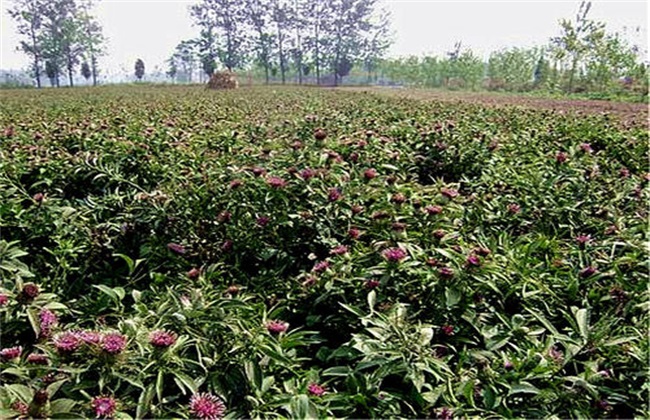
What are the risks of planting Atractylodes macrocephala? You need to understand them clearly before planting
Risks of planting Atractylodes macrocephala
-

Several commonly used treatment methods for medicinal herb seeds before sowing
Several treatment methods for medicinal herb seeds before sowing
-

Why should the roots of Schisandra chinensis be pruned before transplanting?
The benefit of pruning the root hairs of Schisandra chinensis seedlings before planting is: after the roots are cut, the seedlings can be stimulated and encouraged to generate and grow new roots. The length of the roots left after cutting is generally best kept between 10-12cm; seedlings with roots shorter than 10cm should also be trimmed so as to promote the growth of new roots.
-
Why Schisandra chinensis seedlings should be soaked in water before planting and the suitable soaking time
Schisandra chinensis seedlings naturally have indistinct main and lateral roots and many fine fibrous roots. After the seedlings leave the nursery, they go through several stages such as transport, storage and transplanting, and water loss occurs in both the root and crown areas. Using such seedlings results in a low survival rate, so before planting they should be soaked in water for 24 hours.
-
Key Points for Preparatory Work Before Sowing Gastrodia elata Seeds from Sexual Reproduction
The sexual reproduction of Gastrodia elata uses hybrid seedling seeds of Gastrodia elata, which reproduce under the combined action of germination fungi and Armillaria mellea. The growth period of sexually reproduced Gastrodia elata is one and a half years, that is, planted in June-July of the current year and harvested at the end of the second year. Its characteristics are small investment, high success rate, and stable yield, and it is currently a relatively advanced high-yield cultivation technique for Gastrodia elata in China. 1. Selection of planting site. The growth of Gastrodia elata hardly requires sunlight, so it can be planted in basements, air-raid shelters, mountain streams, and other places with certain ventilation conditions, as well as in all idle land such as the edges of courtyards, fields, roads, slopes, forests, and bamboo groves. In areas with relatively high temperatures such as semi-mountainous and plain areas, indoor planting is advocated. For the sexual reproduction of Gastrodia elata, river sand, hemp-bone stone sand, etc. should be used as much as possible. In places where there is really no river sand, sandy loam soil with a sand content of more than 50% should also be selected.
-
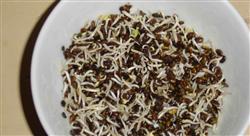
What are the methods for treating Astragalus seeds before planting?
How should Astragalus seeds be treated before planting? Please give guidance. Astragalus seeds can be treated like this before planting: first put the seeds into boiling water and stir quickly for 1 min, immediately add cold water, adjust the water temperature to 40°C, soak for 2h, then remove them, cover well with a wet cloth or gunny sack, and let them sweat for 8h-12h. When the seeds swell or the outer coat splits, sow...
-
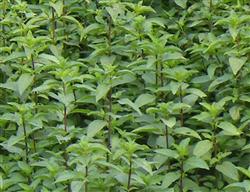
How to manage mint before and after emergence? Key technical points explained in detail
Based on many years of large-scale mint cultivation practice, effectively strengthening field management before and after the emergence of first-cut mint is an effective measure to achieve high yield, high quality and high efficiency. It can increase mint crude oil by l-1.5 kg per mu, with a net profit increase of about 100 yuan. 1. Clear ditches and improve soil moisture conditions to reduce field humidity. Mint is both afraid of drought and intolerant of waterlogging, and soil...
-
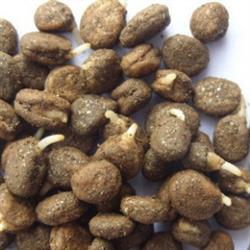
How should ginseng seeds be treated before flat-ground planting?
How should ginseng seeds be treated for flat-ground planting? Please explain the method. Before planting ginseng, you can refer to the following methods for treatment: after the water seeds are dried until the skin turns white, spread them in sunlight at a temperature of around 25°C and turn them for 30 minutes; this uses ultraviolet light to kill bacteria on the seed coat. Mix weathered sand (river sand also works, but it has a high bacterial content...) with ginseng seeds at a ratio of 5:1, keeping moisture between 15% and 18%, that is, it forms a ball when squeezed in the hand and breaks apart when released. Store the mixed ginseng seeds with moderate moisture in a jar or wooden box, or dig a pit in ground that does not accumulate water, wrap it with mesh netting, and build a rainproof and sun-shading shelter above. Before the seeds crack, control the temperature at 18°C-20°C. After the cracking rate reaches 80%, lower the temperature of the seed storage container to 13°C-15°C. Too high a temperature and too much moisture easily cause seed rot. Ginseng seeds stored in sand should be turned once every 10-15 days to ensure consistent moisture in the container. When moisture is low, supplement with a warm water spray; when moisture is high, dry them in the air promptly.
条件筛选