-

What are the common pests of open-ground roses? Understand them in one article
Roses are flowers prone to many pests. Before carrying out control, you must first understand the symptoms of the pest damage and identify which pest it is; second, you need to understand the timing and patterns of the pest's occurrence so as to treat the right cause. Here we introduce the 4 most common pests. Aphids Aphids gather on the buds, tender leaves, and flower buds of roses to suck...
-
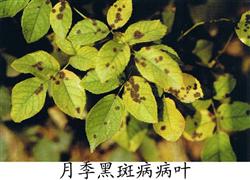
What are the prevention measures for rose black spot disease? Explained clearly in one article
Rose black spot disease is a stubborn disease that harms roses, mainly occurring on leaves, young shoots and flower stalks. The lesions mostly occur on the upper surface of the leaves. On severely affected plants, all the leaves from the lower to the middle part fall off, making the plants grow weakly and susceptible to low-temperature damage to flower buds, affecting flowering the following year, and even causing branches to die. The author...
-
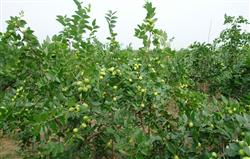
What are the pesticide application methods for jujube tree cultivation? Explained clearly in one article
What pesticide application methods are there for jujube tree cultivation? Please explain. The commonly used pesticide application methods in jujube tree cultivation include the following: (1) Spraying method: generally for emulsifiable concentrates and wettable powders, they should be mixed into an emulsion of appropriate concentration and applied with spraying equipment; ultra-low-volume spray agents can be sprayed directly without adding water. (2...
-
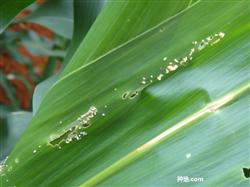
What are the main pests and diseases of sweet corn? Learn it all in one article
What are the main pests and diseases of sweet corn? How to control them The main pests and diseases occurring in sweet corn are: corn borer, northern leaf blight and southern leaf blight, and sheath blight. I. Occurrence of pests and diseases Corn borer: moderate occurrence, locally on the heavy side. According to surveys, at maturity the average damage rate of corn plants was 10.06%, and in severely affected fields the average plant damage rate was 31.43%. At present, the larval stage in the field is mainly late-instar larvae, with an average of 1971 larvae per mu, reaching as high as 2500.
-

What Is the Relationship Between Lisianthus and Balloon Flower? Understanding the Differences in One Article
Only ?? days until the release of the Species Calendar 2019. In today's closing "Calendar Girl's Big News" segment, the question that Species Calendar original illustrator @Li Liang will answer is: How are those beautiful illustrations painted? Is there a tutorial? More questions...
-

What do soft-shelled turtles eat? Learn about the common foods of soft-shelled turtles in one article
What do soft-shelled turtles eat
-

Can Red-Eared Sliders Be Kept Dry? Understanding Dry-Keeping Precautions in One Article
Can Red-Eared Sliders Be Kept Dry?
-

What are the key points to note when growing sweet potatoes? Master the essentials in one article
Key points to note when growing sweet potatoes
-
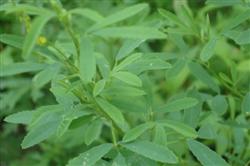
What are the control methods for powdery mildew on Astragalus membranaceus? Explained clearly in one article
What are the control methods for powdery mildew on Astragalus membranaceus? Please introduce. The control methods for powdery mildew on Astragalus membranaceus can refer to the following: 1. Strengthen field management. Reasonable close planting, pay attention to ventilation and light transmission between plants, can reduce the incidence of disease; fertilization is mainly organic fertilizer. Pay attention to the proper ratio of nitrogen, phosphorus and potassium fertilizers, do not apply too much nitrogen fertilizer, so as to avoid excessive vegetative growth of plants...
-

Is the white-striped rat snake venomous? Read this one article to understand the truth about its toxicity
Is the white-striped rat snake venomous?
条件筛选