What are the common pests of open-ground roses? Understand them in one article
Roses are flowers prone to many pests. Before carrying out control, you must first understand the symptoms of the pest damage and identify which pest it is; second, you need to understand the timing and patterns of the pest's occurrence so as to treat the right cause. Here we introduce the 4 most common pests. Aphids Aphids gather on the buds, tender leaves, and flower buds of roses to suck...
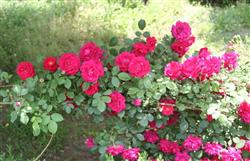
Roses are flowers prone to many pests. Before carrying out control, you must first understand the symptoms of the pest damage and identify which pest it is; second, you need to understand the timing and patterns of the pest's occurrence so as to treat the right cause. Here we introduce the 4 most common pests.
Aphids
Aphids gather on the buds, tender leaves, and flower buds of roses to suck sap. When they occur in large numbers, there are honey-oil-like black secretions. In spring and summer they reproduce by parthenogenesis, and in autumn they reproduce bisexually and lay eggs to overwinter. In open-ground cultivation, the peak occurrence period is early spring and early summer.
Control method: when the number of insects is not large, you can spray clean water to wash them off. If necessary, spray 4000 to 5000 times diluted 2.5% deltamethrin emulsion or 1500 to 2000 times diluted 40% omethoate emulsifiable concentrate. When spraying, add one-thousandth neutral laundry powder to improve control efficacy. Be careful to protect natural enemies such as ladybugs, lacewings, and hoverflies.
Cotton bollworm
The cotton bollworm is a pest with very varied feeding habits and great harm. In North China it occurs 3 to 4 generations a year. The first-generation larvae cause damage from late June to early July, the second-generation larvae from late July to early August, and the third-generation larvae in early September. The following year, when the temperature reaches above 15°C, they emerge. The larvae have 6 instars. The larvae mainly bore into tender buds and flowers to cause damage, and excrement is discharged outside the buds. One larva can damage several flower buds, preventing the flowers from opening normally; they mostly turn yellow-green and fall off after 3 to 4 days. Mature larvae spin silk and hang down, then enter the soil to pupate. In years with more rain, because the environmental conditions are unsuitable for the cotton bollworm's life, cotton bollworms generally do not break out in large numbers.
Control method: when damage is minor, larvae can be caught manually. Chemical control is best carried out before the 2nd-instar larvae enter the buds. You can spray the bacterial insecticide B.T. emulsion or chemical pesticides such as 1200 to 2000 times diluted 30% Mielingling emulsifiable concentrate, 2000 times diluted 20% Jusha emulsifiable concentrate, 1200 times diluted 50% phoxim emulsifiable concentrate, 5000 times diluted 2.5% Kung Fu emulsifiable concentrate, etc., to kill newly hatched larvae.
Scarab beetles
One generation per year, with adults appearing in May to June. They mainly damage rose flowers and lay eggs in the soil. Their larvae gnaw the roots of various flowers. They go out to activity at dusk. Artificially composted leaf manure or places where chicken manure is piled are places it likes to lay eggs. Damage is most severe from July to August. When damage is most severe, flowers can be bitten until incomplete or even eaten bare, and 2 to 3 adult scarab beetles can be caught in one flower. The best control method is manual catching.
Rose stem sawfly
One generation per year. It overwinters as larvae inside damaged branches. In early to mid-May of the following year, adults emerge and go out. They like to lay eggs on the tender tips of current-year branches, especially on thick tender shoots growing from the ground. Damaged branches first wilt and then dry up, bending downward. By autumn, some bore into the underground part of the branches, and some bore into thicker branches from the previous year to make cocoons and overwinter.
Control method: in spring, when wilted tender tips are found, cut them off at any time and eliminate the larvae inside. During winter pruning, branches found to carry pests must be thoroughly eliminated; cut off pest-carrying branches and eliminate the larvae inside. Be careful to protect natural enemies such as parasitic wasps.