-

Detailed Explanation of Herbicide Application Methods During the Corn Growing Period
Herbicide Use During the Corn Growing Period
-
A Detailed Guide to the Yield-Increasing Effects and Application Methods of Potassium Fertilizer on Sesame
The Yield-Increasing Effects and Application Methods of Potassium Fertilizer on Sesame
-
Correct application methods for topdressing mature jujube trees
Application of topdressing for mature jujube trees
-
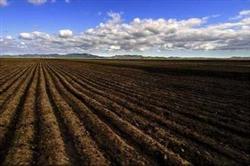
Detailed Explanation of Fertilizer Application Methods and Dosages
After several years of investigation and practice, it has been found that due to continuous cropping problems, at garlic harvest time, most plots show varying degrees of yellowing garlic skin, cracked outer skin of garlic bulbs, thin skin on the garlic neck, resembling waterlogged rot, and after sun exposure becoming exposed-clove garlic or flowering garlic. The main cause of this phenomenon is unhealthy soil, in the soil...
-
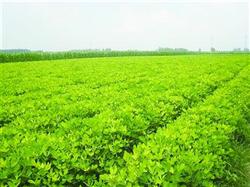
Application Methods of Several Growth Regulators on Peanuts
Applying growth regulators to peanuts has the effects of promoting strong seedling early growth, increasing pod number and weight, and achieving early maturity and high yield. The growth regulators currently used fall mainly into two categories: one is growth promoters containing substances such as micro-fertilizers and hormones; the other is growth inhibitors that control growth and prevent lodging. 1. Growth promoters 1. AB...
-
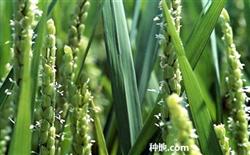
What is the correct application method for rice flower-promoting fertilizer?
How should rice flower-promoting fertilizer be applied? Please guide. Rice flower-promoting fertilizer and flower-preserving fertilizer are collectively called ear fertilizer. Flower-promoting fertilizer is generally applied from the 4th leaf from the top to the 3rd leaf from the top stage of rice. The 4th leaf from the top to the 3rd leaf from the top stage is a reverse leaf age stage. For early-maturing late japonica rice, it is generally applied when the first internode has reached its final length and the second internode is elongating. Flower-promoting fertilizer should be applied according to the seedlings. High-yield fields generally do not apply flower-promoting fertilizer. Only fields with small population growth and obvious yellowing at the early stage of jointing and ear elongation should be topdressed with an appropriate amount. Fields with little base fertilizer, a small population, and obviously faded leaf color should be applied early; fields with sufficient base fertilizer, a large population, and no yellowing of leaf color should be applied less or not at all.
-
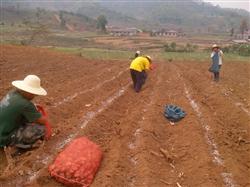
Fertilizer Application Methods for Base Fertilizer and Top Dressing in Yam Cultivation
How do you apply base fertilizer and top dressing when growing yams? Please provide guidance on the methods. For applying base fertilizer and top dressing when growing yams, you can refer to the following methods: 1. Base fertilizer. After selecting a good field, before plowing apply 2000 kg-4000 kg of decomposed farmyard manure and 60 kg-80 kg of compound fertilizer per mu as base fertilizer, then plow the soil 30 cm...
-
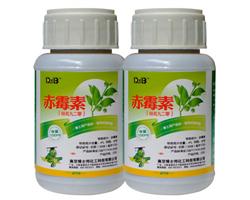
What are the application methods for plant growth regulators?
What application methods are there for plant growth regulators? Please give an introduction. Plant growth regulators are a class of substances with physiological and biological effects similar to those of plant hormones. Substances currently widely used in agricultural production for plant growth and development functions include auxins, gibberellins, ethylene, cytokinins, abscisic acid...
-
Application methods of potassium sulfate compound fertilizer on crops
How is potassium sulfate compound fertilizer applied to crops? Please give an introduction. The following introduces the methods of applying potassium sulfate compound fertilizer to several crops: Cucumber: generally, for a high-yield cucumber field, apply 5000 kg of high-quality organic fertilizer and 50 kg of potassium sulfate compound fertilizer per mu as base fertilizer. The principle for topdressing is small amounts applied multiple times, with a total topdressing amount of about 50 kg. Topdressing should be applied by flushing with water, once every half a month, with urea and potassium sulfate compound fertilizer used alternately, 10-15 kg per mu each time.
-
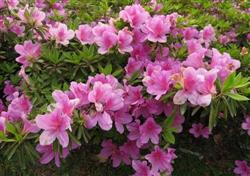
What fertilizer is best for azaleas? Fertilizer selection and application methods
What fertilizer is best for azaleas? Please give guidance. Azaleas are fertilizer-loving plants. In addition to the main nutrients nitrogen, phosphorus and potassium, they also need trace elements such as boron, copper, molybdenum and zinc. For azaleas, fertilizers with mild strength and long-lasting effect are suitable. For home azalea growing, ox horn, ram horn and animal hoof pieces can be used; these fertilizers contain 12%-15% nitrogen and 0.2%-8% phosphorus, and also contain a small amount of potassium and trace elements. Thin hoof pieces take effect 1 month after application, while thick hoof and horn pieces show fertilizer effect after 2 months, and the fertility can last 6-8 months. When using them, they can be buried at the edge or bottom of the pot along with repotting or changing pots. Cake fertilizer is also a relatively complete fertilizer in terms of nutrition. The nutrients in cake fertilizer generally contain 2.1%-7.6% nitrogen, 0.54%-3.3% phosphorus and 0.5%-2.7% potassium. Generally speaking, soybean cake and peanut cake contain more nitrogen, while rapeseed cake and cottonseed cake contain more phosphorus. They must be fully fermented before application. Fertilizer made by composting livestock manure and tree leaves can be mixed into the growing medium when repotting.
条件筛选