-

Application Methods of Fertilizer Long in Formula Fertilization for Rice
1. Advantages of Fertilizer Long: (1) Long-acting and synergistic effect, extending the fertilizer efficiency period of nitrogen fertilizer by 1 time, with no fertilizer deficiency phenomenon throughout the entire growth period of rice. (2) Improved nitrogen fertilizer utilization rate; deep fertilization overcomes fertilizer loss due to running, overflowing and seepage of field water, reducing fertilizer loss. (3) Enhanced resistance of rice to low temperature, drought and disease erosion. (4) Changes traditional multiple surface fertilization to deep one-time fertilization, saving fertilization labor and costs. (5) Reduced nitrogen fertilizer dosage; according to plots with different fertility, the pure nutrient amount of nitrogen fertilizer can be reduced by 15%-25%. 2. Fertilizer Long
-
Reasonable Application Methods of Allicin Feed Additives
Allicin has the effect of improving the growth environment of livestock and poultry. The volatile sulfur-containing compounds in allicin can not only give off a special garlic odor to drive away mosquitoes, flies and insects from biting and sucking feed or manure, but also, under the action of enzymes in the bodies of livestock and poultry, be converted into allicin and excreted from the body to prevent mosquitoes and flies from breeding and growing in manure and urine, thereby improving the surrounding environment. Allicin has an anti-disease effect on livestock and poultry. Allicin can effectively kill various pathogenic bacteria such as Shigella dysenteriae, Pasteurella, Salmonella enteritidis, and Pseudomonas aeruginosa, and has the functions of enhancing resistance to viral diseases, and replacing
-
The role and application method of spraying paclobutrazol on rice
Paclobutrazol is a highly active plant growth retardant and broad-spectrum fungicide. Its internationally used code is pp333, and the code for the product made in China is MET. Its physiological effects on rice are mainly dwarfing, promoting tillering and improving stress resistance. Moreover, after transplanting, the seedlings turn green quickly, tiller early, the number of effective panicles increases, and the seed-setting rate and 1000-grain weight increase. It is a simple, easy and effective measure to increase yield. Experiments in various places in Liaoning in recent years have found that rice seedlings sprayed with paclobutrazol show the following changes compared with the control: 1. The seedlings become shorter. Spraying at the rice seedling stage
-
Rational Application Methods and Key Points for Using Allicin
Although allicin has very good effects, it must still be used rationally, and the dosage must not be blindly increased, so as to avoid waste or even adverse effects. Huang Xingguo et al. conducted a preliminary study on the application effect of allicin in rice field eel farming, and the results found that due to different doses of allicin added at different feeding stages, the survival rate and disease prevention and control effects differed: in the feeding stage without added allicin, after 1 month of feeding, the survival rate was 89%, and the main causes of death were red-skin disease and enteritis; when 200mg/kg and 40
-
The role and application methods of wheat straw and wheat chaff mulching
Wheat straw and wheat chaff mulching is the even scattering of wheat straw or wheat chaff around autumn crops or between rows to form a certain mulch layer, with an appropriate amount of soil pressed over it in spots so as to cover and preserve soil moisture. For wheat straw and wheat chaff mulching, it is necessary to properly grasp the principles of timing, mulching amount, and rational application of chemical fertilizers, etc. 1. Timing. The relatively suitable mulching time is from late June to early and mid-July. Too early makes it easy to press down the seedlings, while too late means the crop plants are tall and not easy to work with. After mulching, if there is no rain or the rainfall is insufficient, it will affect the rotting and decomposition of the straw, and the effect will be poor, so timely watering is needed. It is also possible to water at the first topdressing at the end of June.
-
Key Technical Points and Application Methods of Wheat Straw and Wheat Chaff Mulching
Wheat straw and wheat chaff mulching involves evenly spreading wheat straw or wheat chaff around autumn crops or between rows to form a certain mulch layer, with an appropriate amount of soil pressed onto it in spots, so as to mulch and preserve soil moisture. For wheat straw and wheat chaff mulching, it is necessary to grasp the timing and mulching amount well, and to apply chemical fertilizers reasonably and according to other such principles. 1. Timing. The relatively suitable mulching time is from late June to early to mid-July. Too early makes it easy to press down the seedlings, while too late means the crop plants are tall and difficult to work with. After mulching, if there is no rain or insufficient rainfall, it will affect the rotting and decomposition of the straw, and the effect will be poor, so watering should be done in time. It can also be done at
-
Application methods of Shangnong Iprobenfos for controlling rice blast
Shangnong Iprobenfos is a systemic fungicide with a pre-harvest interval of more than 20 days and low toxicity to humans and livestock. Its formulation is a 40% emulsifiable concentrate. Shangnong Iprobenfos is mainly used to control rice neck blast, and is also effective against rice sheath blight (small sclerotium disease), small grain sclerotium disease, rice sheath blight, and planthoppers, and also has insecticidal and lodging-resistant effects. Application methods: To control rice blast, sheath blight, and small sclerotium disease, dilute 600-1200 times with water and spray. Precautions: (1) This agent is also a cotton defoliant, so when applying
-
Planting Performance and Application Prospects of Different Simplified Rice Cultivation Methods
1 Planting performance of several simplified rice cultivation methods 1.1.1 Actual harvested yield. The actual harvested yield was highest for machine-transplanted rice, with an average yield of 9000 kg/hm2; followed by hand-transplanted rice, with an average yield of 8850 kg/hm2; third was seedling-throwing rice, with an average yield of 8700 kg/hm2; fourth was wheat-intercropped rice, with a yield of 8400 kg/hm2; direct-seeded rice had the lowest yield, averaging 8250 kg/hm2. 1.1.2 Number of panicles per unit. Direct
-
A detailed guide to the application technology of phenthoate: master the correct method of use
50% Miechonglu emulsifiable concentrate (phenthoate) is an organophosphorus insecticide with moderate toxicity (only 1/30 that of methamidophos). It also has stomach-poison and contact-killing effects, and gives good control of various pests on many crops such as rice, cotton, vegetables and fruit trees. It is especially outstanding against rice stem borers, and no pest has yet developed resistance to it. The application technology of this insecticide is described below: 1. Use technology: 1. To control rice striped stem borer and rice yellow stem borer, use 50% Miechonglin emulsifiable concentrate per mu
-
Proper application of the four fertilizers is very important for spring peanuts, and the fertilization method must be mastered
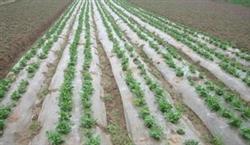
Spring peanut cultivation with plastic film mulching has the advantages of heat preservation, moisture retention, fertilizer retention, improving the soil environment, ensuring uniform and strong seedlings, promoting growth and development, earlier maturity, and increased yield and income. It can usually increase yield by 20%-30%, and increase net income by 50-100 yuan per mu. 1. Fine land preparation and full-layer fertilization for peanut mulching...
条件筛选