-
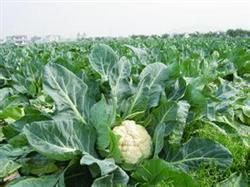
Reasonable Application Methods for Water-Soluble Fertilizers
Plants need to absorb various nutrients for growth and development. However, what determines crop yield is the nutrient factor present in the smallest relative amount in the soil, and yield also changes relatively within a certain limit as this factor increases or decreases. This is usually explained using a water-filled wooden bucket. The bucket is made of staves representing different nutrient contents and factors...
-
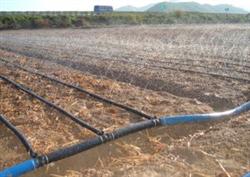
Correct Application Methods for Water-Soluble Fertilizers
Water-soluble fertilizer (WSF) is a multi-element compound fertilizer that dissolves completely in water. It dissolves rapidly in water, is more easily absorbed by crops, and has a relatively high absorption and utilization rate. More importantly, it can be applied in facility agriculture such as spraying and drip irrigation, achieving...
-
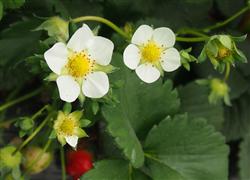
Rational application methods and technical key points for potassium fertilizer
Strawberries bloom and bear fruit continuously, with many flowers and a large fruit load, and a long flowering and fruiting period, so they consume a lot of phosphorus and potassium fertilizer. Once phosphorus is deficient and potassium is low during the flowering and fruiting period, cold resistance will decrease, few flowers will form, flower buds will be weak, and flowering and fruiting will be affected. Not only will the fruit-setting rate be low and the fruit prone to deformities, but the coloring will also be poor, the sugar content will drop, and the taste will be bland, ...
-
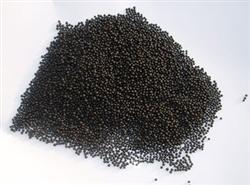
A Detailed Explanation of the Role of Organic Fertilizer and Common Application Methods
In the total nutrient amount currently applied as fertilizer to farmland in our country, about more than 1/4 of the nitrogen, more than 1/3 of the phosphorus, more than 80% of the potassium, and more than 90% of the trace elements are supplied through the application of organic fertilizer. Applying organic fertilizer is an important foundation for the sustainable development of modern agriculture. A large amount of research and practice holds that organic fertilizer has comprehensive nutrients and long-lasting fertilizer efficiency....
-
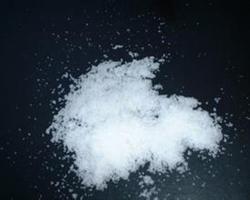
Types of Nitrogen Fertilizers and Scientific Application Methods
At present, the effective utilization rate of nitrogen fertilizers in our country is generally very low. How to reduce nitrogen loss and improve nitrogen fertilizer utilization rate is a problem of common concern to the vast number of farmers. Here are seven methods for improving the effective utilization rate of nitrogen fertilizers, introduced to the vast number of farmers: 1. Implement mixed application and deep application, and strengthen water management. A large number of field...
-
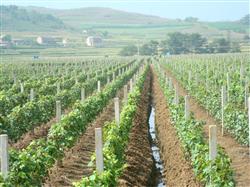
What Types of Nitrogen Fertilizers Are There? A Detailed Guide to Application Methods
The nitrogen fertilizers commonly used in fruit tree production mainly include urea, ammonium bicarbonate, ammonium nitrate, ammonium sulfate, ammonium chloride and slow-release urea. Urea is an amide-form nitrogen fertilizer with a nitrogen content generally of 46%, and can be used as a base fertilizer, a top dressing and a foliar top dressing. Ammonium bicarbonate is an ammonium-form nitrogen fertilizer with a nitrogen content generally of 16.5%-16.8%, and can be used as a base fertilizer, ...
-
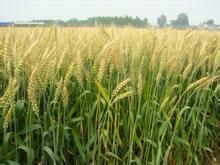
Correct application methods and precautions for slow-release nitrogen fertilizer
Traditional nitrogen fertilizer management for strong-gluten wheat is generally divided into two applications. The first is a portion of nitrogen fertilizer applied before wheat sowing in conjunction with plowing, accounting for 60%-70% of the total nitrogen application; the second is a topdressing applied from the spring green-up stage to the stem elongation stage of wheat in conjunction with watering, accounting for 30%-40% of the total fertilizer application. Some apply it before wheat overwintering...
-
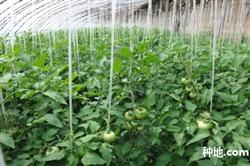
Correct application methods for topdressing water-soluble fertilizer for greenhouse vegetables
How should fertilizer be applied as a topdressing with irrigation when growing vegetables in greenhouses? A request for technical guidance. In greenhouse vegetable production, many farmers apply water-soluble fertilizer as a topdressing with irrigation too frequently and in excessive amounts, often causing soil compaction, root rot, root waterlogging, and plant wilting, which seriously affects farmers' economic returns. For this reason, it is recommended that in greenhouse vegetable production, fertilization should follow the "four combinations"...
-
Detailed Explanation of the Differences Between Types of Water-Flush Fertilizers and Their Correct Application Methods
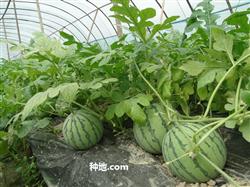
Should organic fertilizer be applied when growing watermelons now? What is the use of applying organic fertilizer? Growing watermelons that are sweet and refreshing is what every melon farmer strives for. Only by continuously improving watermelon quality can one win the market, be favored by the vast number of consumers, and achieve increased production and income for melon farmers. Watermelons have a short growth period and high yield...
-
What are the scientific application methods for bio-organic fertilizers?
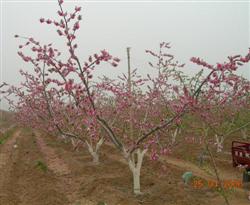
How should nitrogen fertilizer be applied to fruit trees? Please provide guidance. If there is too much nitrogen in the fruit tree, it will cause an imbalance between carbohydrates and nitrogen in the tree or disrupt its relationship with other elements, resulting in excessive vegetative growth, spindly branches and leaves, poor flower bud differentiation, and serious flower and fruit drop; in summer and autumn, when the nitrogen content in fruit leaves exceeds 2....
条件筛选