Causes and Control Methods of Angular Leaf Spot in Cucumber, Watermelon, Melon and Mango
Angular leaf spot refers to a class of diseases that occur on the leaves of various crops such as cucumber, watermelon, melon and mango, with disease spots shaped like polygons. So what are their causes and control methods? This disease is mainly prevented, and scientific management together with good ventilation and drainage conditions can greatly reduce the occurrence of the disease.
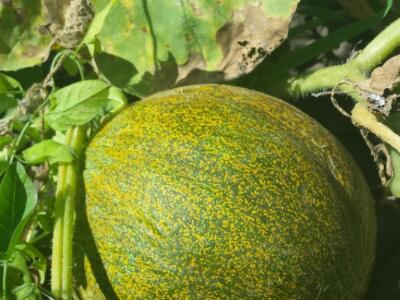
I. Causes and Control Methods of Angular Leaf Spot in Cucumber
1. Causes: The pathogen invades through the stomata and wounds of leaves and fruits, and is often splashed up by rainwater and spread around.
2. Control methods: Agricultural control: Plants with insufficient fertilizer and aged plants are prone to the disease. Seeds must be disinfected, and diseased leaves and diseased plants should be removed in time and burned.[3]
2. Chemical control: Commonly used agents include 5% DT (copper succinate-glutarate) 500 times solution, 72% agricultural streptomycin 4000 times solution, 77% Keshade 1200 times solution, or 75% Daconil 50 g plus 72% agricultural streptomycin 15 g mixed with 15 kg of water for spraying. The above agents can be used alternately, spraying once every 4-5 days, for 3-4 consecutive sprays, and the control effect can reach more than 90%.
II. Causes and Control Methods of Angular Leaf Spot in Watermelon
1. Causes: The pathogen mainly overwinters in the soil as mycelium or sclerotia-like bodies along with diseased residues, and the mycelium can also overwinter attached to seeds. When conditions are suitable, the mycelium directly infects the cotyledons and causes the disease. In most cases, the pathogen produces a large number of conidia that spread through rain or irrigation water, forming primary infection. After the disease occurs, the diseased parts produce conidia for repeated infection. The suitable temperature for disease development is 22—27°C, and the suitable humidity is 85%-98%.
2. Control methods:
(1) Seed collection from disease-free melons and seed treatment: Before sowing, soak the seeds in 40% or 55°C warm water for 15 minutes, wash them with clean water, then germinate and sow.
(2) During the growing period or after harvest, remove diseased leaves and diseased plants and bury them deeply, and carry out deep plowing.
III. Causes and Control Methods of Angular Leaf Spot in Melon
1. Causes: A disease caused by bacteria. The pathogen overwinters in the soil along with diseased residues or attached to the seed surface, invades through wounds and natural openings of the host, and spreads through wind and rain, insects and human contact. Humidity and frequent rain, and high field humidity, are the main conditions for the occurrence of the disease.
2. Control methods:
(1) Carry out crop rotation with non-cucurbit crops for more than 2 years.
(2) Select disease-free melons for seed saving, and disinfect the seeds before sowing. The disinfection method is to soak the seeds in 55°C warm water for 20 minutes, or soak them in O.1% mercuric chloride solution + “Yunda-120” 1500 times for 10 minutes, or soak them in calcium hypochlorite 300 times solution + “Yunda-120” 1500 times for 30—60 minutes, then remove and wash with clean water, or soak them in streptomycin sulfate or new streptomycin + “Yunda-120” 500 times for 2 hours, then remove to germinate and sow.
(3) Remove diseased leaves and diseased vines in time and bury them deeply; topdress fertilizer in time, water reasonably, and strengthen ventilation and dehumidification management for greenhouse melons.
IV. Causes and Control Methods of Angular Leaf Spot in Mango
1. Causes: (1) Angular leaf spot is a bacterial disease.
(2) Diseased leaves, diseased branches, diseased fruits, diseased residues, infected seedlings in the orchard, and host weeds in or around the orchard are the primary infection sources of bacterial angular leaf spot in mango.
(3) The pathogen can spread through airflow, diseased seedlings, wind, rainwater, etc. The pathogen invades through wounds and natural openings such as water pores on leaves and fruits and causes disease. (4) The optimum temperature for pathogen development is 20-25°C. High temperature and frequent rain are favorable to the occurrence of this disease. Usually, areas with stronger wind, windward zones or low-lying orchards have more severe disease, while wind-sheltered orchards and orchards at higher terrain have milder disease. At present, the main mango varieties differ somewhat in resistance to bacterial angular leaf spot, but there are no immune varieties.
2. Control methods:
(1) Do a good job of orchard cleaning: half a month before budding, and after fruit harvesting and 2/3 of leaf fall in autumn, spray the whole orchard with Kuifuling 60-100 times solution to kill pathogens and nourish the tree.
(2) Spray regularly during the growing period: Liangguoan 300-500 times + Wofengsu 600 times for spray protection, especially at the leaf expansion stage, spray Liangguoan 300 times and Wofengsu 600 times twice.