-

Two Simple Tricks to Quickly Get Farmed Fish to Come to the Feeding Table
In recent years, with the continuous development of fish farming technology, the method of raising fish with complete granular feed has been gradually promoted and applied. However, because many fish farmers are not skilled at feeding and conditioning, the fish being trained are slow to come to the feeding table, which not only affects feed intake and delays growth, but also increases costs and affects farming efficiency. Below, we introduce two simple and easy successful conditioning methods that we have summarized in production practice for the reference of users. 1. Feed hanging-bag conditioning method: Use large-mesh window screen (with mesh fine enough not to let feed through) to make a hanging bag that can hold 1.5-2 kg of feed.
-
Reasonable pig feed formulation is the only way to prevent pigs from losing their appetite
When the temperature rises above 35°C, pigs have low feed utilization and slow weight gain. Therefore, in hot seasons, different feeding methods should be given according to different categories of pigs and different physiological stages of pigs. Boars: feed 2 times a day, and add green feed or thin feed at noon. Mating and exercise are both carried out in the morning and evening; after mating, do not immediately let them go into water to wallow or spray them with cold water. From 1 p.m. to 3 p.m. every day, spray water once on the pigs' bodies and the ground, and reduce light to 8-10 hours. If the number of matings is low, the amount of concentrated feed should be reduced to prevent overfattening and poor libido.
-
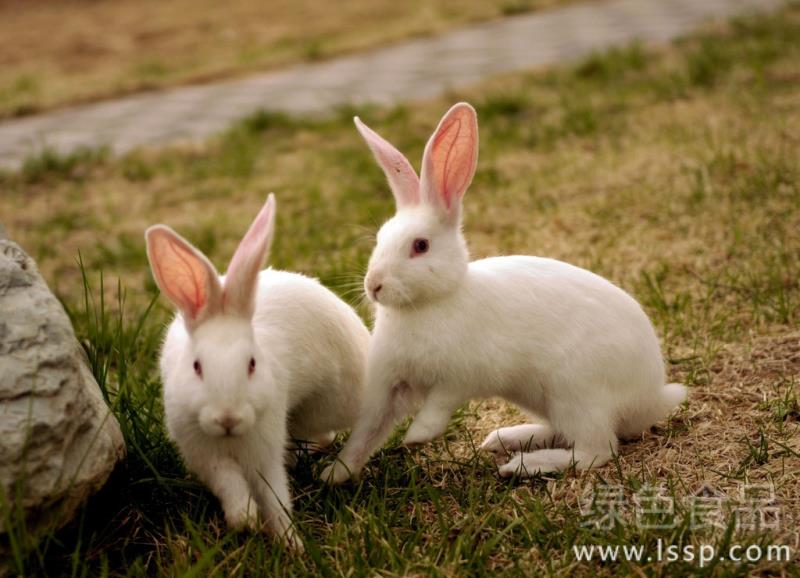
5 contraindications for immune injection in domestic rabbits; only reasonable immunization brings healthy rabbits
Reasonable immunization brings healthy rabbits: 5 contraindications for immune injection
-
What are the suitable growing conditions for tea plants? A detailed explanation of the suitable growing environment
Heat: The heat condition is generally expressed by temperature, and what mainly affects the growth and development of tea plants is air temperature and soil temperature. The biological minimum temperature for tea plants is generally around 10°C (the growth starting temperature); early-budding varieties may have a minimum below 10°C, while late-budding varieties have one above 10°C. The optimum temperature for tea plant growth refers to the temperature at which tea plants grow most vigorously and actively; it varies with variety and place of origin, and is mostly 20°C-30°C. Temperature difference: the day-night temperature difference directly affects the accumulation of photosynthetic substances. When daytime temperatures are high, photosynthetic substances are synthesized
-
The Mopan jujube is an ornamental tree suitable for courtyard planting
Aliases: Mozi jujube, Hulu jujube (Hebei), Yaohulu jujube (Gansu). It is fairly widely distributed; it is cultivated in places such as Dali in Shaanxi; Qingyang in Gansu; Jiaohe, Qingxian, Xianxian, Quyang, Daming and Weixian in Hebei; and Leling, Wudi and Xiajin in Shandong, but the quantity is very small, mostly planted scattered around the four sides [of homes and fields]. It has a long history of cultivation. The tree is vigorous, relatively large, with medium-strong trunk dominance; the crown is a natural semicircle and the tree posture is open. A 23-year-old tree: trunk height 1.1 m, trunk circumference 60 cm, tree height 7.35 m, crown diameter about 7 m. The main trunk is grayish brown, with deep bark cracks
-
Techniques for large-scale rearing of bream summer fry, suitable for triangular bream and blunt snout bream
Bream (triangular bream, blunt snout bream) are high-quality freshwater fish. They are not only excellent species for pond culture but also suitable for stocking in large water bodies, where their tendency to readily form natural populations can be used to achieve resource protection and enhancement. The techniques for large-scale rearing of bream summer fry are described below: 1. Conditions of the summer fry rearing pond. The summer fry rearing pond requires an abundant water source, unpolluted water quality, and convenient filling and drainage. The area should not be too large, generally 1-3 mu, with a water depth of 1-1.2 m being suitable. The pond must not leak,
-
Detailed Explanation of Key Points for Reasonable Fertilization Techniques for Cotton
Vigorously promoting scientific fertilization techniques for cotton is an important measure to increase the yield per unit area and product quality of cotton fields. The demand of cotton for the three major elements of nitrogen, phosphorus, and potassium and fertilizer application techniques. Field fertilizer efficiency test results prove that for every 100 kg of seed cotton produced, 5.0 kg of pure nitrogen, 1.8 kg of phosphorus pentoxide, and 4.0 kg of potassium oxide are required, with the ratio of nitrogen : phosphorus pentoxide : potassium oxide being 1 : 0.36 : 0.8. Reasonable application of base fertilizer. Base fertilizer should be mainly organic fertilizer, combined with a certain proportion of chemical fertilizer. Generally, per mu, use pig and cattle manure
-
Why is intercropping tree peony root bark with Gastrodia elata so profitable?
Tree peony root bark (the root bark of the tree peony) and Gastrodia elata are both precious Chinese medicinal herbs. Intercropping Gastrodia elata in tree peony root bark fields is a new high-yield, high-efficiency cultivation model that is worth promoting to herb growers in Chinese medicinal herb growing regions everywhere. The most notable features of intercropping Gastrodia elata in tree peony root bark fields are: first, it makes full use of the land; second, the two are complementary; third, it eliminates the trouble of having to weed the tree peony root bark field frequently. The cultivation method is described below: 1. Planting tree peonies. 1. Site selection: The tree peony field for intercropping Gastrodia elata requires fertile, deep soil, and a slight slope is best.
-
The most suitable planting time for Gastrodia elata and its impact on yield
Gastrodia elata is best planted during its dormant period. Winter planting in October to November and spring planting in March to April both give relatively good results. Gastrodia elata is generally not planted in summer, because this is precisely its growing season; digging it up at this time disrupts the relationship between Gastrodia elata and Armillaria mellea, and even if it barely survives, the results are very poor. Choosing an appropriate cultivation time is one of the important measures for increasing Gastrodia elata yields. The most suitable cultivation time is October to November (called autumn-winter planting), followed by February to March (called spring planting), and the worst is June to July
-
Mycelial film is a formidable enemy of high-yielding oyster mushrooms, and growers must be vigilant
Casing soil cultivation is an important measure for obtaining high yields of oyster mushrooms. However, before fruiting or after the first flush is harvested, the casing soil surface often forms an impermeable, airtight mycelial film from vigorously growing aerial hyphae, affecting fruiting. This mycelial film consumes a large amount of nutrients, causing reduced oyster mushroom yields, and must be prevented in production. Causes of mycelial film formation: First, when bag-cultivated oyster mushroom substrate is not fully colonized before casing soil is applied, the hyphae undergo a second vegetative growth on the surface, forming a mycelial film; Second, the cultivation substrate formula is unreasonable, with excessive nitrogen content blocking
条件筛选