-
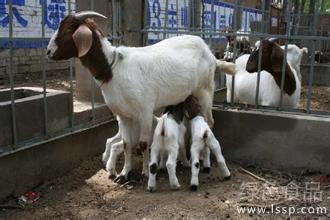
How should ewes in late pregnancy be fed to be reasonable?
Reasonable feeding methods for ewes in late pregnancy
-

What temperature requirements does soybean growth have? Detailed explanation of the suitable temperature range
Soybean is a warm-season crop and has different temperature requirements at each growth and development stage. First, seed germination is very sensitive to temperature: the minimum germination temperature is 6°C, emergence is 8-10°C, and seedlings suffer slight frost damage at a low temperature of -4°C. Throughout the growth period, the optimum growth temperature for soybean is a daily average temperature of 20-25°C, among which the optimum growth temperature for seedlings is 20-21°C, the flower bud differentiation stage is 21-23°C, the flowering stage is 22-25°C, the pod-setting and seed-filling stage is 21-23°C, and the maturation stage is 19-
-
Why is courtyard cultivation of Gastrodia elata so profitable?
Opening remarks: The artificial cultivation of Gastrodia elata follows special rules, and the level of technical skill directly affects the yield of Gastrodia elata. Comrade Zhang Youyun of the Heze City Yunzhou Gastrodia elata Research Institute began studying Gastrodia elata cultivation techniques in 1992 under Mr. Xu Jintang, the father of Chinese Gastrodia elata and a researcher at the Institute of Medicinal Plant Development, Chinese Academy of Sciences. Over ten years, he has worked out in practice a complete set of effective Gastrodia elata cultivation techniques and accumulated rich practical experience. To enable more Gastrodia elata enthusiasts to learn and master Gastrodia elata cultivation techniques, this newspaper is opening from today the "Gastrodia elata Cultivation Techniques Lecture" column
-
How profitable is Gastrodia elata cultivation? A planting income analysis
Question: How profitable is cultivating Gastrodia elata? Is it guaranteed? Answer: It can be said with certainty that the production benefit of Gastrodia elata is relatively high. At present, the purchase price of fresh Gastrodia tubers is generally around 40 yuan per kilogram. Calculated at a yield of 10 kilograms per square meter, the output value is about 400 yuan. In the first year of planting, the input cost is about 200 yuan, and the production benefit is about 200 yuan; from the second year onward, using self-produced tuber seeds to expand the cultivation area, about 5 times the cultivation area of the first year, and at the same time using first-generation high-quality fungal strains to self-cultivate fungal wood, that is,
-
Which dog breeds are not suitable for home breeding
Among the many pet dogs, some breeds are very prone to dystocia (difficult birth) when breeding. The more purebred the dog, the greater the chance of dystocia; small breeds such as the Poodle, Dachshund, Shih Tzu, Spanish Spaniel, and Chihuahua are especially prone to dystocia. Because these dogs have been artificially modified, their bones have become smaller and their pelvic cavity narrower, so dystocia is relatively easy to occur. In addition, some dogs such as the English Bulldog and the Italian Mastiff (Neapolitan Mastiff) also frequently experience dystocia because their heads are relatively large. Home-kept dogs are prone to dystocia
-
Reasonable Use Methods and Key Points of Feed Additives for Deer
Feed additives are classified into nutritional additives and non-nutritional additives. Commonly used nutritional additives for deer include: mineral additives, vitamin additives, amino acid additives, etc.; commonly used non-nutritional additives include: Chinese herbal medicine additives, probiotics, silage improvers, enzyme preparations, antibiotic additives, appetite stimulants, etc. There are many types of feed additives with different properties, and the dosage is very small. Using them directly in feed is not only technically difficult, but also makes it hard to guarantee the effect. Generally, additives are added to carriers or diluents to produce various
-
What are the precautions for feeding vegetables to rabbits?
The water content of vegetables is about 85%, and their crude fiber content is low, giving them good palatability. Rabbits tend to overeat them. Feeding vegetable leaves to young rabbits within 90 days of age will cause diarrhea in the young rabbits within just a few days. If rabbits develop diarrhea after eating vegetables, stop feeding vegetables, increase the feeding of green hay and dry leaves, and mix 2% charcoal powder or 2% medicinal charcoal into the mixed feed or compound feed for treatment. When the soil where vegetables are grown has been heavily fertilized with nitrogen, treated with herbicides, or when the vegetables are affected by pests, drought, or insufficient sunlight and turn red, their nitrate content increases. Rabbits overeat vegetable leaves and thus take in more nitrate
-
Full-film double-ridge furrow sowing cultivation technique for potato, suitable for arid regions
The full-film double-ridge furrow sowing cultivation technique for potato is a drought-resistant planting technique suitable for the arid and semi-arid regions of northern China, achieved by forming large and small ridges according to belt width and implementing full-ground coverage, integrating moisture conservation, rainwater harvesting, warming and yield increase. Its main advantages are: (1) By fully covering the large and small ridges with plastic film, all rainfall during the potato growing period is fully collected; in particular, the tiny rainfall of about 5 mm in spring is gathered through the film surface into the rainwater harvesting furrows, effectively solving the problem of sowing being seriously affected by spring drought in dryland farming areas, thereby ensuring normal emergence of potatoes;
-
Four unfavorable factors in paddy field management
1. The time for land preparation and field soaking is short, the clods are large, and seedlings are transplanted before the soil is thoroughly soaked; salt removal and alkali washing are incomplete, making salt damage likely and harming seedling growth and development. 2. This year there are many windy days and cloudy days with large temperature differences, so the seedlings cannot be properly ventilated and hardened, which is unfavorable for recovery after transplanting. 3. The masses have a relatively strong fear of water, transplanting in deep water and managing with deep water, which is unfavorable for raising soil temperature after transplanting, early rooting, early seedling growth, and early tillering. 4. Water stored from last winter to this spring is of poor quality, and soil salinity is high, making the rice growing environment unfavorable.
-
How to make fish, vegetable and rice cereal: recipe and detailed steps
Ingredients: rice cereal (or infant rice cake), 15-25 g each of fish and green vegetables, a pinch of salt. Method: soak the rice cereal in a little water until soft, stir into a paste, put it in a pot, bring to a rolling boil over high heat for about 8 minutes; wash the green vegetables and fish, chop each into a paste and add both to the pot, continue cooking until the fish is thoroughly cooked, season and it is ready. The secret of calcium supplementation: fish is rich in calcium, which not only helps your baby grow taller and supports bone development, but also promotes brain development and meets the body's need for a variety of nutrients, so you may want to regularly
条件筛选