-

Detailed Explanation of the Forcing Cultivation Techniques for Softening-Type Chicory
After the roots are harvested, it is best to subject them to a period of low-temperature treatment before carrying out forcing cultivation. The duration of the low-temperature treatment varies by variety; early-maturing varieties can be treated for a shorter time, while late-maturing varieties should be treated for a longer time, so that tighter chicons can be formed. The methods of forcing cultivation are quite flexible and can be broadly divided into the soil culture method and the water culture method. The soil culture method is a relatively traditional cultivation method and can be carried out by digging trenches in the ground inside plastic tunnels or greenhouses. Its characteristics are low cost and simple operation, but the fact that the chicons formed are not clean is its greatest drawback. The water culture method requires specialized
-
Product Introduction to Kekeling, a New Type of Silkworm Disinfectant
(1) Content Introduction Disinfection and disease prevention are key technical measures for stabilizing silkworm crops and increasing cocoon production. Researching and promoting silkworm disinfectants that are highly effective, low in toxicity, broad-spectrum in sterilization, stable in medicinal properties, non-corrosive, low in cost, and simple and safe to use is a topic that the sericulture industry in all countries attaches importance to. In recent years, various silkworm-producing areas in China have developed and promoted numerous silkworm disinfectants, and many have been restricted in their promotion and application due to reasons such as unstable medicinal properties, strong corrosiveness, and insufficiently broad-spectrum sterilization. The new silkworm disinfectant Kekeling was jointly developed through collaborative research by South China Agricultural University, the Shunde Chemical and Biological Research Institute, and
-
What is fruit-scented drunken jujube? A detailed look at this type of jujube
Ingredients and formula: 1 kg fresh jujubes, 20 ml baijiu (Chinese liquor), 5 drops orange flavoring (food grade). Method: 1. Select eight-ripe red jujubes that are undamaged, free of pests and diseases, and firm in texture, and wash them clean with water. 2. Pour the jujubes into a pot, add 20 ml baijiu, and stir evenly so the jujubes absorb the liquor, then drip in the orange flavoring and mix well. 3. Quickly place the jujubes into a plastic food bag, tie it tightly with string, put it in a cool place, and store sealed for 1 month, after which they are ready to eat. Product characteristics: ruddy color
-

Analysis of the Characteristics of Legume Vegetables and Their Pesticide Residue Situation
Do you like eating legumes? Do you know whether they have pesticide residues? Inspections have found that the pesticide residue failure rate of legume vegetables such as green beans, peas and common beans is as high as 63%. Among the pesticide residues detected were chlorothalonil and acetamiprid
-
Duck prosthogonimiasis is a type of parasitic helminth disease in ducks.
Duck prosthogonimus is a parasite that lives in the bile ducts or gallbladder of the duck liver. It mainly affects ducks over one month of age, and both the infection rate and infection intensity are very high. Death often occurs due to blockage of the gallbladder and bile ducts by the worms, making it one of the trematode diseases currently causing relatively great harm to ducks. There are two species of prosthogonimus parasitic in the gallbladder and bile ducts of ducks (Prosthogonimus orientalis and Prosthogonimus taiwanensis), and the one commonly seen in clinical practice is mainly Prosthogonimus orientalis. 1. Pathogen and epidemiological characteristics The pathogen is Prosthogonimus orientalis, belonging to the family Opisthorchiidae. The worm body is leaf-shaped, 2.4-4
-
What varieties and types of Pinellia ternata are there? Detailed introduction
Pinellia ternata commercial products are subglobose, some slightly flattened and oblique, 1-1.5 cm in diameter. The surface is white or pale yellow, the top has a sunken stem scar, surrounded by densely distributed pitted root scars commonly called "brown eyes," and the lower part is bluntly rounded and relatively smooth. The texture is solid, the cross-section is pure white and kidney-shaped, rich in farinaceous character, odorless, pungent in taste, numbing to the tongue and irritating to the throat, and sticky when chewed. In the past, commercial Pinellia ternata was divided into many commodity types according to production area; Xufuzi: the adjacent areas of Sichuan and Yunnan, especially that produced in Zhaotong, Yunnan, is the most famous and has the reputation of "Pearl Pinellia." Nearby Leibo,
-
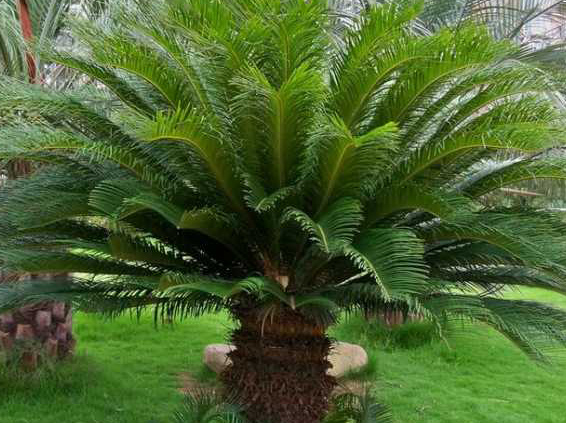
What Types of Cycads Are There? Introduction to Common Varieties
Cycads are a rare plant group in the world, with 24 extant species. Those commonly seen in gardens include: Cycas rumphii, Cycas szechuanensis, Cycas panzhihuaensis, Cycas micholitzii, Cycas multipinnata, Zamia cycads, and others
-
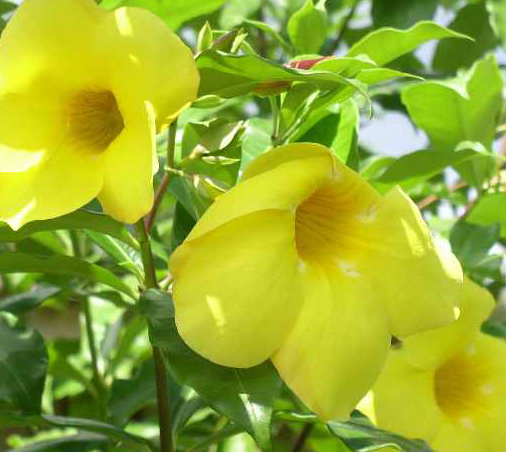
What types of yellow allamanda are there? A detailed introduction to common yellow allamanda varieties
Yellow allamanda belongs to the genus Allamanda in the family Apocynaceae. This genus has 15 species, distributed in tropical America. The common species and cultivated species introduced and grown in China include: yellow allamanda, willow-leaved allamanda, double-flowered willow-leaved allamanda, small-leaved willow-leaved allamanda, white allamanda, and purple allamanda. Yellow allamanda is an evergreen shrub. Leaves are 3-5 in whorls, ovate-lanceolate, with entire margins
-
What are the types of whitefly pests and their damage symptoms?
Which whiteflies are commonly seen? What kind of damage do whiteflies bring to agricultural products? Let's take a look together below and get to know them first. The silverleaf whitefly belongs to the order Homoptera, family Aleyrodidae. Since it invaded the main island of Taiwan, China in the 78th year of the Republic of China, the
-
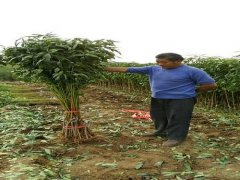
What is organic matter in fertilizer, and what types are there?
Do you know the selection and application techniques of organic matter fertilizers? If not, then take a look at this article and learn about it. This way you can fertilize crops better. Choose according to soil conditions. You can send soil samples to an improvement station to analyze the soil's organic matter.
条件筛选