-

Research on the Cultivation of Edible Fungi Using Yellow Ginger Residue
Study on the Cultivation of Edible Fungi Using Yellow Ginger Residue
-
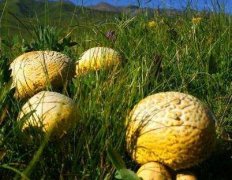
Qinghai Qilian Wild Yellow Mushroom: Benefits, Uses, and Stew Recipe with Pictures
In Xining, Qinghai, apart from the local mutton, there are three things that are local specialties you have to take home: black goji berries, highland barley wine, and yellow mushrooms. Black goji berries are rich in anthocyanins, highland barley wine is a grain liquor brewed from locally produced highland barley, and yellow mushrooms grow on the grasslands
-
Analysis of the Causes of Abundant Yellow Mushrooms and Prevention and Control Methods
The main causes are improper management during the low-temperature season. During the low-temperature season, the humidity inside the mushroom shed may be too high, with excessive watering, and too much free water adhering to the mushroom bodies. After absorbing water, it cannot evaporate, which weakens the metabolism of the mushroom bodies, causing various pathogens to take advantage of the opportunity, multiply in large numbers, and trigger various diseases of the fruiting bodies; continuous low-temperature weather causes the temperature inside the mushroom shed to be too low, and the edible fungus fruiting bodies remain in a poor living environment for a long time, leading to disease; some edible fungus varieties are at the 3rd to 4th flush during the fruiting period, and the nutrient supply in the fungus bags is insufficient. After budding, the
-
What are the reasons for the recent surge of yellow mushrooms?
Recently, many mushroom growers have called in, saying that the edible fungi they cultivated have shown yellowing and death, and they do not know the cause. After investigation, the author believes that the following aspects can be provided as reference for mushroom growers. 1. The disease types occurring recently are mostly brown rot, brown spot, yellow spot, etc. The pathogens are Mycogone perniciosa, Verticillium, Cladobotryum varium, etc. These pathogens have strong survivability, tolerate low temperatures, and prefer high humidity. They can grow normally at around 10°C, and are common pathogens from late autumn to early spring. 2.
-
What are the symptoms of yellow blotch disease in oyster mushrooms?
Yellow blotch disease of oyster mushrooms is a disease caused by Pseudomonas bacteria, which shows a negative reaction to Gram staining. This disease is a bacterial disease, it is widely present in nature, and it attacks both oyster mushrooms and button mushrooms. Symptoms: In the early stage of infection, small speckled yellow diseased areas appear on the caps; as the fruiting bodies grow, they expand and infect other fruiting bodies; subsequently the color deepens and spreads to the entire cap, and the whole mushroom turns yellow. The affected fruiting bodies become water-soaked but are not sticky and do not rot, and especially in black oyster mushrooms the color difference after yellow blotches appear is extremely obvious.
-
Causes and Control Methods of Yellow Mushroom Disease in Oyster Mushrooms
In recent years, the cultivated area of oyster mushrooms has continued to increase, but due to poor management by growers, weak awareness of disease prevention, and other reasons, the incidence of yellow mushroom disease in oyster mushrooms has shown an upward trend year by year. In some mushroom sheds, after one flush of mushrooms, no more mushrooms appear for a long time; in others, the small mushrooms that do appear turn yellow before growing up, then shrivel and die, leading to a decline in oyster mushroom quality and making it difficult to increase yield. For this reason, the author studied the causes of the disease and integrated control techniques, and reports as follows: 1. Disease symptoms. Yellow mushroom disease mostly starts from the caps of young mushrooms or the junction between the stipe and cap of small mushrooms. After onset, pale yellow spots appear on the caps of young mushrooms or in the depressions of the caps of small mushrooms. The young mushroom bodies become sticky, stop growing, and die; small mushroom bodies grow slowly and lose elasticity, breaking apart at the slightest touch, after which the mushroom bodies become sticky and shrivel, giving off a foul rotting odor. The disease spreads rapidly, causing the cultivation substrate surface to become sticky and cease producing mushrooms.
-
Control Methods and Technical Key Points for Yellow Blotch Disease of Oyster Mushrooms
Control methods: [1]The mushroom house facilities must be thoroughly disinfected; removable support materials should be taken down, brushed or soaked in bleaching powder solution and then sun-dried, with bleaching powder used at 1:150 parts water; the floor and space should be sprayed with 1:50 Jinxing disinfectant solution. [2]The compost and fermented material must be thoroughly processed, and the casing soil material should be fumigated with formaldehyde (for specific operation methods, see the control methods for mushroom Mycogone perniciosa written by our factory). [3]Ventilation must be maintained inside the mushroom house, and the relative air humidity inside the mushroom house should be appropriately reduced so that the carbon dioxide concentration in the shed drops
-
Causes and Control Methods of Yellow Mushroom Disease in Pleurotus pulmonarius
In recent years, because Pleurotus pulmonarius has good economic returns and can fill the gap in summer edible mushroom products, its production in Jiangshan City has developed rapidly, and by 2004 the total had exceeded 8 million bags. However, in the recent period, some mushroom farms in Jiangshan have experienced mushroom death. Through observation, it was clearly determined that the dead mushrooms were caused by yellow mushroom disease. 1. Symptoms of yellow mushroom disease. Yellow mushroom disease is a bacterial disease caused by infection with Pseudomonas bacteria, which causes the fruiting bodies to discolour, rot and stink, and the incidence rate is generally higher in the first flush. When the disease occurs, a slime-like pathogen appears on the surface of the mushroom bags, part of the mycelium shows yellowing symptoms, and in severe cases the pathogen directly attacks the mushroom bodies, causing the affected mushrooms to develop lesions, turn yellow, and even die. It takes only a few hours from infection of the mushroom body by the pathogen to the appearance of symptoms (dead mushrooms). ① Dry rot type: it can occur from the young mushroom stage to the mature stage; after onset, the cap or stipe shows localized scorched yellow, causing light-coloured mushrooms to become yellow mushrooms, and the mushroom bodies grow slowly, gradually becoming rigid until the whole mushroom body shrinks and dries up, like being dried by lack of water. ② Wet rot type: the affected site or the entire cluster of mushrooms has a sticky, moist feeling; in severe cases, all diseased mushrooms show pale yellow water-soaked rot, with sticky secretions and a foul odour.
-
Golden Star Yellow Umbrella Mushroom Successfully Cultivated Artificially in Jiangxi
Recently, fresh "Golden Star Yellow Umbrella" mushrooms were successfully cultivated artificially in Shicheng County, Jiangxi Province, and quickly became a new favorite in local residents' "vegetable baskets," selling out rapidly after hitting the market. The "Golden Star Yellow Umbrella" mushroom originally had no history of artificial cultivation and is also quite rare growing naturally in the wild. Luo Yijin, a farmer from Taohua Village in the Yangdi area of Hengjiang Town in the county, accidentally discovered wild "Golden Star Yellow Umbrella" mushrooms during an operation deep in the mountains. After picking the mushrooms and bringing them home, Luo Yijin began actively practicing and boldly exploring artificial cultivation methods for them.
-
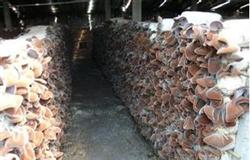
Detailed Explanation of Key Points for Cultivating Yellow-Back Wood Ear Mushroom (Auricularia polytricha) on Rice Straw
1 Rice straw softening treatment. The quality of rice straw treatment is the key to the success or failure of cultivating yellow-back wood ear mushroom and to achieving high yields. Rice straw is a loose material that easily accumulates water but is difficult to shape, and its epidermis in particular has a waxy layer that can hinder mycelial colonization of the substrate. Through experimentation, we have developed 3 methods for softening rice straw...
条件筛选