-

Recommended Flower Varieties with Both Ornamental and Medicinal Value
In the embrace of nature, there are many flowers that not only adorn our living spaces with their brilliant beauty, but also hold rich medicinal value. Today, let us step into the world of cockscomb, globe amaranth, corn poppy, and foxglove, and learn about these wondrous flowers that are both ornamental and medicinal. Cockscomb:
-

Greenery Company Wins a 1 Billion Yuan Mega Order, with Orders Continuing to Pour In
Recently, Zhongbu Huamu Cheng Free Trade Park Co., Ltd. has been stealing the spotlight in the nursery stock industry! 300 million yuan and 1 million nursery plants were successfully exported to Dubai, and right after that, it secured a 1 billion yuan mega order from Africa. While many companies are still worrying about market share, why has this one been able to "power up" all the way in overseas markets and win
-

Will a Phalaenopsis orchid still grow after its flower spike is cut off, and how to deal with soft, collapsed, sticky leaves
The main reason Phalaenopsis orchids are loved by so many flower enthusiasts is that there are many varieties and rich flower colors, with colors ranging from pure white to passionate red to mysterious purple, all fully available in Phalaenopsis. However, after bringing home a flower you love, many times the flowers begin to show various problems, such as buds dropping early, flower stems becoming withered
-

How long can a Phalaenopsis (moth orchid) go without water before its roots become hollow or it even dies of drought?
Phalaenopsis (moth orchid), as a beautiful ornamental flower, has specific requirements for its growing environment. During care, everyone wonders whether Phalaenopsis is drought-tolerant, and how long a drought will cause its roots to become hollow. Phalaenopsis is not drought-tolerant. Although a short period without water will not cause fatal damage, a prolonged drought will cause the moth orchid to
-

How to Handle a Phalaenopsis Orchid with Too Many Roots That Have Filled the Pot
Phalaenopsis orchids, long known as the "Queen of Orchids", are favored by flower lovers for their elegant bearing and brilliant blooms. However, during care, many growers may run into this problem: the roots of the Phalaenopsis have grown so vigorously that they have even filled the pot. So how should this be handled? Phalaenopsis belongs to the typical
-

Reasons for Withering Phalaenopsis Orchid Buds and How to Remedy Them
Phalaenopsis orchids (moth orchids) sometimes suffer from withered buds during care, which is deeply regrettable. What exactly causes Phalaenopsis orchid buds to wither? And how should they be remedied? Causes of Phalaenopsis orchid bud withering: Sudden temperature changes: Phalaenopsis orchids are relatively sensitive to temperature changes. Whether a sudden high temperature or low
-

Just bought a Phalaenopsis with no shaping? Here are simple shaping tips for you
In the fast-paced urban life, more and more flower lovers like to grow some beautiful flowers at home to relieve daily stress and irritation. Among the many flowers, the Phalaenopsis (moth orchid) is undoubtedly one of the most popular choices, simply because its elegant flower posture and long blooming period are the most appealing. However, although many flower lovers
-

The Best Time to Sow Cypress Vine and a Detailed Explanation of Its Winter Withering Problem
Today we introduce a plant in the Convolvulaceae family that is often mistaken for morning glory - the cypress vine. It is native to tropical America and is known for its unique five-pointed star-shaped flowers and feathery leaves. It was first introduced to China during the Tang Dynasty, and in recent years it has often been used to adorn courtyards, becoming a garden landscaping internet favorite. Besides its high ornamental value,
-
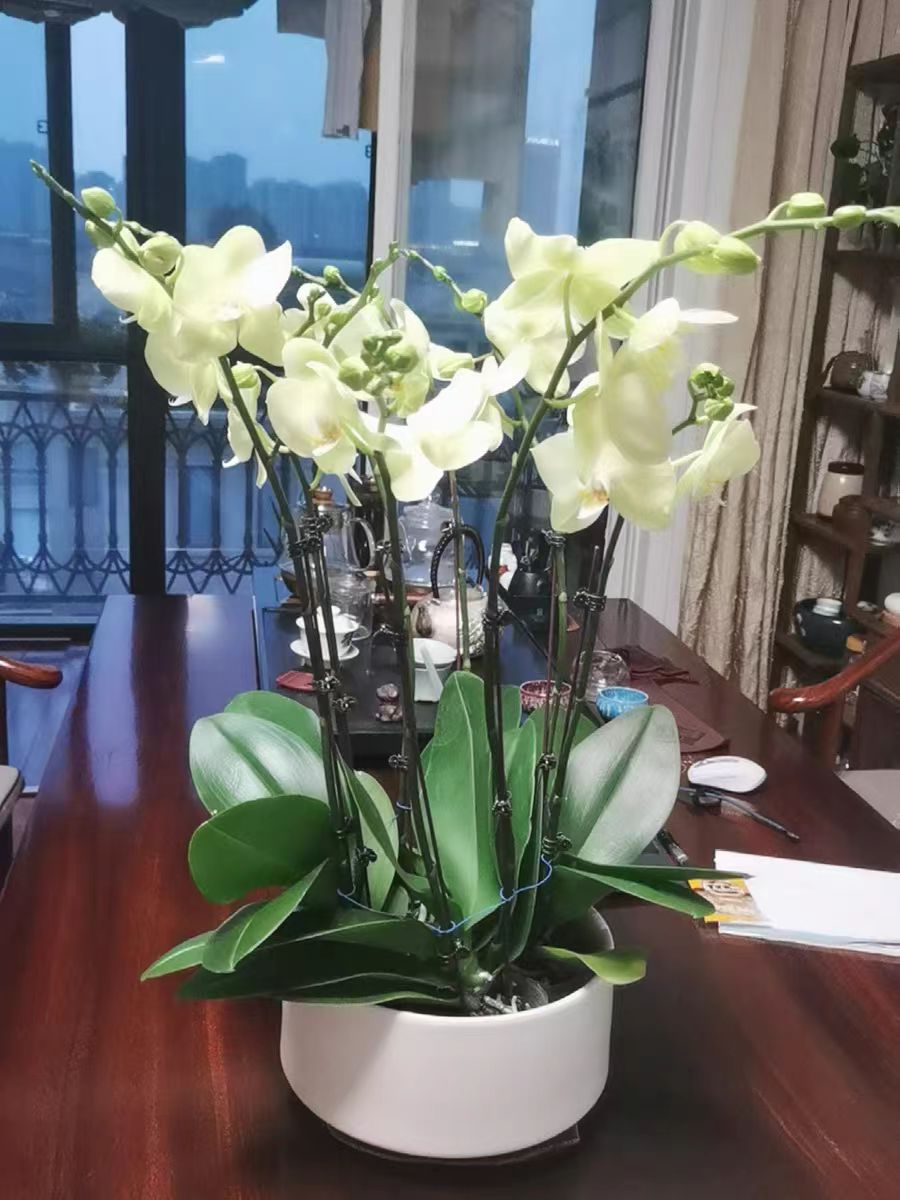
What's the Matter with the Cracks in Phalaenopsis Leaves?
During the cultivation of phalaenopsis, many people encounter the problem of cracked leaves, which not only affects the plant's appearance but also causes
-

Can a Gloxinia still grow leaves with only one tuber left? Detailed guide to the sprouting method
Gloxinia (Sinningia speciosa), as a beautiful indoor flowering plant, has quite tenacious vitality. Even if only the tuber remains, as long as it is cared for properly, it can still grow new leaves again and bloom. The key lies in providing a good growing environment and the correct care methods. Care points: Temperature control: keep the indoor temperature above 15°C
条件筛选