-
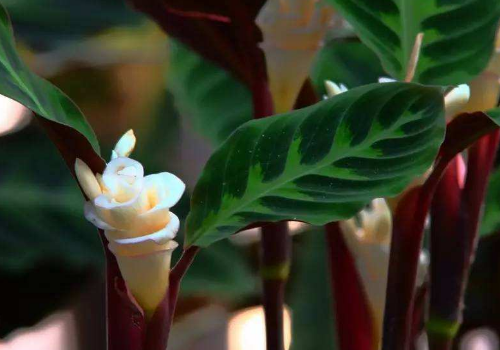
When Does the Velvet Calathea Bloom? Reasons for Not Blooming and Solutions
The velvet calathea can effectively absorb harmful substances from the air, which greatly improves the home environment. When does the velvet calathea bloom? What to do if it does not bloom: When does the velvet calathea bloom: The flowering period of the velvet calathea is from May to June each year. The capitulum is ovate, about the size of a goose egg.
-
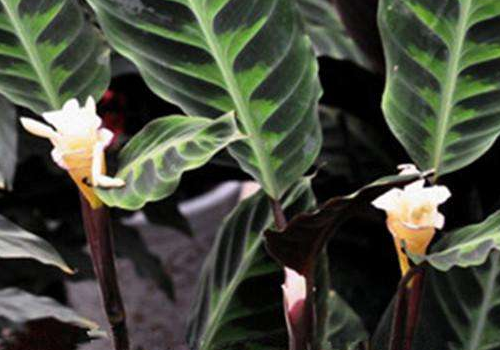
Reasons for Yellowing, Drooping Leaves on the Velvet Calathea and How to Fix Them
Generally, you can start with its growth habits, and in the later stages of cultivation you need to strengthen the management of waste water. What causes yellowing, drooping leaves on the velvet calathea? How to fix it: What causes yellowing, drooping leaves on the velvet calathea: 1. Too little water in summer. The velvet calathea likes a somewhat humid growing environment
-

Occurrence and Control Methods of the Black Velvet Chafer in Fengxiang County, Shaanxi
The black velvet chafer (commonly known as "louhu") has a body length of 7-8 mm, a blackish-brown or purplish-brown body color, and blackish-brown fine hairs on its body surface. It has one generation per year and overwinters as an adult. In April of the following year, it emerges and becomes active, then feeds on the leaves of weeds, poplar, willow, and elm trees. After crop seedlings emerge, it migrates to sunflowers, beans, and other crops to feed and cause damage. During the day, it hides in weeds and soil cracks. It mostly flies out in groups in the evening to cause damage, biting the tender leaves of willow, elm, and fruit trees, as well as the seedlings of crops such as alfalfa, sunflower, sweet potato, potato, and kidney bean. Adults have a death-feigning habit and phototaxis. From May to
-
What are the general principles for raising velvet deer?
(1) Scientifically and rationally match the feed. To improve the production performance of deer, the feed should be scientifically and rationally matched according to local feed sources, types, reserve quantities, feed quality, deer management conditions, etc., so as to meet the nutrient requirements of velvet deer. Velvet deer have different nutritional needs at different stages. For example, male deer need more nutrition during the mating period and antler-growing period than female deer, while female deer need even more nutrition during pregnancy and lactation. Therefore, during the feeding process, feed supply plans should be prepared in advance to ensure that feed can be matched and adjusted promptly, scientifically, and rationally, so as to achieve good results.
-
Detailed Explanation of Key Technical Points for Velvet Deer Breeding and Reproduction
Physiological Characteristics of Velvet Deer Sexual Maturity and Suitable Age for First Mating Sexual maturity is the maturity of reproductive physiology, at which point deer can produce mature sperm and eggs and exhibit sexual behavior. The sexual maturity of velvet deer is related to factors such as breed, type, sex, genetic status, nutritional conditions and individual development. Sika deer mature earlier than red deer, females earlier than males, and deer of the same breed with good nutritional status and rapid individual development also mature earlier. General sexual maturity period: female sika deer at about 16 months of age, well-developed
-
Detailed Guide to Propagating Purple Velvet Tradescantia: You'll Get It at a Glance
[Propagation Method] Cuttings are the usual method of propagation. In spring and autumn, select 10cm-long stem sections; each cutting should have one or two leaves and be inserted into a mixed substrate of peat and sand. Several cuttings can be inserted into one pot. Water thoroughly the first time, cover well with plastic film, and place in bright light. After that, simply mist the leaves once or twice a day depending on how dry or moist they are; too much moisture easily causes rot, and roots form in about 2--3 weeks. The water-culture method can also be used, but make sure the water temperature is higher than the air temperature; roots will form after a few weeks.
-
How to raise velvet deer well? An analysis of the key points of feeding and management techniques
Deer belong to the class Mammalia, order Artiodactyla, family Cervidae, genus Cervus, and among them, deer whose velvet antlers have medicinal value are all called velvet deer. The velvet deer domesticated in China are mainly sika deer, red deer, white-lipped deer and black deer, etc. Deer antler velvet is a precious traditional Chinese medicinal material, with effects such as promoting spermatogenesis and replenishing marrow, enriching blood, strengthening yang, and strengthening tendons and bones. Others such as deer fetus, deer blood, deer sinew, deer penis, deer bone, deer meat, deer heart, deer liver and deer skin are all first-class raw materials for medicine and industry. Velvet deer have high economic value, and wild resources are scarce, so @#@253@#@ is a promising good industry. 1. The living habits of deer Because the history of deer domestication is relatively short, they still retain the wild habits of their ancestors. Their hearing, vision and smell are well developed, and they are timid and easily startled, fleeing quickly at the slightest disturbance. Under normal circumstances, male deer are more aggressive than female deer. Under natural conditions, they mostly live in groups, ranging from a dozen to several dozen, and we can use their strong social nature for domestication and grazing. Deer are herbivores and have the physiological function of rumination, feeding on various plants year-round. Green grass, crop straw and the branches of trees and shrubs are all good feed for deer. Under artificial feeding conditions, soybean cake, corn, wheat bran, etc. can be used as supplementary concentrated feed. 2. Deer shed construction The deer farm should be chosen in a place with high and dry terrain, flat and spacious, good drainage, sufficient sunlight, abundant forage grass, and shelter from the wind in winter. Because deer are wild by nature, the pens should be sturdy. The pen area should be 2-3 sq m per deer, the exercise yard 8-10 sq m per deer, and the enclosure wall height 2-2.2 m. The pens should be paved with brick, stone or cement flooring, and equipped with feeding troughs and water troughs. 3. Feeding and management The purpose of raising velvet deer is to obtain deer antler velvet. Therefore, raising male deer well is very important (male deer produce velvet, female deer do not). Feeding male deer can be divided into two stages: the pre-antler-growing period (February to April) and the antler-growing period (May to August), and the mating period (September to November) and the post-mating recovery period (December to January). After February, as the weather turns warmer and the daylight becomes longer, in order to meet the physiological needs of male deer for antler growth, concentrated feed should be gradually increased. A mixed concentrated feed of 1-1.25 kg can be fed, then increased by 70-80 g per day, reaching 2.3-2.4 kg by early May. Among this, protein-rich legume feed should account for more than 50%-60%. Mineral feeds such as salt and shell powder need to be fed at 10-20 g per day, and if conditions permit, some additives such as livestock growth hormones can also be fed. In July, after the first crop of velvet is sawed off, non-breeding male deer should have their concentrated feed reduced by 50%-80%, to avoid fierce head-butting during the mating period. During the mating period, male deer become excited and aggressive due to sexual impulses, and their appetite decreases, so attention must be paid to supervision to minimize injuries and deaths. The feed should be as varied as possible, with more green feed and root feed. The mixed feed should be 0.5-0.75 kg per day. After the mating period, the nutrition of male deer declines, and coupled with colder weather, this is a season when they are prone to death, so roughage should be sufficient, and the mixed concentrated feed should preferably be 0.75-1 kg per day. 4. Reproduction of velvet deer Female deer reach sexual maturity at over 2.5 years of age, and male deer at 2.5-3 years, but mating at 4-5 years is preferable. The estrous cycle of female deer is 17-21 days, the duration of estrus is 18-36 hours, and the gestation period is 224-231 days. The peak estrus season for female deer is September to November. In the early and middle stages of estrus, they show restlessness and excitement, wagging their tails, and the external genitalia swell, become congested and discharge transparent mucus. Mating 12 hours after the onset of estrus makes conception more likely. Male deer with high velvet yield, robust constitution and good hereditary performance should be selected as breeding deer. In terms of mating methods, the one-male-to-multiple-female mating method is currently commonly used, that is, 1 male deer mates with 20-30 female deer, and the conception rate can reach over 90%. May to June is the fawning period for female deer, with 1 fawn per litter, and few twins. The lactation period is 2 months. Male deer produce initial antler velvet at 1 year of age, produce standard deer antler velvet at 2 years of age, and 4-8 years is the peak period of velvet production, with a productive lifespan of up to 12-14 years.
-
Introduction to Breeding Methods and Technical Key Points for Velvet Deer
Physiological Characteristics of Velvet Deer: Sexual Maturity and Suitable Age for First Mating. Sexual maturity is reproductive physiological maturity, at which point deer can produce mature sperm and eggs and exhibit sexual behavior. The sexual maturity of velvet deer is related to factors such as breed, type, sex, genetic status, nutritional conditions and individual development. Sika deer reach it earlier than red deer, and females earlier than males. Within the same breed, deer with good nutritional status and rapid individual development reach sexual maturity earlier. General sexual maturity period: female sika deer at about 16 months of age; well-developed deer reach sexual maturity at 7 months of age; male deer at about 20
-
A Detailed Guide to the Identification and Control Techniques of the Black Velvet Chafer
The black velvet chafer is commonly known as the "blind bumper" or "big velvet mandarin jacket." It mainly damages soybean seedlings in its adult form (the chafer), biting the growing points or severing young stems. When outbreaks are severe, it can eat the seedlings bare, causing missing plants and broken rows, or even ruining the field. This insect has one generation per year, overwintering as adults in the soil, and occurs more often in fields following soybeans. From late April to early May, it first feeds on weeds; after soybean seedlings emerge, it bites the soybean seedlings. At night this insect hides in the soil and comes out during the day to cause damage. It feeds most heavily from 3-5 pm, and the number of insects is greatest on windless, warm days. Control methods: 2.5
-
Key Breeding Techniques for Early Growth of the Second-Crop Velvet in Deer
There are 2 methods for harvesting velvet antler: sawing the antler and cutting the antler. Among them, sawing the antler generally starts from 3-year-old deer, and can be harvested 2 times per year. The 1st time is 45-50 days after Qingming, called "first-crop velvet", and the 2nd harvest is 50-60 days later, called "second-crop velvet". To promote early growth of the second-crop velvet, the following measures can be taken: 1. Select superior deer breeds - generally, the regeneration velvet yield of Tianshan red deer and Tarim red deer is significantly higher than that of Northeast red deer, so to obtain more regeneration velvet, it is best to choose to raise these two pure red deer breeds. 2. Utilize hybrid advan
条件筛选