Reasons for Yellowing, Drooping Leaves on the Velvet Calathea and How to Fix Them
Generally, you can start with its growth habits, and in the later stages of cultivation you need to strengthen the management of waste water. What causes yellowing, drooping leaves on the velvet calathea? How to fix it:
What causes yellowing, drooping leaves on the velvet calathea:
1. Too little water in summer. The velvet calathea likes a somewhat humid growing environment. Summer is fairly dry, so if there is not enough water or the air is relatively dry, the velvet calathea can easily develop scorched edges because of insufficient water supply during care.
2. Low temperatures and too much water in winter. In winter, when the temperature is relatively low, the velvet calathea is prone to scorched edges, and if too much water is given at this time, in severe cases it can cause the rhizomes of the velvet calathea to rot.
3. Improper fertilizing. Improper fertilizing can also cause the leaves of the velvet calathea to develop scorched, curled edges, mainly meaning too much or too little fertilizer. Too much fertilizer causes root burn, and the leaves develop scorched, curled edges; too little fertilizer leaves the velvet calathea lacking certain growth elements and produces scorched edges.
4. Direct sunlight. Direct sunlight is not suitable for the velvet calathea, because overly intense light will burn the leaves of the velvet calathea and cause them to wither and scorch.
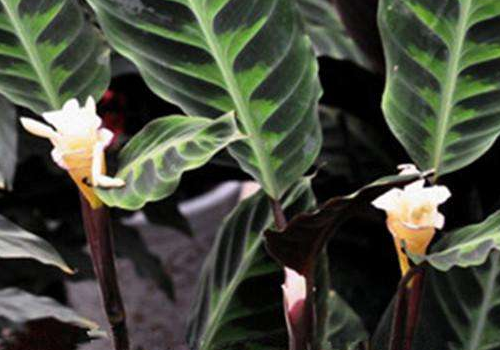
How to fix yellowing, drooping leaves on the velvet calathea:
1. Care. Basically, for yellowing and drooping in the velvet calathea, prevention is still the main approach, and there are several key points to note during care. First, the lighting should preferably be mostly semi-shade, avoiding direct sunlight. Water and fertilizer are also important: in summer, keep the potting soil moist and mist more often, while in winter watering should be controlled. As for fertilizing, applying once every half month during the growing period is better, and it should be rich in elements such as nitrogen, phosphorus and potassium.
2. Pruning. If the leaves of the velvet calathea have already shown yellowing and drooping, then pruning is needed. First mist the leaves of the velvet calathea with water, which helps with the pruning and can prevent more damage during pruning. Prune the yellowed, drooping leaves; the specific method is to use scissors to trim off the scorched parts of the leaves, not leaving yellow edges, so that the remaining leaf surface looks green. When pruning, the movements should be as gentle as possible to avoid causing greater damage to the leaves.
Now you have found the reasons for yellowing, drooping leaves on the velvet calathea.
What to Do About Yellowing, Drooping Leaves on the Velvet Calathea (with Solutions) Causes of Yellowing, Drooping Leaves on the Velvet Calathea
The velvet calathea can now be seen in many places in our country, and it is a fairly common plant. Because of its high ornamental value, it is deeply loved by consumers, who buy it. However, after many people take it home, improper care leads to the phenomenon of yellowing leaves, and in fact there are tricks to avoiding this too.
What to Do About Yellowing, Drooping Leaves on the Velvet Calathea (with Solutions)
1. Care. Basically, for yellowing and drooping in the velvet calathea, prevention is still the main approach, and there are several key points to note during care. First, the lighting should preferably be mostly semi-shade, avoiding direct sunlight. Water and fertilizer are also important: in summer, keep the potting soil moist and mist more often, while in winter watering should be controlled. As for fertilizing, applying once every half month during the growing period is better, and it should be rich in elements such as nitrogen, phosphorus and potassium.
2. Pruning. If the leaves of the velvet calathea have already shown yellowing and drooping, then pruning is needed. First mist the leaves of the velvet calathea with water, which helps with the pruning and can prevent more damage during pruning. Prune the yellowed, drooping leaves; the specific method is to use scissors to trim off the scorched parts of the leaves, not leaving yellow edges, so that the remaining leaf surface looks green. When pruning, the movements should be as gentle as possible to avoid causing greater damage to the leaves.
Causes of Yellowing, Drooping Leaves on the Velvet Calathea
1. Too little water in summer. The velvet calathea likes a somewhat humid growing environment. Summer is fairly dry, so if there is not enough water or the air is relatively dry, the velvet calathea can easily develop scorched edges because of insufficient water supply during care.
2. Low temperatures and too much water in winter. In winter, when the temperature is relatively low, the velvet calathea is prone to scorched edges, and if too much water is given at this time, in severe cases it can cause the rhizomes of the velvet calathea to rot.
3. Improper fertilizing. Improper fertilizing can also cause the leaves of the velvet calathea to develop scorched, curled edges, mainly meaning too much or too little fertilizer. Too much fertilizer causes root burn, and the leaves develop scorched, curled edges; too little fertilizer leaves the velvet calathea lacking certain growth elements and produces scorched edges.
4. Direct sunlight. Direct sunlight is not suitable for the velvet calathea, because overly intense light will burn the leaves of the velvet calathea and cause them to wither and scorch.
What Are the Main Diseases of the Velvet Calathea
1. Leaf blight. Leaf blight can cause large areas of leaves to dry up. In the early stage of the disease, small reddish wrinkled spots first appear on the leaves, then quickly expand into circles, with the lesions appearing light brown and water-soaked. Later, the edges of the lesions turn reddish brown, and if untreated, it can quickly kill half a leaf or even an entire leaf.
2. Anthracnose. The air humidity requirement is between 75-90%. Low air humidity will produce curled leaves, withered leaves and scorched edges, and this is anthracnose.
3. Leaf spot. It generally starts infecting from the leaf margins and leaf tips, with lesions going from small to large and appearing irregular, reddish brown to grayish brown, and the lower leaves of the plant are more severely affected.
Control Methods for Velvet Calathea Diseases
1. Leaf blight. Control method: when the disease occurs, repot promptly, cut off diseased leaves and rotten roots, soak in thiophanate-methyl solution for 15 minutes, dry, then replant in sterile growing medium, then use chlorothalonil (also known as Dakonin) 75% wettable powder, diluted with clean water 600-800 times, spraying once every 7-10 days for three consecutive sprays, which can effectively bring leaf blight under control.
2. Anthracnose. Control method: foliar spraying with systemic wettable powders such as carbendazim and thiophanate-methyl diluted 800-**** times is needed for control. These fungicides can also be diluted 500-600 times to water the potting soil. Afterward, take care to mist the leaves or the growing environment more often to increase air humidity and reduce the occurrence of anthracnose. For watering, it is best to choose purified water or rainwater; tap water must be left to stand for about 2-3 days before it can be used for watering. Fertilizing should follow the principle of light fertilizer applied frequently, with nitrogen fertilizer as the main type, and it is best to choose fully water-soluble fertilizers, such as 'Huaduoduo' and other special fertilizers for soilless cultivation.
3. Leaf spot. Control method: spray with lime equal-amount Bordeaux mixture for control.
Yellowing leaves on the velvet calathea are generally caused by fertilizer, water or light, and these aspects need extra attention during cultivation. The velvet calathea is also easily infected by diseases, so doing a good job of disease prevention and control is also an important factor in ensuring its growth.