-
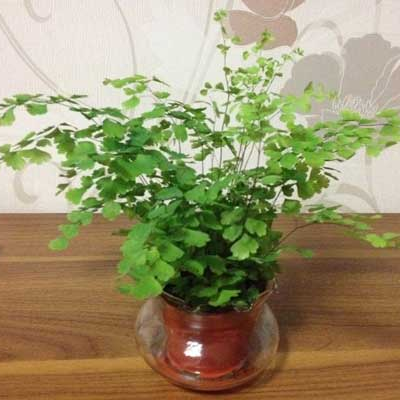
How to care for indoor potted plants? Recommended common varieties
Indoor potted plants, these are what many people like to grow, that is how popular they are
-
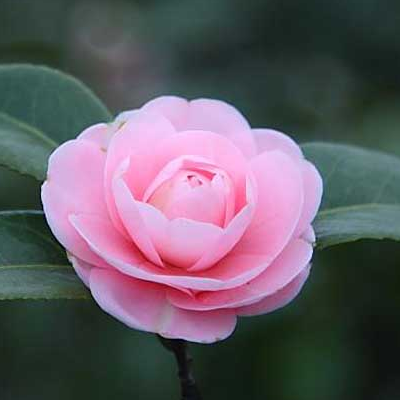
Why Is My Camellia Dropping Leaves? An Introduction to Common Varieties
Camellia is not the name of a single flower; there are many different varieties. So what camellia varieties are there? Why is my camellia dropping leaves? Camellia varieties include: Shibaxueshi (Eighteen Scholars), and the price of Shibaxueshi camellia seedlings is about 10 to 20 yuan. Shibaxueshi is a rare treasure among camellias.
-
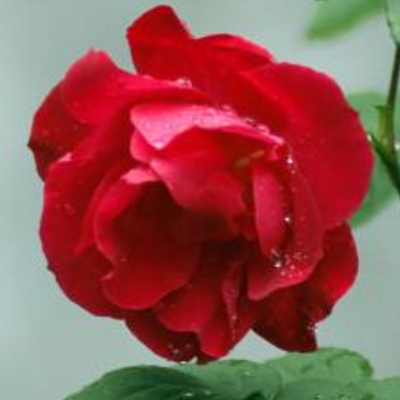
Can you take rose cuttings in October? An introduction to the number of rose varieties
Roses have very high ornamental value, and quite a few people grow roses themselves. Can you take rose cuttings in October? How many varieties of roses are there? Can you take rose cuttings in October: Rose cuttings can be taken all year round, but hardwood cuttings in winter or autumn are most suitable
-
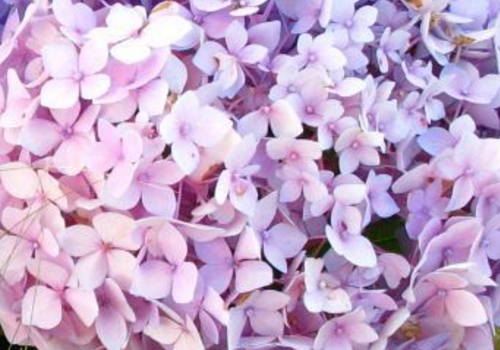
Reasons Why Hydrangeas Don't Bloom and an Introduction to Varieties
Hydrangeas, which many people have surely seen, are very beautiful. Why don't hydrangeas bloom? What varieties are there? Why hydrangeas don't bloom: Potted hydrangeas have not been pruned. Usually after the flowers fade, the branch tips need to be cut short promptly to encourage new branches to grow. When the new branches reach 8-10 cm
-
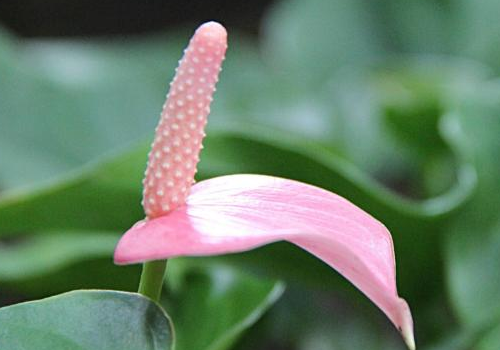
Differences Between Anthurium andraeanum Pink, Red and White Varieties and How to Fix Root Rot
Pink anthurium is very well suited to growing at home, with evergreen leaves and beautiful flowers. What are the differences between pink anthurium, red anthurium and white anthurium? What to do about root rot: What are the differences between pink anthurium, red anthurium and white anthurium: difference in shape. Shape of pink anthurium: the leaves emerge from the rhizome, have long petioles, are solitary, oblong-cordate or ovate, deep bright green
-

Introduction to New Varieties of Arugula, a Specialty Vegetable
Arugula is a rare specialty vegetable selected from local varieties by the Institute of Vegetables and Flowers, Chinese Academy of Agricultural Sciences. Characteristics: The taproot is well developed and the root system penetrates deep into the soil. The mature plant is 30--40 cm tall. The stem is round and covered with fine hairs, and the stem diameter is 0.2--0.4 cm. The leaves are deeply pinnately lobed with wavy margins, 10--15 cm long and 5--8 cm wide, and the petioles are 5--7 cm long. The flowers are yellow with black longitudinal stripes on the petals, and the fruit is a silique. Arugula prefers a warm, cool and humid climate. It is resistant
-
What varieties and types of Polygonatum are there? Let us introduce you to the common ones
According to their different characteristics, commercial Polygonatum is divided into three categories: "chicken-head Polygonatum," "ginger-shaped Polygonatum," and "large Polygonatum." Chicken-head Polygonatum is irregularly conical, with a large head and a thin tail, resembling a chicken's head. It is 3-10 cm long and 0.5-1.5 cm in diameter. The surface is yellowish-white to yellowish-brown, semi-transparent, with fine wrinkles over the whole body and slightly raised, wavy rings. The scar of the aboveground stem is disc-shaped, often with a concave center, and the root scars are mostly dot-like protrusions. The cut surface is light brown, slightly horny, and has numerous yellowish-white dot-like veins (vascular bundles). The odor is slight, the taste is sweet, and it is sticky,
-
The Complete Guide to Silkworm Breeds: Get to Know Common Silkworm Varieties
Silkworm breeds are broadly divided into three categories: 1. Univoltine silkworm breeds. Depending on the breed, the silkworm (Bombyx mori) produces only one generation within a year and then lays diapause eggs; these are called univoltine silkworm breeds. Such breeds develop slowly, take many days to complete their life cycle, consume a large amount of mulberry leaves during the larval stage, and have larger bodies and cocoons with the highest silk yield, but they are physically weak and not suited to hot, humid climatic conditions, making them suitable for rearing in temperate regions. 2. Bivoltine silkworm breeds. Those that produce two generations within a year, that is, the first generation lays non-diapause eggs and the second generation lays diapause eggs, are called bivoltine silkworm breeds. Such breeds
-
Excellent new late-maturing peach varieties successfully bred in Huaning, Yunnan
The Science and Technology Development Company of Huaning County, Yunnan Province, leased 400 mu of land in Dongjiashan, Ningzhou Town, to establish a high-quality economic fruit science and technology demonstration orchard, screen, breed and trial-plant excellent economic fruit varieties, explore high-yield cultivation techniques for economic fruits, and provide the public with strong seedlings of excellent economic fruits. After six years of breeding experiments, from 54 peach varieties, excellent late-maturing autumn and winter peach varieties suitable for promotion and planting in areas at an altitude of 1600-1800 m were selected and bred, with 350 mu under demonstration cultivation. Excellent autumn and winter peaches
-
Recommended Pear Varieties: Excellent Cultivars Suitable for Cultivation in Eastern Hebei
Many pear varieties have been introduced successively. Through cultivation trials and demonstrations, we consider the following 8 varieties to be easy to flower, early to fruit and early to bear abundantly, of excellent quality, strongly resistant, easy to manage, and highly profitable, making them suitable for cultivation in the eastern Hebei region. 1. Zaosu Pear was bred in 1956 by the Institute of Pomology of the Chinese Academy of Agricultural Sciences, with the parents Pingguo Li x Shenbuzhi, named in 1969, and introduced to Qian'an City in 1985. The fruit is obovate with angular protrusions, with an average single fruit weight of 237 g. The ripe fruit has a green-yellow skin, a smooth surface, and white flesh. The flesh is crisp and tender, with few stone cells, juicy
条件筛选