Why Is My Camellia Dropping Leaves? An Introduction to Common Varieties
Camellia is not the name of a single flower; there are many different varieties. So what camellia varieties are there? Why is my camellia dropping leaves?
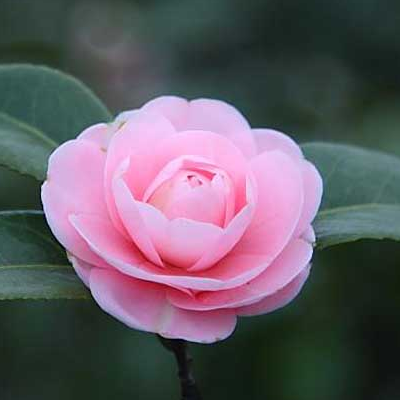
What camellia varieties are there:
1. Shibaxueshi (Eighteen Scholars)
The price of “Shibaxueshi” camellia seedlings is about 10 to 20 yuan. “Shibaxueshi” is a rare treasure among camellias, with a graceful tree shape and a peculiar flower structure. It is composed of 70 to 130 or more petals forming a hexagonal corolla, with distinct tower-like layers arranged in good order, very beautiful. The petals of two adjacent corners are arranged in about 20 whorls, mostly 18 whorls, hence it is called “Shibaxueshi”, and it is deeply cherished by people.
2. Liujiaodahong (Hexagon Big Red)
The price of “Liujiaodahong” camellia seedlings is about 10 to 30 yuan. “Liujiaodahong” is also known as “Songyanghong”. It has a graceful tree shape, plump and upright branches, and dark green obovate leaves with serrated edges. It grows relatively slowly. The flower is bright large red, of fully double form, and very few flowers are of “rose double form or peony form”. It is a large flower, with a flower diameter reaching 10 to 12 cm or more, with over a hundred petals arranged in an imbricate hexagonal pattern.
3. Chidan (Red Dan)
The price of “Chidan” camellia seedlings is about 10 to 15 yuan. “Chidan” is a camellia variety, also known as sea pomegranate, Yuming flower, Naitong, etc. It is a classic camellia variety, with large, gorgeous, varied and lively flowers. It has always been favored by camellia enthusiasts and has been widely cultivated in China from ancient times to the present. Its mutant varieties include “Fendan” and “Yuanyangfengguan”, which have high ornamental value.
4. Zhuangyuanhong (Scholar Red)
The price of “Zhuangyuanhong” camellia seedlings is about 30 to 60 yuan. “Zhuangyuanhong” camellia is a traditional famous Chinese variety, also known as “Putaohong”. Its flower form is fully double, the flower color is rose red, and it grows upright. Its natural tree shape is very good, the leaf color is dark green and glossy, the leaf density is high, and the flowering is dense. Its growth vigor is moderate, making it an excellent camellia variety for pot cultivation.
5. Jinhua Cha (Golden Camellia)
The price of golden camellia seedlings is about 30 to 40 yuan. Golden camellia is a twin sister to tea, camellia, Nanshan tea, oil tea, and sasanqua. Its flowers are golden yellow, dazzling and eye-catching, as if coated with a layer of wax, crystal clear and oily, with a seemingly semi-transparent feel. Golden camellia grows singly in leaf axils. When in bloom, the flowers are cup-shaped, pot-shaped, or bowl-shaped, delicate and colorful, elegant and refined.
6. Feizhafurong (Crimson Claw Hibiscus)
The price of “Feizhafurong” camellia seedlings is about 10 to 20 yuan. “Feizhafurong” is a plant in the Theaceae family, with a graceful form, dark green and glossy leaves, and colorful and gorgeous flowers. Its leaves resemble white hibiscus. The flowers are large, with obovate petals in 3 whorls forming a bowl shape, and yellow stamens among the clusters of small central petals. The flower color is red with white spots, or alternating red and white, with great ornamental value.
7. Cha Mei (Sasanqua)
The price of sasanqua seedlings is about 8 to 15 yuan. Sasanqua is a small tree in the Theaceae family, Camellia genus. It has diverse flower colors, a long flowering period, magnificent yet elegant colors, a graceful tree shape, and most branches spreading horizontally. Its posture is full and it produces many flowers, so it is very suitable for potted appreciation. Placed in a study, meeting room, hall, by the door, on a windowsill, and other places, it adds much elegance and brilliance.
8. Huaheling (Flower Crane Feather)
The price of “Feizhafurong” camellia seedlings is about 20 to 30 yuan. “Huaheling” camellia is a rare camellia variety in China and also belongs to China's top ten famous camellias. Its biggest feature is that its flowering time is quite long. From budding to fully opening takes about one month, and it begins blooming in February and can continue until early May. Moreover, the flowers are beautiful, the tree shape is attractive, there are few pests and diseases, and management and care are relatively simple, so it has great prospects for development and application in landscaping.
9. Fenxia (Pink Cloud)
The price of “Fenxia” camellia seedlings is about 10 to 15 yuan. The “Fenxia” camellia tree is low, with branches spreading evenly and relatively soft. The flowers are pink, with 10 to 15 whorls of petals, up to more than 80 petals arranged neatly. The two sides of the petals fold upward, with white stripes on the midrib and edges. The corolla is hexagonal or pentagonal, with a lower center, and the pistil is completely degenerated. The flower diameter is 8 to 12 cm, and the flowering period is from early February to late March.
10. Hongluzhen (Red Dew Treasure)
The price of “Hongluzhen” camellia seedlings is about 7 to 10 yuan. “Hongluzhen” is a new camellia variety, with elliptical leaves, especially vigorous growth, hard and compact branches, and upright habit. The flower is red, with petals arranged in several whorls, and stamens in the center interspersed among the petals. The flower diameter is 9 to 12 cm, of peony form, and the flowering period is from January to March. It has strong growth vigor and is a wall-base variety of camellia.
Why is my camellia dropping leaves:
1. Overwatering causes leaf drop
When growing camellias, some flower lovers water heavily in order to achieve rapid growth and early blooming, not realizing that this is a wrong method. Although camellias need a supply of water to grow well, too much water will cause water accumulation in the pot. Water accumulation will make the camellia roots breathe poorly, the soil will be too wet, and root rot will occur, causing it to drop leaves. Therefore, when watering camellias, you must pay attention to the amount. Watering in the right amount will have a positive effect on their growth.
2. Pests and diseases cause leaf drop
Many pests and diseases have adverse effects on plant growth. For example, anthracnose can cause camellias to drop leaves. Anthracnose is a relatively common disease that mainly occurs on the leaf parts of camellias, producing lesions on the leaves. As the condition worsens, the lesions gradually expand, and in severe cases they cause leaf drop and affect the entire plant, causing the plant to die. Therefore, when growing camellias, you must take good pest and disease prevention and control measures, strengthen management at ordinary times, enhance the plant's disease resistance, spray pesticides in time for treatment in the early stages of pest and disease occurrence, and in winter pay attention to cleaning up dead branches and diseased leaves of camellias to reduce sources of infection.
3. Poor ventilation causes leaf drop
Sometimes poor ventilation can also cause camellias to drop leaves, especially in winter. If camellias are placed indoors for a long time with poor ventilation or poor air quality, it will cause bud and leaf drop. Therefore, when growing camellias, especially indoors, you must pay attention to ventilation and keep the air fresh.
4. Sudden environmental changes cause leaf drop
When growing camellias, suddenly changing the environment will cause the camellia to fail to adapt to the sudden change. Because the camellia has already adapted to indoor light and other conditions, suddenly moving it outdoors changes the light and temperature, and some old leaves will drop. When this happens, you should quickly move the camellia to a semi-shaded place outdoors, spray more water, and stop fertilizing, and it can slowly recover. If you want to change the growing environment of a camellia, it is best to proceed step by step so that it gradually adapts.
Why is my camellia dropping leaves?
Camellia is the general term for many plants and horticultural varieties in the Theaceae family, Camellia genus. It ranks eighth among the “Top Ten Famous Flowers” and is also one of the world's precious ornamental trees and flowers. Because of its graceful plant form, dark green and glossy leaves, and colorful and gorgeous flowers, it is treasured by the world horticultural community. However, leaf drop often occurs during cultivation. Let's take a look below at why camellias drop leaves!
Overwatering causes leaf drop
When growing camellias, some flower lovers water heavily in order to achieve rapid growth and early blooming, not realizing that this is a wrong method. Although camellias need a supply of water to grow well, too much water will cause water accumulation in the pot. Water accumulation will make the camellia roots breathe poorly, the soil will be too wet, and root rot will occur, causing it to drop leaves. Therefore, when watering camellias, you must pay attention to the amount. Watering in the right amount will have a positive effect on their growth.
Pests and diseases cause leaf drop
Many pests and diseases have adverse effects on plant growth. For example, anthracnose can cause camellias to drop leaves. Anthracnose is a relatively common disease that mainly occurs on the leaf parts of camellias, producing lesions on the leaves. As the condition worsens, the lesions gradually expand, and in severe cases they cause leaf drop and affect the entire plant, causing the plant to die. Therefore, when growing camellias, you must take good pest and disease prevention and control measures, strengthen management at ordinary times, enhance the plant's disease resistance, spray pesticides in time for treatment in the early stages of pest and disease occurrence, and in winter pay attention to cleaning up dead branches and diseased leaves of camellias to reduce sources of infection.
Poor ventilation causes leaf drop
Sometimes poor ventilation can also cause camellias to drop leaves, especially in winter. If camellias are placed indoors for a long time with poor ventilation or poor air quality, it will cause bud and leaf drop. Therefore, when growing camellias, especially indoors, you must pay attention to ventilation and keep the air fresh.
Sudden environmental changes cause leaf drop
When growing camellias, suddenly changing the environment will cause the camellia to fail to adapt to the sudden change. Because the camellia has already adapted to indoor light and other conditions, suddenly moving it outdoors changes the light and temperature, and some old leaves will drop. When this happens, you should quickly move the camellia to a semi-shaded place outdoors, spray more water, and stop fertilizing, and it can slowly recover. If you want to change the growing environment of a camellia, it is best to proceed step by step so that it gradually adapts.
Extended: How to grow camellias
1. Soil: Camellias have high soil requirements. Generally, the soil should contain relatively high humus, with a pH between 5 and 6.5, slightly acidic. The best soil mix is 50% mountain soil, 40% wood chips or edible mushroom residue, and 10% cake fertilizer powder or livestock manure and phosphate fertilizer powder.
2. Light: Camellias avoid strong light, so you must pay attention to sunlight when planting. In spring and autumn, sufficient light is required, but in summer you must avoid direct sunlight. If exposed to strong light for too long, it can easily die.
3. Temperature: Camellias are neither cold-tolerant nor heat-tolerant. Their most suitable temperature is 18 to 25 degrees, so the ambient temperature should not be too high or too low, otherwise it will affect their growth. In winter, the indoor temperature must be above 3 degrees; if it is below 0 degrees, they will suffer cold damage.
4. Watering: Camellias like a moist environment. They cannot be too dry, too wet, or alternately dry and wet. In spring, you can water more. In summer, water twice a day, morning and evening. In autumn, do the same as in spring. In winter, it is best to water before and after the plant.
5. Fertilizing: Camellias relatively like fertilizer, but fertilizing also has a limit and must not be excessive. Generally, fertilize about 3 times during the nearly half year after flowering, and fertilizing once in winter is enough. In order to make the flowers more beautiful, it is best to include more phosphate fertilizer in the fertilizer.
6. Pruning: Pruning camellias is very important. Generally, branches that affect the tree shape and diseased or weak branches are cut off, and flower buds are also arranged. Once flower buds are too dense, they should also be thinned. After flowers fade, they should also be removed in time, which can reduce nutrient consumption.
7. Repotting: Camellias generally need to be repotted once every two years. Changing to a larger pot is beneficial to their growth. The best time for repotting is April. Do not remove all the old soil, and add a small amount of base fertilizer, then water.
8. Pests and diseases: Camellias are very prone to illness. The common ones are mainly black mold and anthracnose. At this time, it is only necessary to spray 0.5-degree Bordeaux mixture. The main pest is the tea shoot moth. At this time, it is mainly enough to prune off the affected shoots.
Camellia pictures. What camellia varieties are there? Complete camellia pictures and names
Speaking of camellia, I wonder if everyone has drunk flower tea. Most of the tea leaves in this flower tea are made from this camellia. Camellia, also called camellia, is one of China's traditional top ten famous flowers and also one of the world's precious ornamental trees and flowers. It is loved by people all over the world. Camellia flower colors are rich and gorgeous, the plant shape is graceful, and the varieties are very abundant. I wonder which camellia varieties everyone knows and how much they understand about these camellias. Let's take a look at camellia varieties below.
Introduction to Camellia
First, let's briefly understand camellia. Camellia, also called camellia, is a plant in the Theaceae family, Camellia genus, and is also a shrub or small tree. Camellia is native to eastern China. Today, with the popularity of camellia, it is planted all over the world, including in countries such as Korea, Japan, and India. Usually, the stem of camellia can reach 9 m high. Its young branches are hairless, and its leaves are leathery and elliptical, with a broad wedge-shaped base, dark green above and light green below. Camellia has a long flowering period, and can bloom from October of the previous year to May of the following year, but the peak flowering period of camellia is usually from January to March each spring.
Camellia varieties
1. According to records, there are currently about 2,000 camellia varieties in the world, which can be divided into 3 major groups and 12 flower forms. In 2013, someone investigated and found that at that time there were already more than 306 camellia varieties in the general collection, and now it is unknown how many camellia varieties there are. It is recorded in “Hua Jing” that at that time China mainly had 19 camellia varieties, including Manao tea, Hedinghong, Baozhu tea, Jiaoe Baibaozhu, Yangfei tea, Zhenggongfen, Shiliu tea, Yinianhong, Zhaodianhong, Wanshan tea, Nanshan tea, etc. There are many camellia forms, including single, semi-double, double, curved petal, five-star petal, hexagonal, and pine-shell type, and so on.
2. Today people mainly distinguish camellia varieties by 3 major groups. These 3 major groups refer to the single group, semi-double group, and double group, distinguished by the number of camellia petals. Camellias with 1 to 2 whorls of petals are single-group camellias. This type of camellia has 5 to 7 petals, and its base is connate and mostly tubular. Included camellia varieties are Dahua Jinxin, Chuizhi Jinxin, Zihua Jinxin, Saijinguang, and Meiren tea, etc. Among them, Dahua Jinxin may be one of the more familiar camellias. Its flower color is bright red, the flowers are relatively small, and it mainly blooms from March to April. Its leaves are elliptical, and the leaf margins also have many fine serrations, looking very gorgeous.
3. Semi-double camellias have 3 to 5 whorls of petals, and about 20 petal pieces, while some camellias have more petal pieces, around 50 or more. Among this type of camellia, familiar ones include Hongmudan, Songzi, and Dongfangliang, etc. Hongmudan, although called peony, is actually a red or pink camellia. Double camellias are camellias in which most stamens have become petals, and their petal count is basically above 50. They are further divided into 7 types, including tuogui type, chrysanthemum type, hibiscus type, crown type, hydrangea type, radial type, and rose type, etc. Camellias such as Baibaozhu, Huamudan, and Baifurong that everyone knows are all this type of camellia.
Conclusion: Camellia varieties are indeed too abundant. If we were to explain them one by one, who knows how long it would take. However, if everyone knows its classification method, then even without knowing its specific name, you can still know what kind of camellia it is.
[You may be interested in]
? Window glass film ? Dendrobium officinale pictures ? Professional carpet cleaning ? DIY cross-stitch frame ? Steps for cutting window paper
? Paper cup handicrafts ? How to grow peonies ? What kind of mattress is good ? Wintersweet bonsai pictures ? How to grow mimosa